Investigators Find No Evidence of Wider Terror Cell in Bondi Attack
Australian investigators concluded that the two men accused of the Bondi Beach mass shooting at a Hanukkah festival appear to have acted alone, after inquiries that included cooperation with authorities in the Philippines. The finding narrows the immediate public safety threat, but it raises fresh questions about lone actor violence, security spending, and the economic fallout for tourism and holiday events.
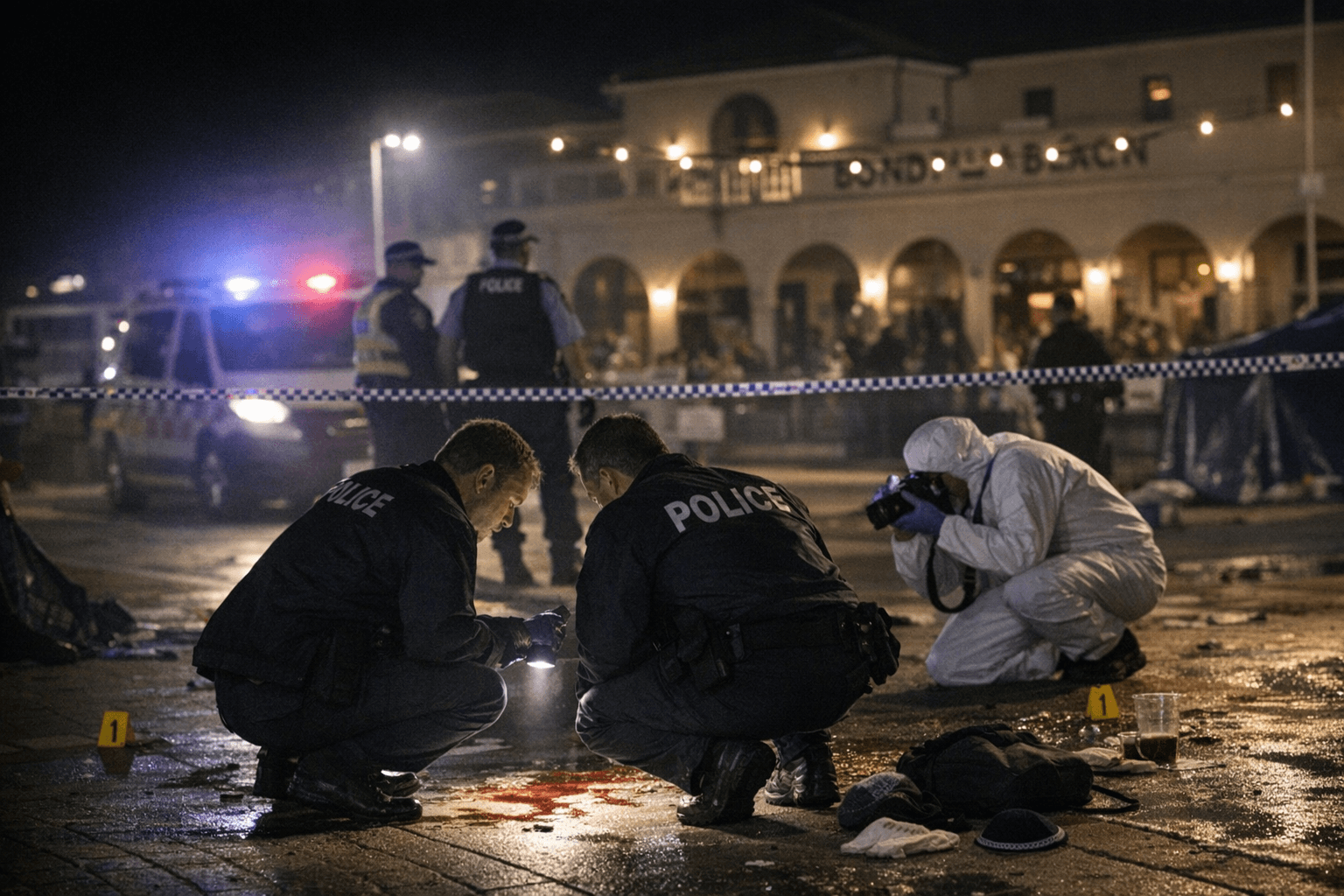
Australian authorities said their investigation into the mass shooting at a Hanukkah festival at Bondi Beach found no evidence that the two accused were part of a broader terrorist cell. The two men, identified as father and son Sajid and Naveed Akram, were accused in the attack that took place on December 30, 2025. Investigators completed lines of inquiry that included work in the Philippines and concluded there were no substantive links to organized transnational extremist networks.
Police and counterterrorism officials said the inquiries involved checks with overseas partners, review of travel histories and communications, and other standard investigative measures. Those steps failed to produce corroboration of any external command, support network or coordinated plot beyond the two accused. The authorities emphasized that the conclusion was based on the evidence collected to date and that routine investigative activity would continue as the criminal case moves forward.
The immediate practical implication for public safety is that investigators do not currently expect a wave of related attacks linked to a wider cell. That reduces the probability of a coordinated campaign of violence, but it does not eliminate the risk of additional lone actor incidents, which have accounted for a rising share of extremist violence in many advanced democracies in recent years. Intelligence agencies face persistent challenges in detecting and disrupting isolated plots that are planned and executed by small numbers of people with limited overt contacts.
The economic implications are tangible even if the security assessment narrows the threat. Bondi Beach is both an iconic tourist destination and a focal point for New Year celebrations, and the attack occurred at a high profile holiday event. Tourism and hospitality businesses in Sydney rely heavily on holiday season trade, and even short term declines in visitor numbers or event attendance can hit revenues for restaurants, hotels and local retailers. Authorities will likely increase visible security around major gatherings for New Year celebrations and into 2026, a measure that raises operational costs for local governments and event organisers.
There are also longer term policy considerations. Lawmakers and security planners will need to balance investments in surveillance, deradicalization programs and community policing with civil liberties and community trust. Increased spending on public order and counterterrorism places pressure on state budgets already stretched by infrastructure commitments and social services. At the same time, targeted community engagement and online counter-radicalization efforts may offer more cost effective long term returns than broad based surveillance scaling.
For markets, the impact is likely to be limited and localized, with short term disruptions in tourism related sectors more probable than broader shocks to Australian equities or foreign direct investment. Consumer confidence in affected precincts may dip temporarily, and insurance and security costs for public events could rise.
The investigation’s finding that no broader cell was involved narrows the immediate security horizon, but it leaves open enduring questions about how to detect and prevent lone actor violence without imposing disproportionate costs on civil liberties or the economy. Authorities have said inquiries will continue as legal processes proceed and as they monitor any new intelligence.
This article was produced by Prism’s automated news system from verified source data, official records, and press releases, then run through automated quality and moderation checks before publishing. The system is built and supervised by the people who set the standards it runs under. Read our full AI policy.
Did this article answer your question?