IonQ posts record revenue, raises forecast after major quantum milestones
IonQ's revenue jumped to $64.7 million, but the bigger question is whether a $470 million backlog signals durable demand or early quantum hype.
IonQ turned a record quarter into a louder argument that quantum computing is moving from lab promise to paid deployments, but the latest surge also leaves the harder question intact: how many of these contracts can become a durable business?
The College Park, Maryland company said first-quarter 2026 revenue reached $64.7 million, up 755% from a year earlier and 30% above the midpoint of its guidance range. It raised full-year 2026 revenue expectations to $260 million to $270 million and projected second-quarter revenue of $65 million to $68 million, signaling that management sees demand holding up beyond a single burst of sales.
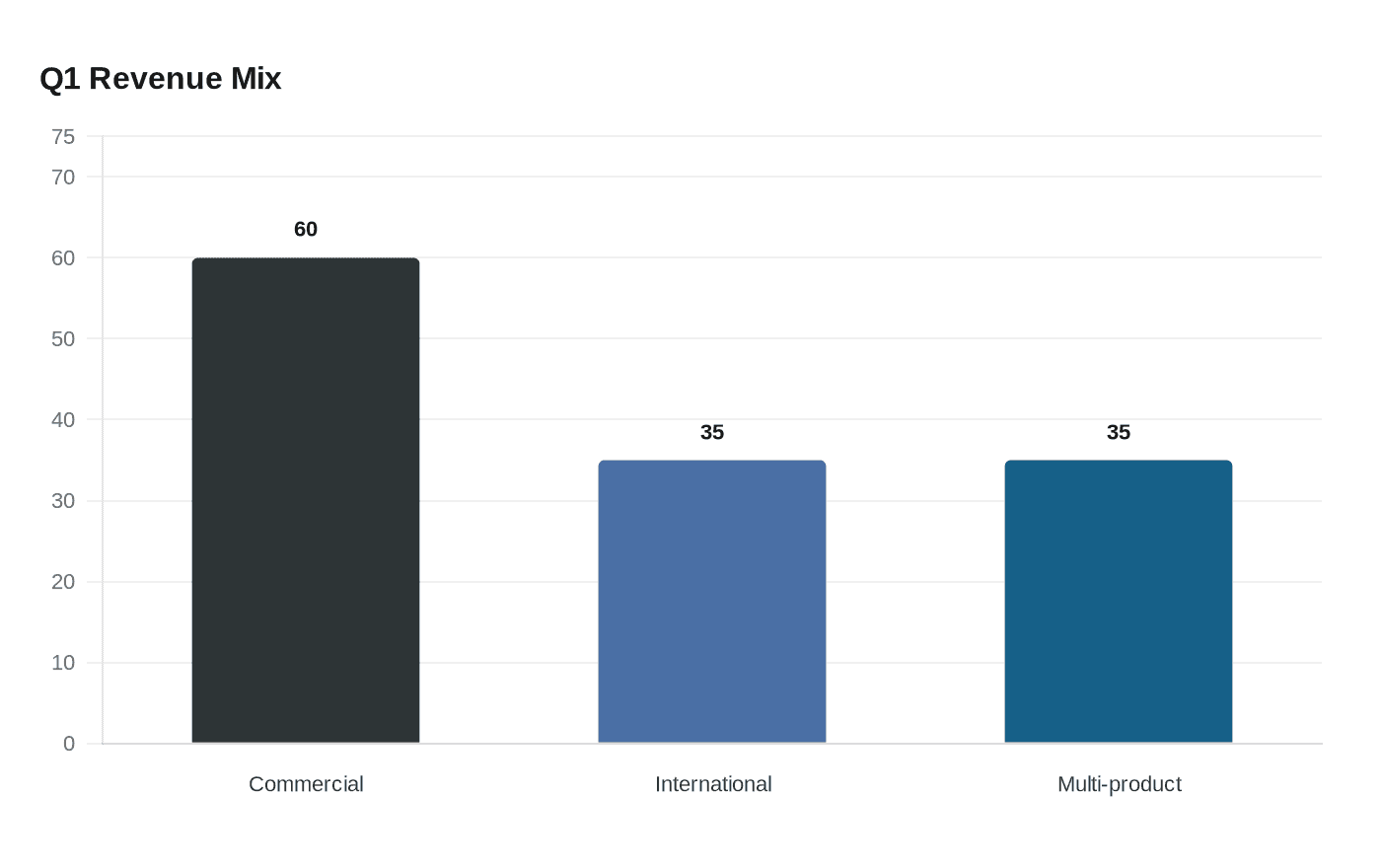
The headline numbers are striking, but the quality of the revenue mix matters just as much. IonQ said about 60% of first-quarter revenue came from commercial customers, while about 35% came from international customers and 35% from multi-product customers. Remaining performance obligations climbed 554% from a year earlier to $470 million, a figure that suggests a growing pipeline, though still one concentrated in a young market where a few large contracts can move the entire growth story.
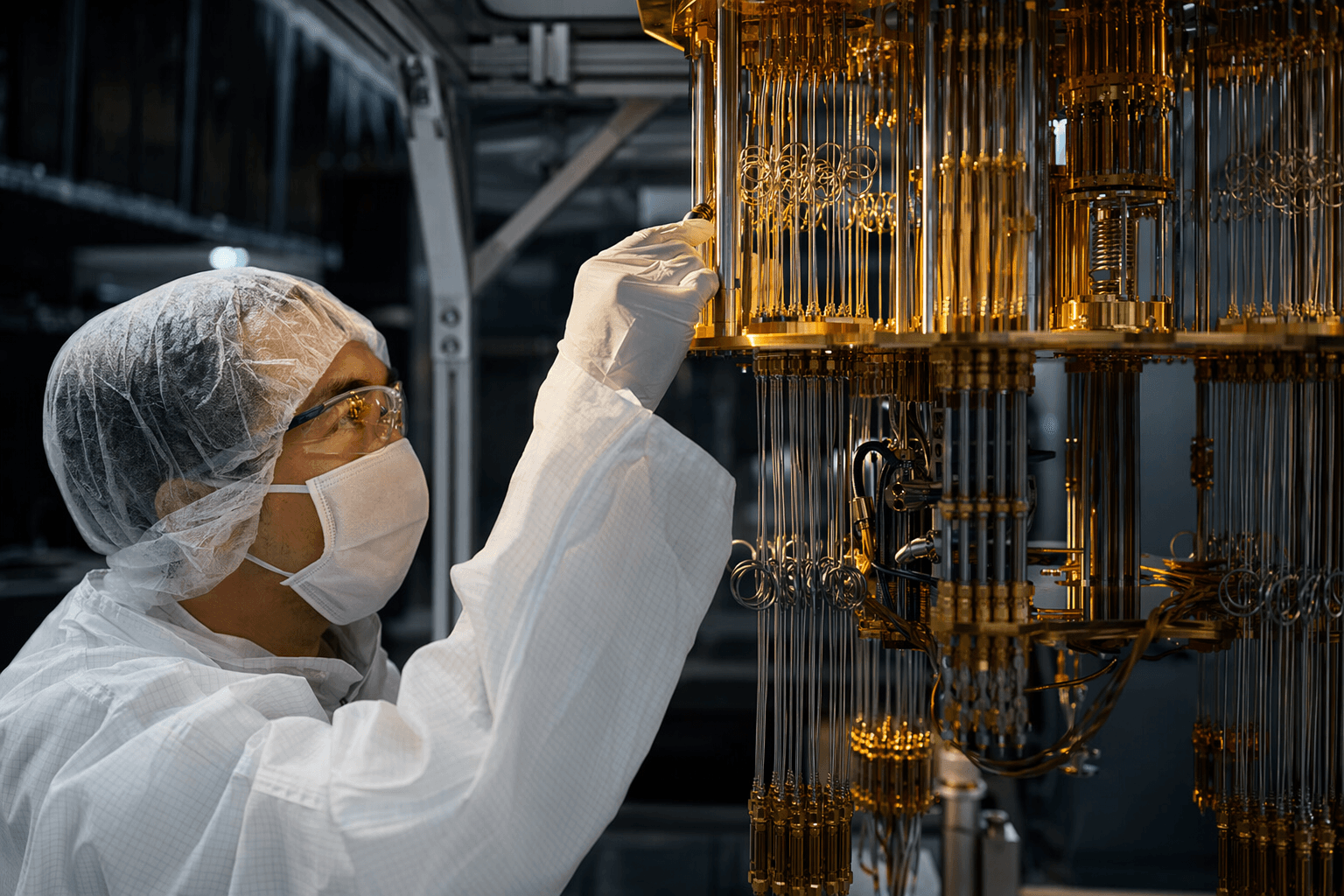
IonQ also said it sold its first 6th-generation, chip-based 256-qubit system and received its first ion-trap chip samples back from fabrication, milestones that push the company further from component testing toward integrated system-level work. The company described the quarter as its fourth consecutive record-breaking period and said it published what it called a definitive and detailed architectural blueprint for fault-tolerant quantum computing. It also pointed to commercialization of sensing products and global deployments of post-quantum cybersecurity tools as signs that it is trying to build revenue around a broader platform, not just a single machine.
The momentum comes after a strong full year in 2025, when IonQ reported $130.0 million in GAAP revenue, up 202% year over year, and said it became the first public quantum company to surpass $100 million in annual GAAP revenue. Even with $3.3 billion in cash, cash equivalents and investments at the end of 2025, the company is still operating in a capital-intensive field that has yet to prove a mass-market use case.
Niccolo de Masi said the 256-qubit sale and the returned chip samples marked a "pivotal shift toward commercial scale," and he said IonQ is moving into integrated, system-level testing on its 256-qubit roadmap. The company’s April 14 DARPA HARQ contract adds another layer to that pitch, tying IonQ to a government program designed to combine distinct qubit types into heterogeneous systems with compiler tools and high-speed interconnects. For now, the numbers show real commercial traction. Whether they add up to sustainable profitability is still the central test.
This article was produced by Prism’s automated news system from verified source data, official records, and press releases, then run through automated quality and moderation checks before publishing. The system is built and supervised by the people who set the standards it runs under. Read our full AI policy.
Did this article answer your question?
%3Amax_bytes(150000)%3Astrip_icc()%2FCertificate-of-deposit-2301f2164ceb4e91b100cb92aa6f868a.jpg&w=1920&q=75)