Iran Calls Youth to Form Human Shields Around Power Plants Before Trump Deadline
Iran's regime summoned youth to ring power plants with their bodies hours before Trump's Tuesday deadline to bomb civilian infrastructure if the Strait of Hormuz stays closed.
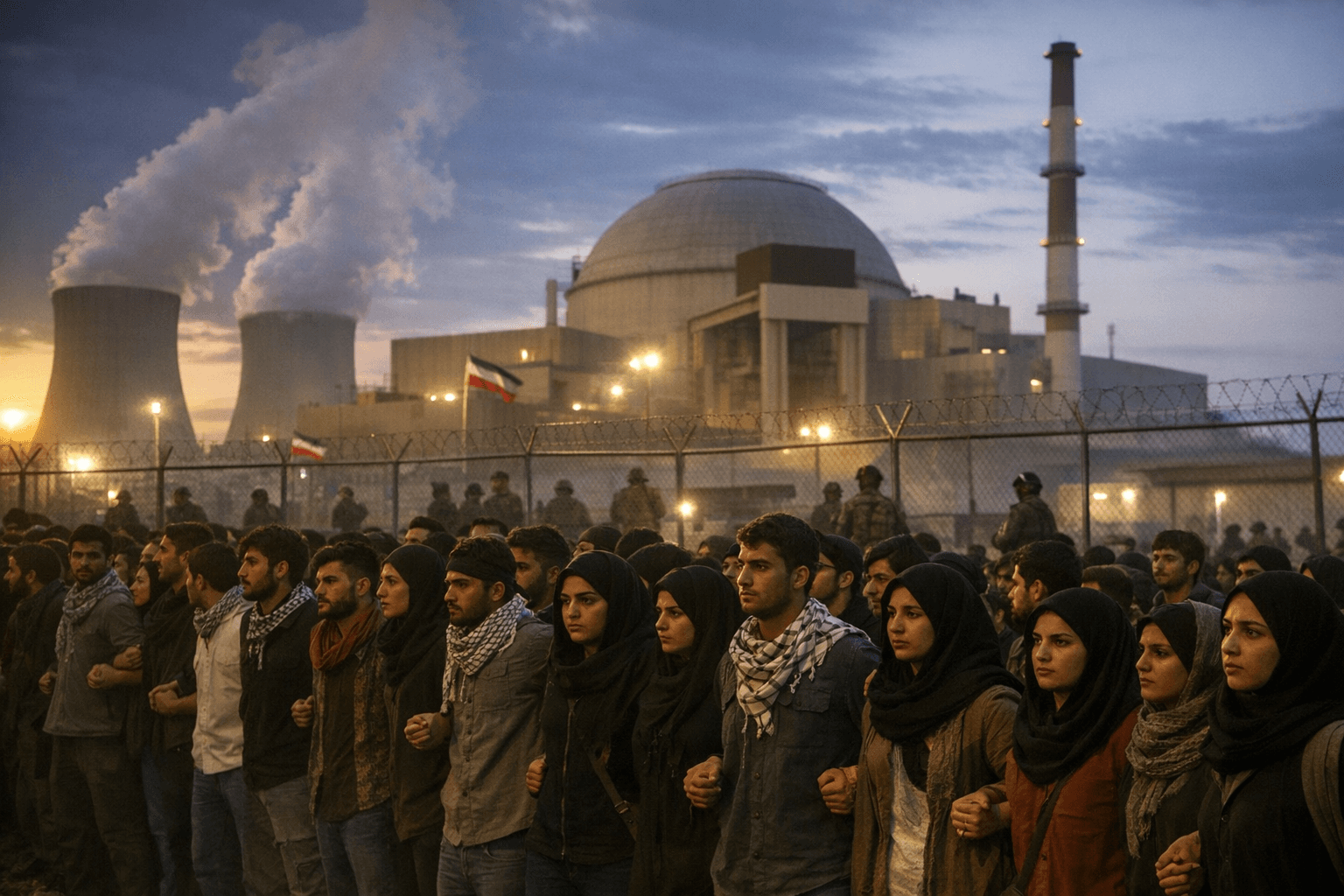
Iran's Deputy Sports Minister Alireza Rahimi issued a video message on Tuesday calling on "all young people, athletes, artists, students and university students and their professors" to encircle power plants at 2 PM local time, hours before President Trump's 8:00 PM Eastern deadline to bomb those same facilities if Iran refused to fully reopen the Strait of Hormuz to shipping.
Rahimi, who also serves as Secretary of the Supreme Council of Youth and Adolescents, framed the mobilization as a patriotic act. "Power plants that are our national assets and capital, regardless of any taste or political viewpoint, belong to the future of Iran and to the Iranian youth," he said, claiming the idea had originated with Iranian youth themselves rather than the government.
Iranian President Masoud Pezeshkian amplified the defiance on X, writing that "more than 14 million Iranian people have declared their readiness to sacrifice their lives." That figure is reportedly double what Iranian state media had previously cited as the number of volunteers the government was recruiting by text message. "I too have been, am, and will remain ready to give my life for Iran," Pezeshkian added.
Trump's ultimatum, posted on Truth Social, was unambiguous: "Tuesday will be Power Plant Day, and Bridge Day, all wrapped up in one, in Iran." At a White House press conference Monday, he escalated further, saying, "The entire country can be taken out in one night, and that night might be tomorrow night." His demand centers on the Strait of Hormuz, through which roughly 20 million barrels of oil pass daily, approximately 20% of global petroleum liquids consumption. China depends on the strait for an estimated 90% of its energy imports.
The crisis traces to February 28, 2026, when the assassination of Iranian Supreme Leader Ali Khamenei triggered U.S. and Israeli military operations against Iran. The Islamic Revolutionary Guard Corps responded with missile and drone strikes on U.S. bases, Israeli territory, and Gulf states while prohibiting vessel passage through the strait, bringing shipping traffic to effectively zero. Iran also threatened to close the Bab al-Mandeb strait; analysts warned that shutting both waterways would cut roughly a quarter of the world's energy supply.
A Pakistan-brokered proposal for a 45-day ceasefire collapsed after Iran rejected temporary terms, insisting through state news agency IRNA that the Strait of Hormuz "will not return to its previous condition unless the war is permanently stopped." Trump dismissed the proposal as "not good enough."
Airstrikes killed at least 15 people across Iran on Tuesday even as the diplomatic effort was ongoing, and Iran fired missiles at both Israel and Saudi Arabia. The King Fahd Causeway linking Saudi Arabia to Bahrain was temporarily closed amid Iranian threats.
International legal experts offered stark warnings about the planned campaign. Lt. Col. Rachel VanLandingham (ret.) told PBS NewsHour that Trump is "both threatening a war crime and he's engaging in a war crime through that rhetoric." Former Obama NSC legal adviser Tess Bridgeman told CBS News that "obliterating all power plants, threatening coercive actions against the civilian population...those kinds of things are flatly illegal." Amnesty International formally labeled Trump's threats "a threat to commit war crimes," warning that destroying power plants would "plunge an entire country into darkness." Trump said he was not worried about the war crimes implications.
New Zealand Prime Minister Christopher Luxon urged Trump to stand down, calling attacks on civilian infrastructure "unacceptable." The European Council's António Costa urged Pezeshkian to halt attacks on neighboring countries and lift the strait restrictions. With civilian volunteers standing between Iran's power grid and U.S. airpower, and no ceasefire in sight, the trajectory points toward a confrontation with consequences reaching well beyond the Persian Gulf.
This article was produced by Prism’s automated news system from verified source data, official records, and press releases, then run through automated quality and moderation checks before publishing. The system is built and supervised by the people who set the standards it runs under. Read our full AI policy.
Did this article answer your question?


