Iran Denies Trump's Ceasefire Claim, Calling It False and Baseless
Iran's Foreign Ministry spokesperson flatly rejected Trump's Truth Social claim that Tehran sought a ceasefire, as the U.S. weighs ending the war without reopening the Strait of Hormuz.
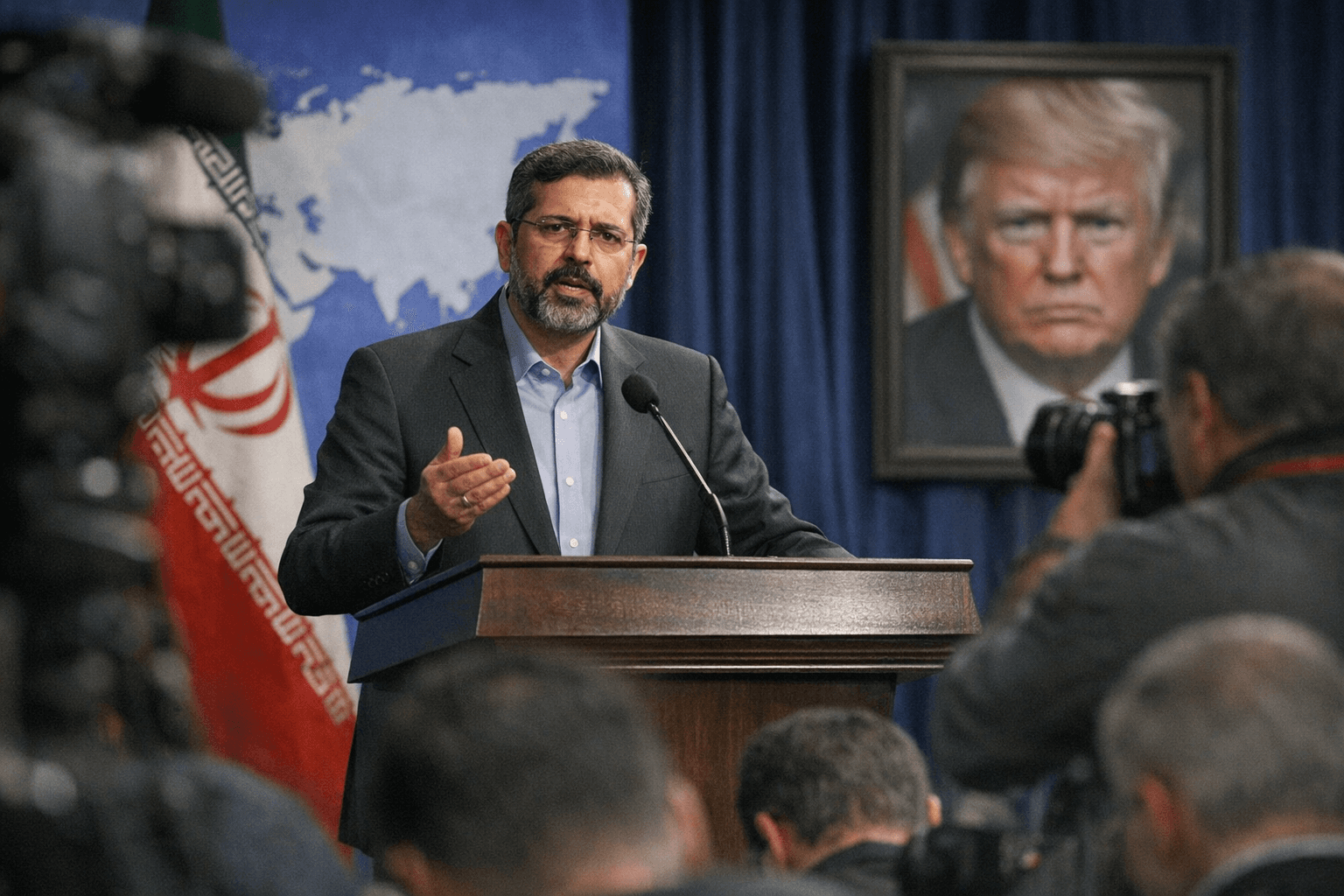
Iran's Foreign Ministry spokesperson Esmail Baghaei publicly rejected President Donald Trump's claim that Tehran had sought a ceasefire, calling Trump's assertion "false and baseless" in remarks broadcast on Iranian state television. The denial landed on the same day Trump was preparing to deliver a primetime national address with the Iran conflict expected to feature prominently.
Trump had posted on Truth Social that Iran's "new regime president" requested a ceasefire, a characterization Iran rejected without qualification. The exchange crystallized a strikingly public rupture in the two governments' competing accounts of whether any diplomatic outreach had actually occurred.
Behind the scenes, however, the picture was more complex. The Wall Street Journal reported that Trump privately told aides he is willing to end the military campaign against Iran even if the Strait of Hormuz remains largely closed, setting aside a reopening of the critical oil waterway for a later date. That posture represents a meaningful shift from the public framing of U.S. war aims. Trump had previously extended a deadline for Iran to reopen the strait, holding off on strikes against Iranian power plants until April 6. Administration officials indicated that a full mission to reopen the passage would push the conflict beyond Trump's stated timeline of four to six weeks.
The Strait of Hormuz, through which a substantial share of global oil shipments passes, has become a central flashpoint. Iran's parliament separately approved an early plan to charge a toll for transit through the strait, a move that drew further pressure on crude markets. A Kuwaiti oil tanker also burst into flames near Dubai after what the vessel's owner attributed to an Iranian attack, adding urgency to the standoff.
Analysts tracking Iran's internal dynamics warned that any signals from Tehran about ceasefire interest warrant deep skepticism. Beni Sabti of the Israeli Institute for National Security Studies cautioned that even when Iran uses ceasefire language, it may invoke the concept of "hudna," a temporary suspension of hostilities with strategic rather than peaceful intent. The concern, Sabti warned, is that Iran's posture represents a "cycle of deception" rather than a genuine opening.
Adding another layer of uncertainty is the shifting power structure inside Tehran. Attention has focused on Ahmad Vahidi, a longtime Islamic Revolutionary Guard Corps commander now described by analysts as more influential than Iran's president or even Khamenei's son. Vahidi's reemergence, alongside the Supreme Leader's appointment of another IRGC stalwart, Mohammad Baqr Zolqadr, as Secretary-General of Iran's Supreme National Security Council, signals that hardliners have consolidated control as the war drags on. Whether that consolidation makes a genuine diplomatic resolution more or less attainable is the central question now hanging over Trump's address to the nation.
Know something we missed? Have a correction or additional information?
Submit a Tip