Iran Denies U.S. Destroyers Entered Hormuz as Cease-Fire Talks Continue
Mines in the Strait of Hormuz could jolt oil prices fast, even as Iran denies U.S. destroyers entered the waterway and cease-fire talks strain in Islamabad.

A mine threat in the Strait of Hormuz can hit household budgets far beyond the Gulf, because the waterway carries about 20 million barrels of oil a day, roughly one-fifth of global petroleum liquids consumption, along with a major share of the world’s liquefied natural gas trade. Any disruption there can move freight costs, lift shipping insurance premiums and add volatility at the pump almost immediately.
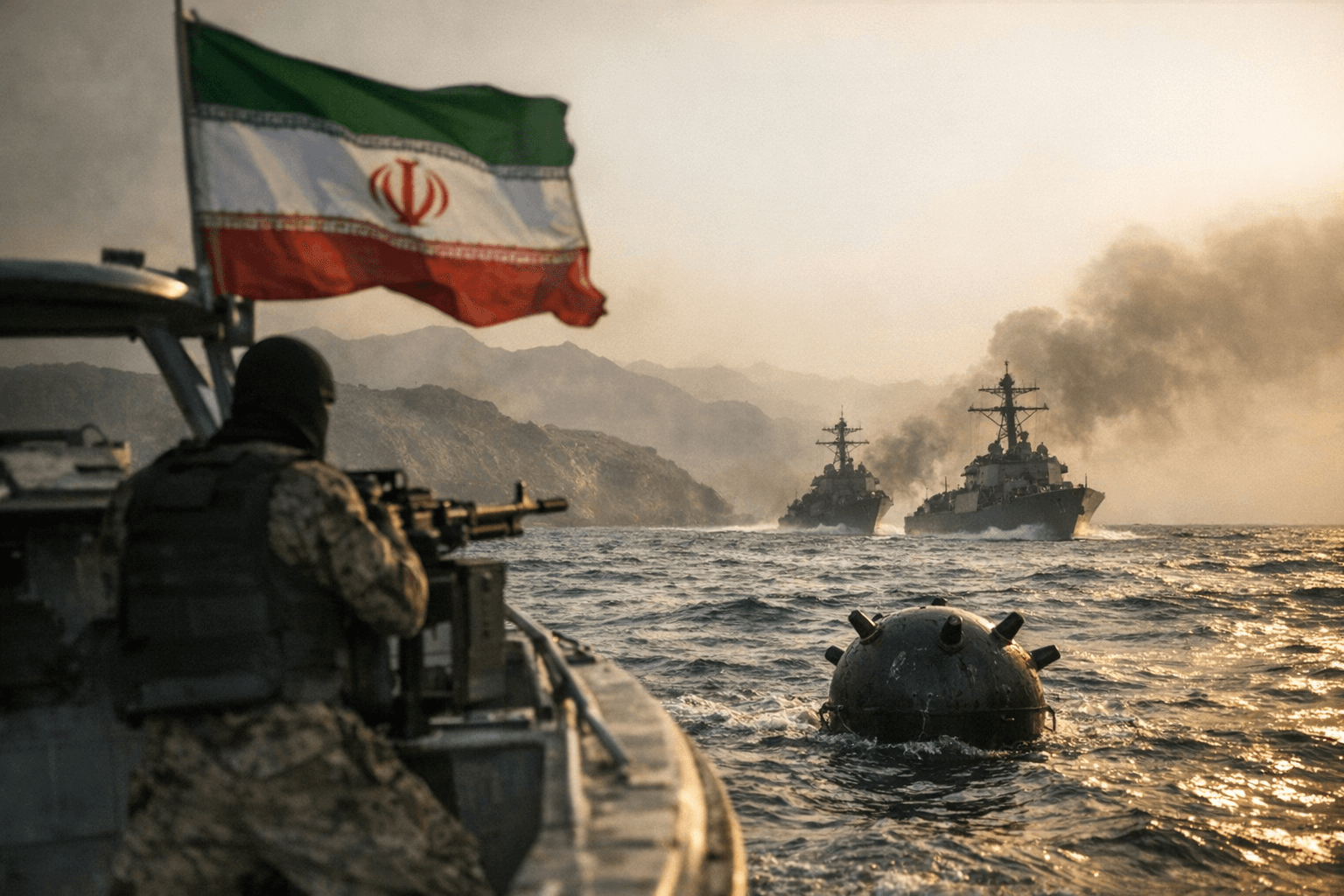
Iran on Saturday denied that American destroyers had entered the strait, even as U.S. Central Command said two U.S. Navy guided-missile destroyers had transited the narrow passage to begin “setting conditions” for mine-clearing operations. The ships were identified as USS Frank E. Petersen Jr. and USS Michael Murphy. CENTCOM said additional resources, including underwater drones, would join the clearance effort “in the coming days.”
The dispute comes after U.S. officials assessed in late March that at least a dozen underwater mines had been placed in the waterway, based on U.S. intelligence. CBS News reported that the mines included the Iranian-made Maham 3 and Maham 7, raising the stakes around a corridor that links the Persian Gulf with the Gulf of Oman and the Arabian Sea. President Donald Trump said the United States was doing “a favor to Countries all over the world” by clearing mines and claimed Iran’s mine-laying ships had been destroyed.
Mine-clearing in the Strait of Hormuz is a painstaking operation. The route is narrow, heavily trafficked and vulnerable to panic even when no ship has been hit. CBS News reported that oil tanker and commercial traffic through the strait was all but halted during roughly six weeks of war, and that some traffic resumed after a two-week cease-fire took hold earlier in the week, but remained low in marine transit data. Henning Gloystein of Eurasia Group said disruptions could persist for months and that tanker operators may need at least two months to resume operations even if the cease-fire holds.
The military move is unfolding alongside cease-fire talks in Islamabad, where Vice President JD Vance and other senior U.S. officials were involved and Pakistan acted as mediator. Vance said the talks lasted about 21 hours and broke down over Iran’s refusal to accept U.S. terms, including a commitment not to seek a nuclear weapon. Iranian foreign ministry spokesman Esmaeil Baghaei said the talks fell apart over gaps on “two or three” important issues and said the Strait of Hormuz was among the topics discussed.
With the IRGC issuing threats and both sides trading conflicting accounts, the central question is no longer only who controls the narrative. It is whether the world’s most sensitive energy choke point can stay open long enough for the cease-fire to hold.
Know something we missed? Have a correction or additional information?
Submit a Tip