Iran Offers Counterproposal via Pakistan as Trump Deadline Looms
Iran's 10-point counterproposal via Pakistan demands permanent war guarantees, uranium rights, and Strait sovereignty as Trump's April 7 strike deadline closes in.
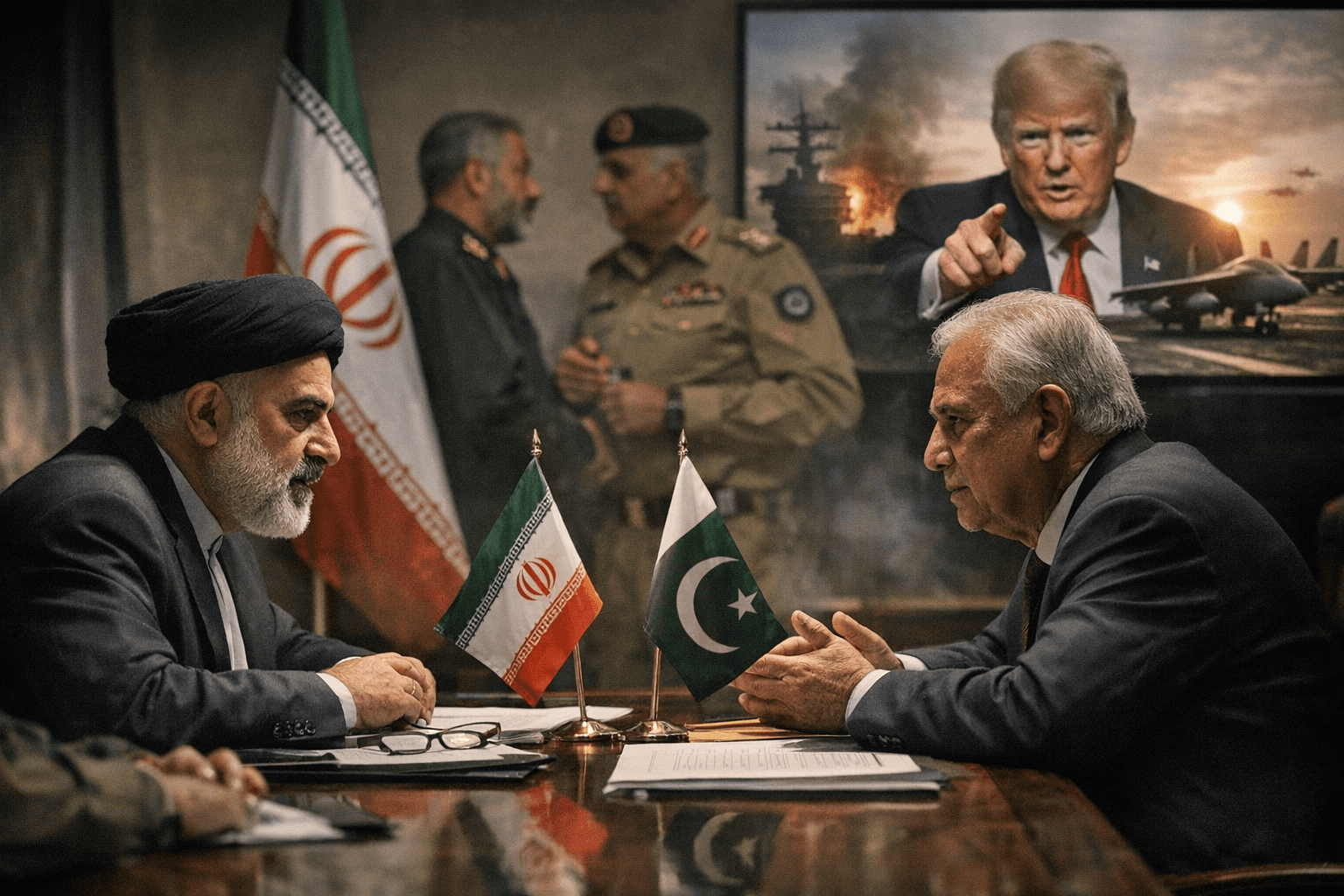
Iran transmitted a 10-point counterproposal to Washington through Pakistani intermediaries as President Trump's Tuesday, April 7, 8 p.m. ET deadline for new military strikes approached, staking out conditions for ending a conflict that has killed more than 3,400 people across the Middle East and closed the world's most critical oil shipping lane.
The proposal, conveyed by Tehran to Islamabad and disseminated through Iran's state-run IRNA news agency, came after Iran formally rejected the U.S. 15-point ceasefire framework, known informally as the Islamabad Accord. That plan called for an immediate halt to fighting followed by 15 to 20 days of negotiations covering Iran's ballistic missile and nuclear programs and the Strait of Hormuz. Iran dismissed it as "unrealistic."
Tehran's counter demands more expansive ground: a protocol for safe passage through the Strait, the lifting of U.S. sanctions, reconstruction assistance, an end to attacks on pro-Iranian forces in Lebanon and Iraq, and binding guarantees against future U.S. or Israeli strikes. Iran also demanded formal recognition of its right to regulate shipping traffic and collect tolls in the Strait, and reportedly the right to continue enriching uranium under the Nuclear Non-Proliferation Treaty.
That last demand collides directly with Trump's stated rationale for the war. Standing alongside Defense Secretary Pete Hegseth, Chairman of the Joint Chiefs Gen. Dan Caine, and CIA Director John Ratcliffe at a Monday press conference, Trump called the 10-point plan "significant" but "not good enough," and threatened to destroy Iran's power plants and bridges if his deadline passed. "The entire country can be taken out in one night, and that night might be tomorrow night," he said.
Iran's ceasefire terms were equally unyielding. Mojtaba Ferdousi Pour, head of Iran's diplomatic mission in Cairo, told the Associated Press that Tehran would accept only a permanent end to the war. "We only accept an end of the war with guarantees that we won't be attacked again," he said, adding that Tehran no longer trusts the Trump administration after being bombed twice during earlier rounds of talks. Foreign Minister Abbas Araghchi had previously declared that "our policy is the continuation of resistance."
Still, talks have not collapsed entirely. A regional official said on condition of anonymity, "We are still talking to both sides." Egyptian officials involved in the mediation said Iran may be open to a 45-day ceasefire, contingent on guarantees of a permanent end to the war and the opening of negotiations over the Strait.
Pakistan's role as primary conduit reflects Iran's refusal to engage directly with Washington following the February 28 strikes that killed Supreme Leader Ali Khamenei. His son Mojtaba Khamenei was installed as supreme leader within a week, a succession Trump publicly called "a big mistake." U.S. special envoy Steve Witkoff has continued briefing Israeli Prime Minister Benjamin Netanyahu on contacts with Pakistani intermediaries; Trump and Netanyahu spoke by phone for roughly 30 minutes overnight.
The Strait of Hormuz has been closed to all foreign shipping since March 4, 2026, the first such closure in the waterway's history. Carrying approximately one-fifth of the world's oil in peacetime, its blockade has sent global energy prices soaring. Iran's parliament passed a bill formalizing toll collection on vessels that do transit. U.S. and Israeli strikes have killed more than 1,900 people inside Iran, per the country's deputy health minister, and at least 1,400 in Lebanon. Thirteen U.S. service members have died in combat.
With Trump's deadline now hours away, the gap between Iran's insistence on permanent security guarantees and sovereign Strait authority and Washington's non-negotiable position on nuclear disarmament remains the central obstacle no intermediary has yet bridged.
This article was produced by Prism’s automated news system from verified source data, official records, and press releases, then run through automated quality and moderation checks before publishing. The system is built and supervised by the people who set the standards it runs under. Read our full AI policy.
Did this article answer your question?


