Iran president accuses US, Israel and Europe of stoking deadly unrest
Iran’s president blames foreign powers for a two‑week wave of protests; rights groups report thousands killed and internet blackouts hinder verification.
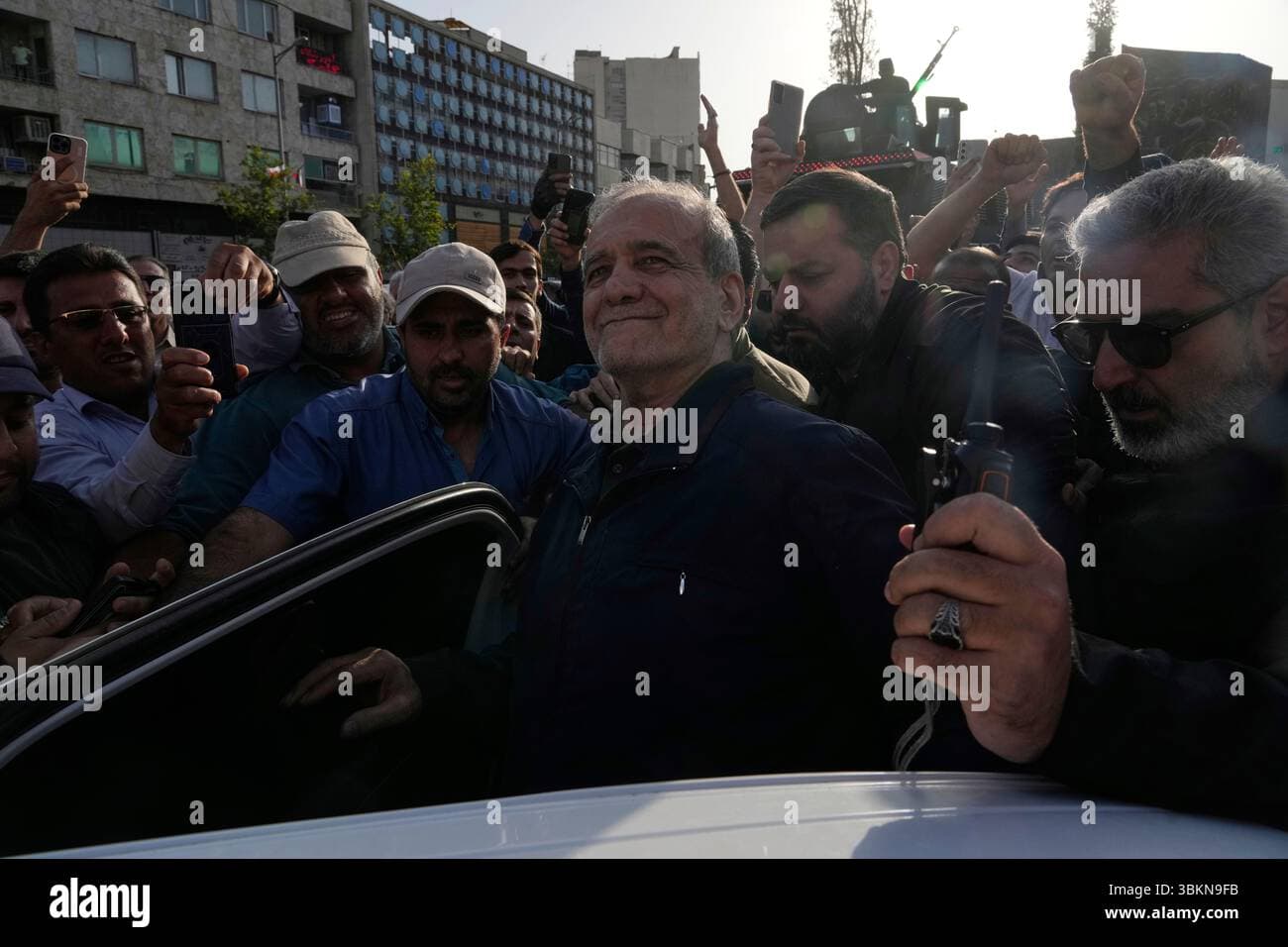
Iran’s president Masoud Pezeshkian accused the United States, Israel and European leaders of exploiting economic hardship to “incite unrest” and of supplying resources intended to “tear the nation apart,” state media said as Tehran confronts a roughly two‑week wave of nationwide protests. The charges reflect a coordinated government narrative that paints the unrest as externally driven amid competing accounts of heavy civilian losses.
The demonstrations, which began in late December and continued into January, prompted a severe security response and a communications blackout that officials say was intended to restore order. Human rights organisations and medical workers inside Iran say the crackdown has killed “several thousand people,” a toll that cannot be independently verified because access is restricted and communications remained limited for more than two weeks. State media and senior officials reject responsibility for the deaths, blaming what they call foreign‑linked “terrorists” and violent elements within the protests.
Pezeshkian told state outlets that Iran’s adversaries sought to “sow chaos and disorder in the country after the 12‑day war” and accused foreign‑linked “terrorists” of “killing innocent people, burning mosques and attacking public property.” He also said the government was “determined to resolve people’s economic problems” and that the “establishment was ready to listen to its people,” language aimed at undercutting the protests’ domestic grievances while framing external actors as the principal threat.
Ayatollah Ali Khamenei reiterated the hard line at a separate address, saying, “We will not drag the country into war, but we will not let domestic or international criminals go unpunished.” State commentary attributed to the supreme leader alleged a deeper level of U.S. involvement than in previous unrest and described the U.S. president as a central figure in an international plot against Iran.
Foreign Minister Abbas Araghchi, speaking in Beirut, sought to lower immediate fears of wider conflict. He said Tehran viewed the risk of military escalation as “unlikely,” and warned that any military confrontation “would not differ from previous experiences.” Araghchi added that the government had begun “engaging with various segments of society to address internal challenges,” framing a mix of security measures and political outreach.
Outside Iran, commentators and opposition voices urged harder measures. European commentator Raphael Glucksmann said the regime’s actions showed its “naked truth is death” and urged Europe to go beyond statements, declaring that “press releases are not enough.” He called for stronger scrutiny of the Islamic Revolutionary Guard Corps, which he described as acting like terrorists across the region.
The security picture is complicated by conflicting intelligence claims. Unnamed sources familiar with the matter have told interlocutors that the United States could target Iran in the coming weeks as Washington steps up military deployments in the region, a claim that Tehran has repeatedly warned would raise the risk of rapid escalation. Iranian officials have signaled both restraint and readiness to hold accountable those they deem responsible for fomenting unrest.
Independent verification of casualty and arrest figures has been limited. State lists circulated by authorities indicated thousands of arrests, and some internal sources cited roughly 3,000 detentions, but the full scale remains opaque because of the communications blackout and restrictions on media and aid groups. What follows next will hinge on whether Tehran reopens independent channels, how European capitals respond to calls for action, and whether any external military moves materialize.
This article was produced by Prism’s automated news system from verified source data, official records, and press releases, then run through automated quality and moderation checks before publishing. The system is built and supervised by the people who set the standards it runs under. Read our full AI policy.
Did this article answer your question?


