Iran seizes floating armoury vessel in Gulf of Oman
Iran’s seizure of a floating armoury vessel has exposed a little-regulated weapons cache at the mouth of the Strait of Hormuz.

Iranian military personnel have seized a vessel described as a floating armoury in the Gulf of Oman, a move that turns a niche piece of maritime security infrastructure into the latest flashpoint off the UAE coast. The seizure matters because floating armouries are offshore storage ships for weapons, ammunition and security equipment used by private maritime security companies, and the United Nations Office on Drugs and Crime says they have no separate legal status and no central registration system.
These vessels were born from anti-piracy logistics in the Indian Ocean and Gulf of Oman, when shipping lines hired armed guards to push back against Somali pirates. A Wall Street Journal report from 2015 said at least a half-dozen floating armoury boats were operating in the Gulf of Oman, the industry was spending about $1 billion a year on armed guards and equipment in the Indian Ocean in 2013, and the last hijacking-and-ransom of a merchant vessel by Somali pirates had taken place in 2012.
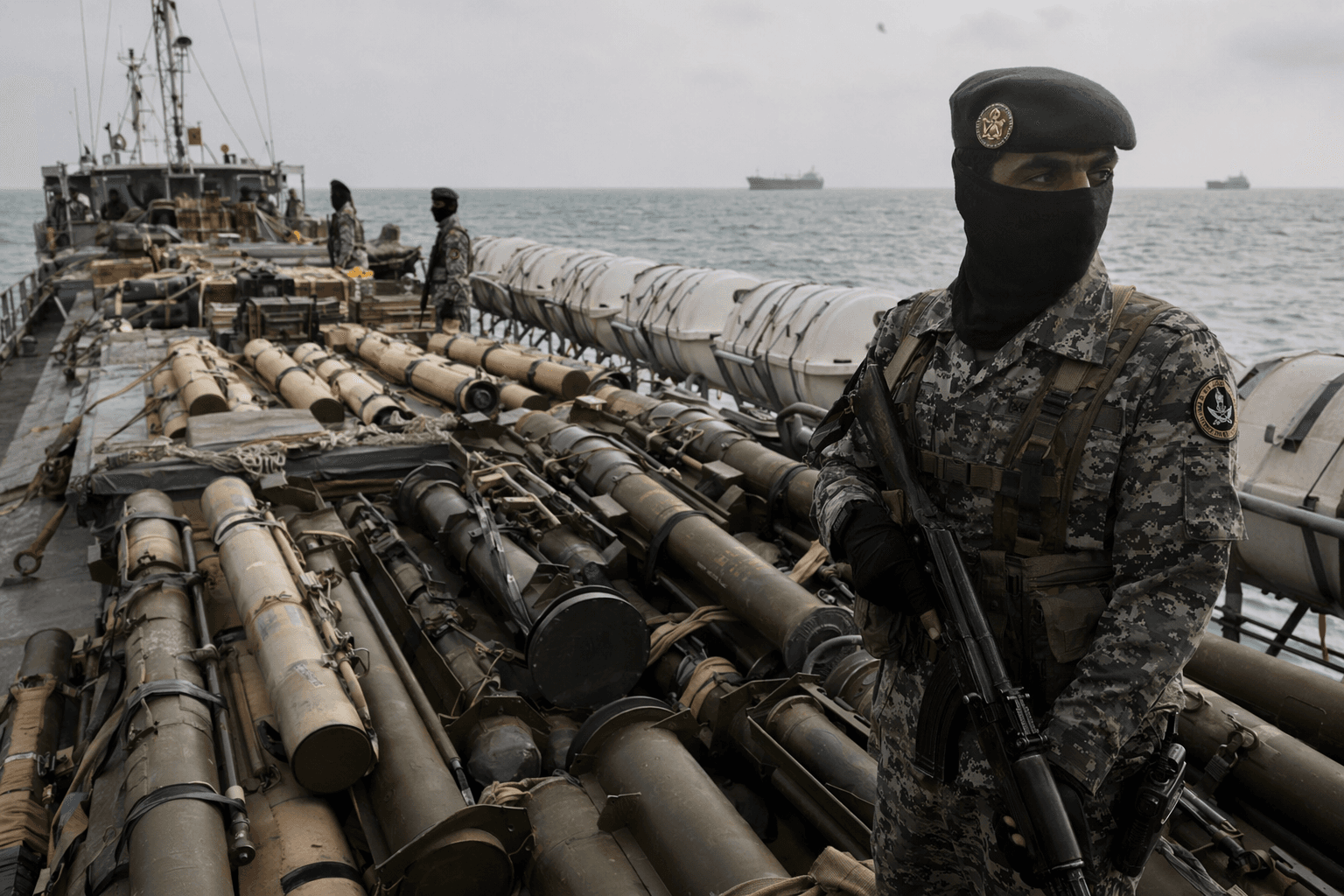
The business has always depended on thin oversight, and that is part of what makes the current seizure so sensitive. In July 2023, the British government withdrew licences from MNG Maritime Ltd., a floating-armoury operator, leaving about 3,000 weapons in limbo and forcing private security contractors that relied on the storage vessels to find somewhere else to keep their arsenal. The episode underscored how much weaponry can sit offshore in legal and logistical limbo long after the piracy crisis that created the industry has eased.
The wider strategic risk is even larger. The Gulf of Oman feeds directly into the Strait of Hormuz, which the United Nations describes as a strategically important shipping route and a critical waterway for the global economy, and on 7 May 2026 Bahrain and the United States circulated a draft Security Council resolution calling on Iran to stop attacks and threats against merchant and commercial vessels there. Iran has repeatedly seized or interdicted ships in the Gulf and Strait of Hormuz, often presenting the actions as law enforcement against sanctions breaches or fuel smuggling, which means a floating armoury falling under Iranian control would be more than a shipping incident: it would be a transfer of private firepower into one of the world’s most fragile maritime theatres.
This article was produced by Prism’s automated news system from verified source data, official records, and press releases, then run through automated quality and moderation checks before publishing. The system is built and supervised by the people who set the standards it runs under. Read our full AI policy.
Did this article answer your question?