Iran stages choreographed funeral for Khamenei, symbols signal power and grief
Black banners, a keffiyeh and portraits of Mojtaba Khamenei turned Khamenei’s funeral into a message of succession and defiance.
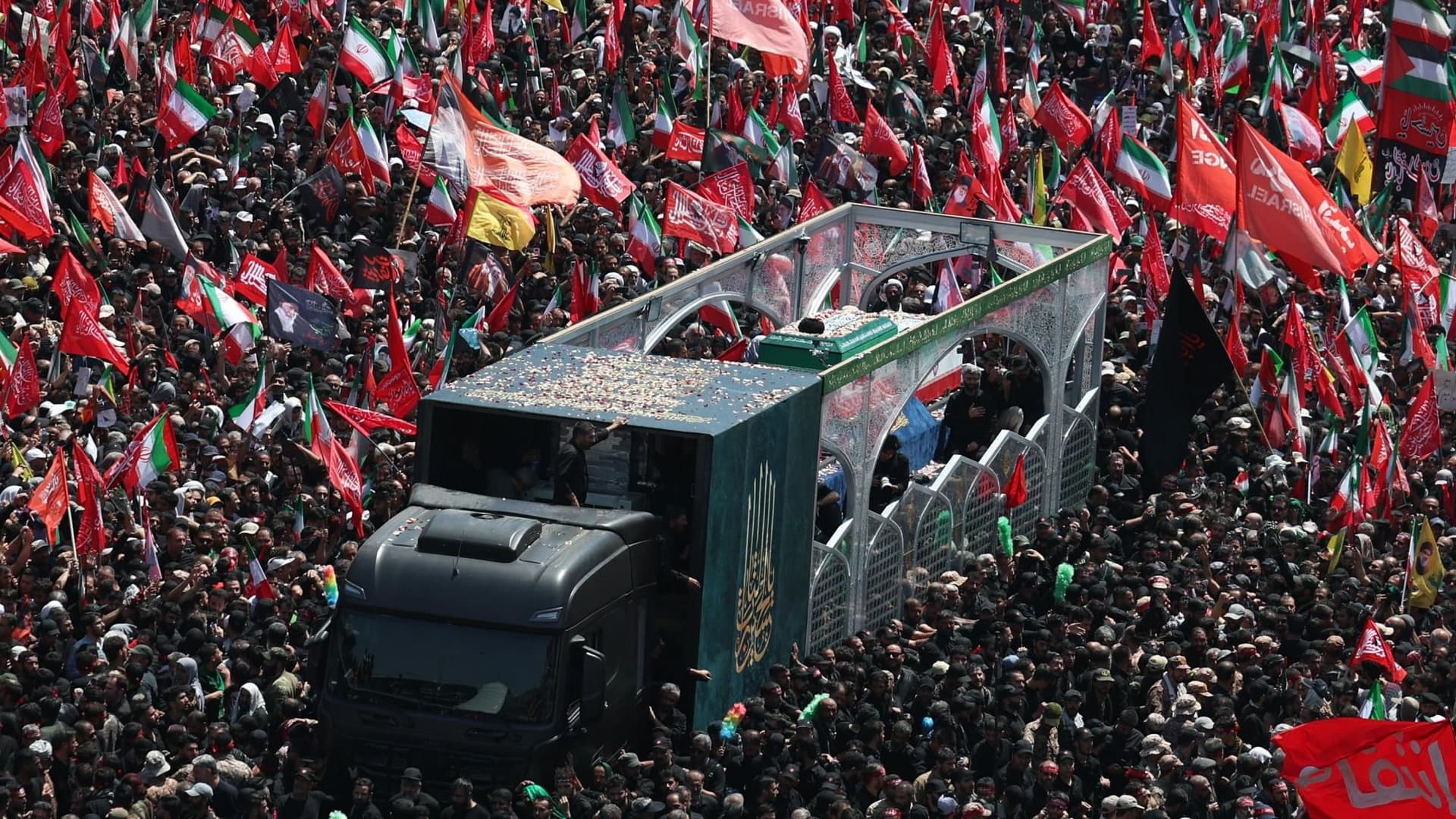
Iran turned Ayatollah Ali Khamenei’s funeral into a tightly managed political display, using black mourning cloth, the national flag and portraits of his son and successor Mojtaba Khamenei to signal continuity after the supreme leader’s death. The public ceremonies began in Tehran on July 3 and moved into a major procession on July 4, part of a six-day sequence that is set to end with burial in Mashhad on July 9.
Khamenei, who led Iran from 1989 until his death at 86, was killed in a U.S.-Israeli airstrike on February 28, 2026, in the opening moments of the war with the United States and Israel. The funeral was not only for him. Coffins for family members killed in the same strike, including his daughter, son-in-law, daughter-in-law and a young granddaughter, were also displayed, widening the mourning into a public account of loss and retaliation.
The visual language was unmistakable. Mourners dressed in black waved the red, white and green Iranian flag and carried black mourning banners through Tehran. Portraits of Khamenei and Mojtaba Khamenei were held aloft, pushing the succession question into the open even as the state presented the event as an expression of unity. In some scenes, a black turban sat on the coffin, a clerical symbol of descent from the Prophet Muhammad, alongside a Palestinian keffiyeh that underscored Iran’s claim to lead the regional cause against Israel.
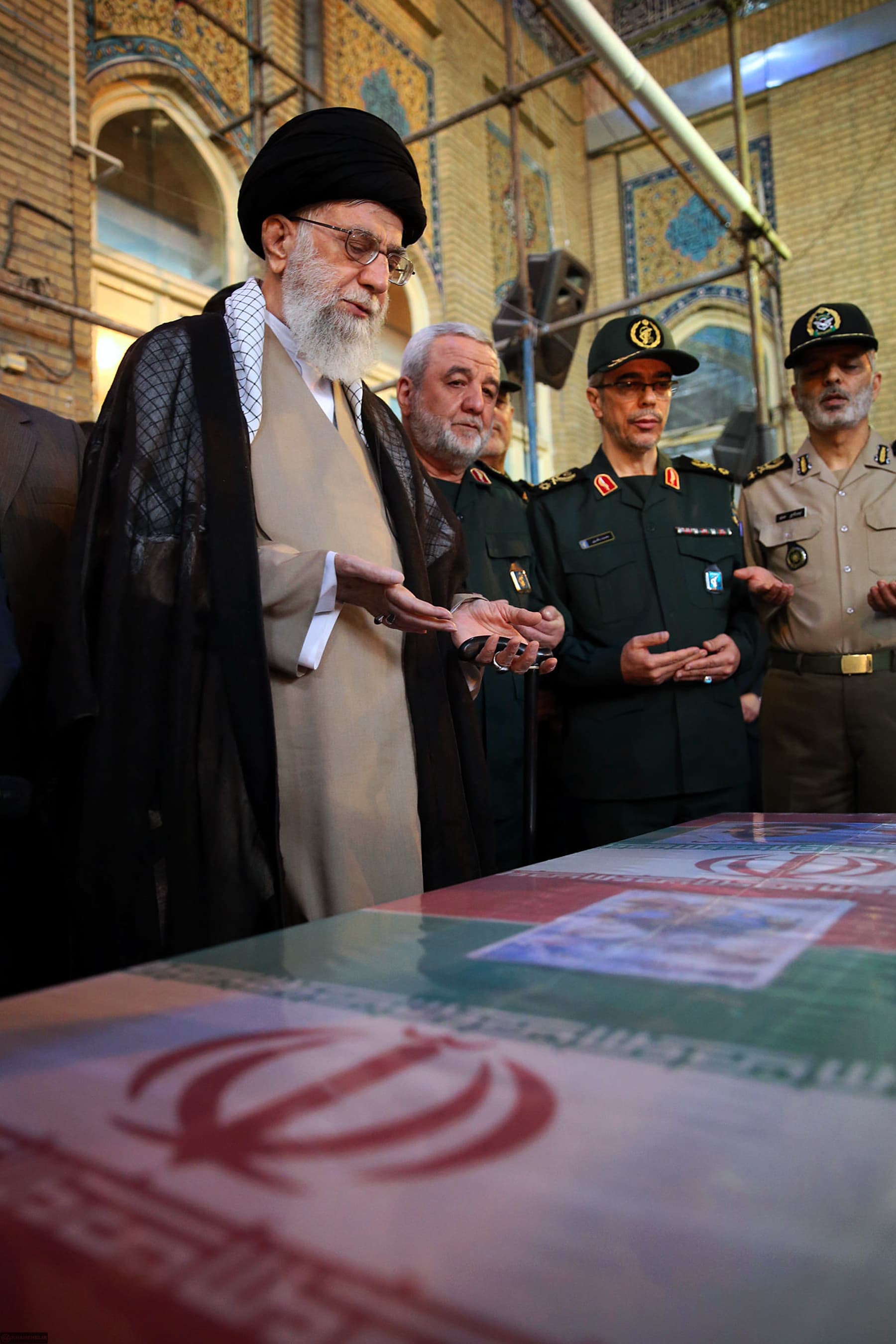
Crowds beat their chests in Shiite mourning rituals and chanted slogans that fused grief with confrontation. “Death to America” rang out alongside other anti-U.S. and anti-Israel messages, while religious eulogies and Qur’an readings gave the procession the cadence of both a funeral and a rally. The choreography framed mourning as loyalty to the Islamic Republic, not just to one man.
The state’s message was reinforced by the presence of senior Iranian officials and foreign dignitaries and by heavy security around the procession, with authorities warning of possible attacks. In a country still under strain from domestic divisions, economic hardship and regional tension, the funeral projected a system insisting that Khamenei’s death would not break its chain of authority, nor weaken the symbolism that has sustained it for more than three decades.
This article was produced by Prism’s automated news system from verified source data, official records, and press releases, then run through automated quality and moderation checks before publishing. The system is built and supervised by the people who set the standards it runs under. Read our full AI policy.
Did this article answer your question?