Japan expands jet-fuel export ban to block Russia loopholes
Japan said its jet-fuel ban reaches third-country shipments and transfers at sea, closing a 200,000-barrel loophole aimed at Russia.
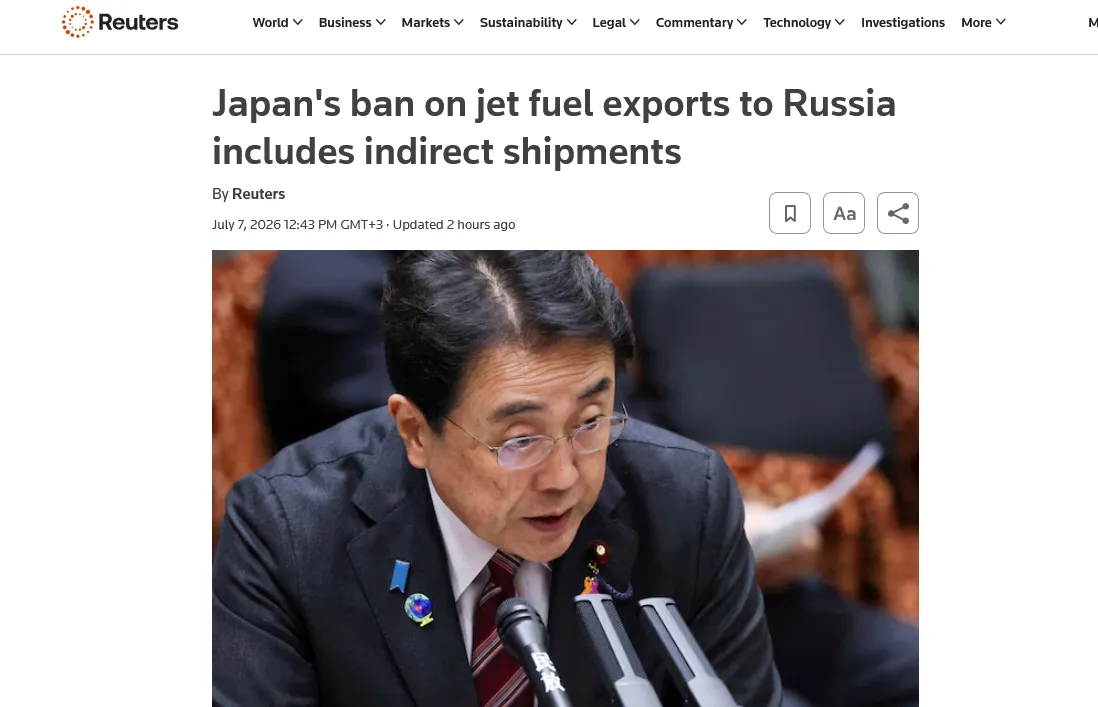
Japan’s trade minister Ryosei Akazawa said Tuesday that Tokyo’s ban on jet-fuel exports to Russia also covers shipments routed through third countries and cargo transferred at sea, closing off a channel that traders could use to move fuel indirectly into Russian hands.
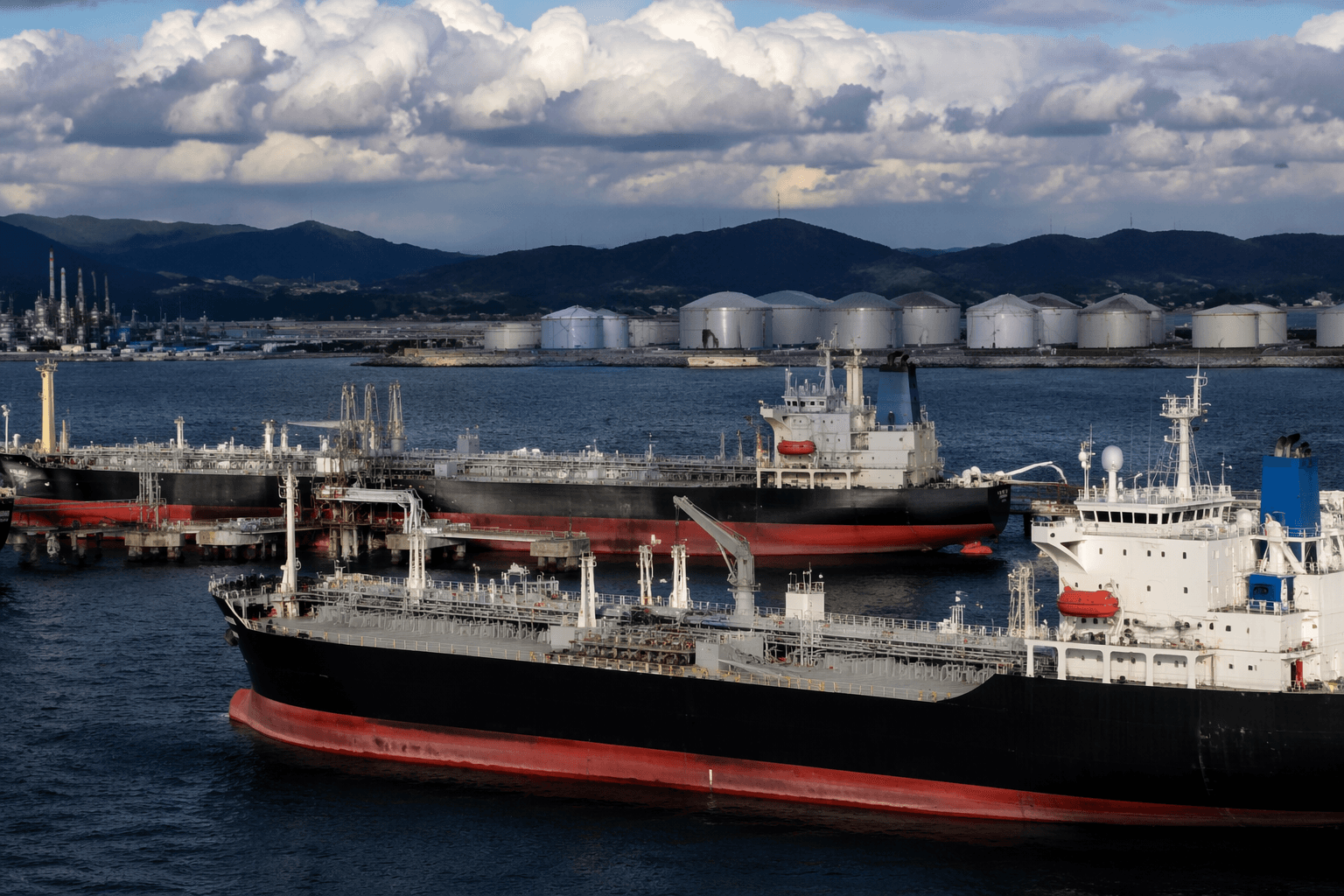
The warning was sharpened by a cargo of at least 200,000 barrels of jet fuel expected to load from Chiba in the first half of July, then move first to South Korea and possibly be transferred ship-to-ship off Yeosu before continuing on to Russia. That route showed how a shipment can leave Japan in apparent compliance with export rules, then be reloaded or reflagged beyond Japan’s reach.
Akazawa said Japan had banned exports of a range of items to Russia as part of sanctions coordinated with the G7 and the wider international community, and that jet fuel was included in that regime. He said the Ministry of Economy, Trade and Industry was trying to reduce sanctions evasion by raising awareness in industry and by warning and sharing information with domestic and foreign authorities.
The practical significance is larger than the ban itself. By explicitly covering third-country transfers and ship-to-ship moves, Tokyo is signaling that enforcement will not stop at the point a vessel leaves Japanese waters. For shipping firms, commodity traders and marine insurers, that raises the compliance burden around any cargo with a Russia connection, especially where end-user documentation, transshipment points and vessel handoffs can obscure the final destination.
The timing also matters. Russia has been under pressure from Ukrainian attacks on its energy infrastructure, and its refining system has faced disruption as fuel shortages deepen. That creates an incentive for traders to search for indirect routes to move aviation fuel into the country, even as sanctions remain in force.
Akazawa framed Japan’s position as part of a wider effort to keep pressure on Moscow while limiting evasive trade networks. He said, “We will continue to implement strict export controls in collaboration with other countries.” The message from Tokyo was that the rules are meant to bite not only on direct sales, but on the evasive shipping chains that have kept sanctioned goods moving.
This article was produced by Prism’s automated news system from verified source data, official records, and press releases, then run through automated quality and moderation checks before publishing. The system is built and supervised by the people who set the standards it runs under. Read our full AI policy.
Did this article answer your question?