Iran stages live-fire drills in Strait of Hormuz as U.S. warships converge
Iran announced two days of live-fire naval exercises in the Strait of Hormuz, prompting stern U.S. warnings and the reported movement of a U.S. carrier strike group.

Iran announced a two-day live-fire naval exercise in the Strait of Hormuz set for Sunday and Monday, warning mariners by radio that “naval shooting” would take place and saying live ammunition would be used. The notice’s coordinates, as reported by regional and international officials, put the firing zone potentially inside the traffic separation scheme that channels commercial shipping through the waterway, raising immediate concerns about safety and the flow of global energy supplies.
The Strait of Hormuz is one of the world’s most sensitive chokepoints: roughly a fifth of all traded oil passes through the narrow corridor between Iran and Oman, and CENTCOM has noted that more than 100 merchant vessels traverse the strait each day. The traffic separation scheme in question is a 3.2-kilometre (2-mile) wide, two-lane system in which ships entering the Persian Gulf keep to the north lane and those departing to the Gulf of Oman keep to the south. Reports said the drill’s coordinates placed the northern lane within the exercise area.
The exercises were expected to involve Iran’s Islamic Revolutionary Guard Corps and its fast-attack naval units, which the U.S. military has said routinely have tense encounters with American warships in the corridor. Tehran’s security establishment framed the exercise as a defensive measure. Ali Shamkhani, a top security adviser to the supreme leader, said Iran would give an “effective deterrent” response to any act of aggression, according to regional outlets. Iran’s foreign minister, Abbas Araghchi, also posted on X late Saturday, mocking the U.S. demand for restraint. Iranian President Masoud Pezeshkian linked the drills to broader tensions, saying that “Trump, Netanyahu, and Europe have escalated tensions in the protests, thereby provoking the people.”
U.S. Central Command issued a forceful warning early Saturday, telling Tehran it “will not tolerate any 'unsafe and unprofessional behaviour' near U.S. forces, regional partners or commercial vessels.” CENTCOM listed specific actions it said would be intolerable, including “overflight of U.S. military vessels engaged in flight operations; low-altitude or armed overflight of U.S. military assets when intentions are unclear; high-speed boat approaches on a collision course with U.S. military vessels; or weapons trained at U.S. forces.” The command also stressed that the exercise “must not impair freedom of navigation and international commercial shipping in the important strait,” and it reiterated that the United States “has the most highly trained and lethal force in the world.”
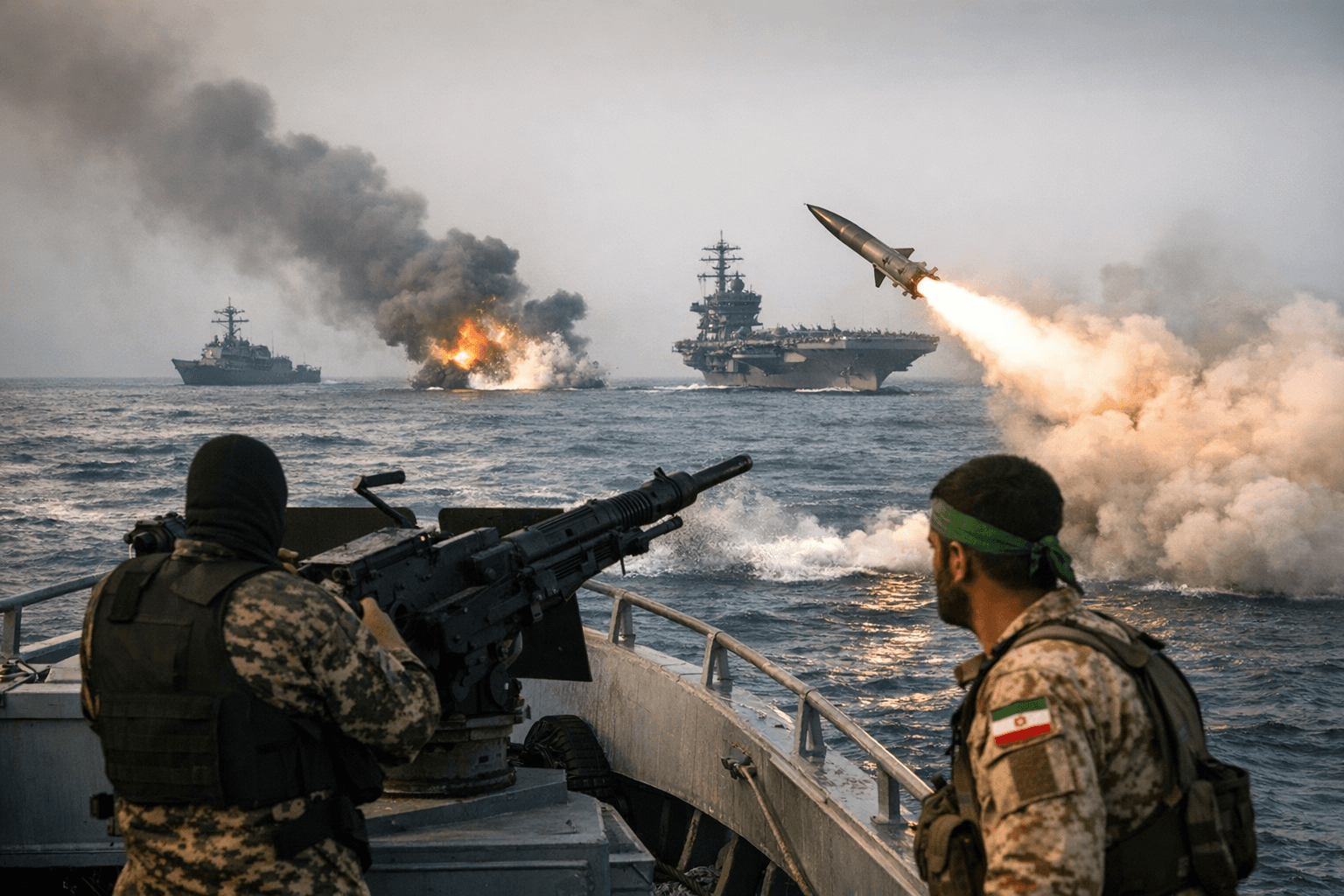
The warning came amid reports that President Donald Trump announced the deployment of a “massive Armada” led by the aircraft carrier USS Abraham Lincoln toward the region. U.S. Fifth Fleet headquarters, based in Bahrain and overseen by CENTCOM, is the operational command in the area; officials have emphasized that deconfliction and professional conduct at sea are essential to avoid collisions, miscalculation or a wider escalation.
Maritime lawyers and shipping insurers have long warned that live-fire drills near the traffic separation scheme pose acute risks to commercial traffic and to global energy markets. With the strait carrying daily vessel traffic and a substantial share of traded oil, even short disruptions or close encounters can ripple through markets and raise diplomatic pressure on Gulf states, Western capitals and shipping authorities.
Diplomats and naval commanders face immediate tasks: clarify the precise coordinates and times of the firing, confirm which Iranian force is conducting the exercise, and ensure communications channels remain open so commercial vessels and regional navies can avoid dangerous interactions. Absent rapid deconfliction, the combination of live ammunition, crowded shipping lanes and high political rhetoric increases the chance that a single misstep could produce an international crisis.
This article was produced by Prism’s automated news system from verified source data, official records, and press releases, then run through automated quality and moderation checks before publishing. The system is built and supervised by the people who set the standards it runs under. Read our full AI policy.
Did this article answer your question?


