Iran stages massive funeral as Khamenei succession remains unclear
Mojtaba Khamenei stayed out of sight as Tehran turned Ali Khamenei’s funeral into a six-day show of unity, even as succession questions deepened.

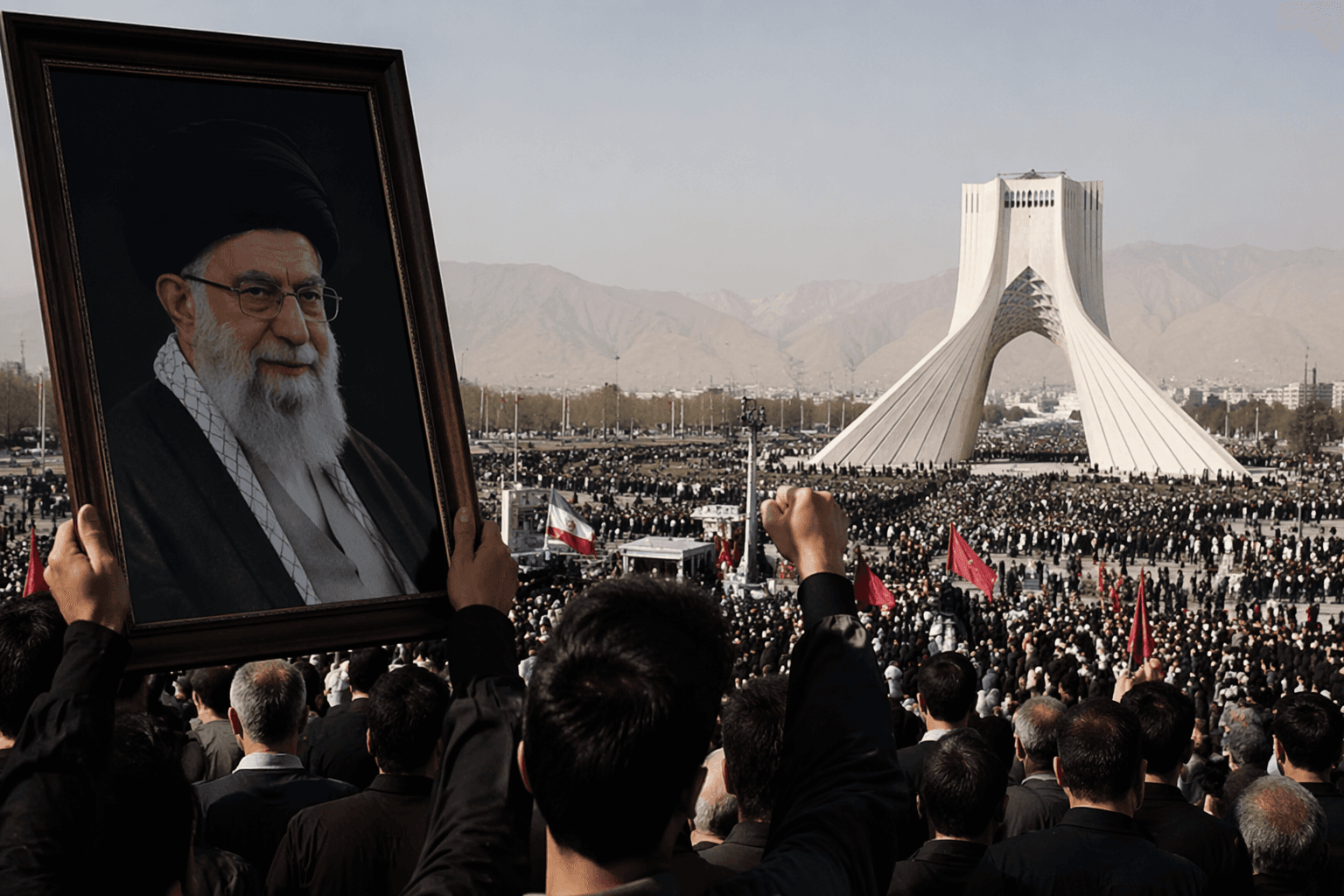
Iranian leaders prayed over the coffins of Ali Khamenei and family members in Tehran on the funeral’s second day, while Mojtaba Khamenei remained out of public view and the succession question sharpened. The six-day procession began in Tehran on July 4 and is set to end with burial in Mashhad on July 9, after Khamenei was killed in U.S. and Israeli airstrikes on Feb. 28, 2026, at the start of the war.
Public rites were scheduled through Tehran, Qom, Najaf and Karbala, linking the mourning to Shiite holy sites in Iran and Iraq. Iranian clerics said the funeral shows the Islamic Republic remains intact and its revolutionary fervor still burns strong. Ayatollah Mohammad Saidi, the Friday prayer leader in Qom, said on July 3 that the funeral was meant to be “another referendum for the Islamic Republic.”
Mojtaba Khamenei has not appeared publicly at the funeral, and posters across Tehran have portrayed him as a future leader. He also did not attend his wife’s funeral last week. The first major leadership change since 1989 came when Ruhollah Khomeini died and Ali Khamenei took over.
A performer at the ceremony called for the death of U.S. leaders, and Iranian commanders warned the United States and Israel against any attack during the mourning period. Crowd estimates have ranged from tens of thousands in Tehran on the opening day to as many as 20 million people over the course of the rites.
This article was produced by Prism’s automated news system from verified source data, official records, and press releases, then run through automated quality and moderation checks before publishing. The system is built and supervised by the people who set the standards it runs under. Read our full AI policy.
Did this article answer your question?