Iran turns Strait of Hormuz transit into a gatekept bargaining corridor
A 330-meter tanker bound for Vietnam took two days to clear Hormuz after IRGC speedboats intervened, showing Iran’s corridor control is becoming routine.
Iran is turning the Strait of Hormuz into a gatekept corridor, not by shutting it outright, but by layering island checkpoints, selective permissions and stop-and-search pressure over one of the world’s most important oil lanes. The latest example was the Agios Fanourios I, a 330-meter Malta-flagged tanker carrying Iraqi crude to Vietnam that sat off Dubai since late April before departing on May 10 after a direct deal overseen by Iraqi Prime Minister Mohammed Shia al-Sudani.
Even then, the ship did not move cleanly. After passing Hormuz Island, Islamic Revolutionary Guard Corps speedboats stopped it as Iranian authorities said they suspected smuggled cargo and wanted to inspect the vessel. What normally takes about five hours stretched into a two-day ordeal, according to the account. The tanker’s manager said no payment was made for passage. Its transponder also went dark at points during the voyage, adding to the opacity that now shadows some crossings through the strait. Shipping watchers in Vietnam, Iraq and Greece followed the trip closely because the passage has become a test case for what Iran can extract without ever formally closing the waterway.
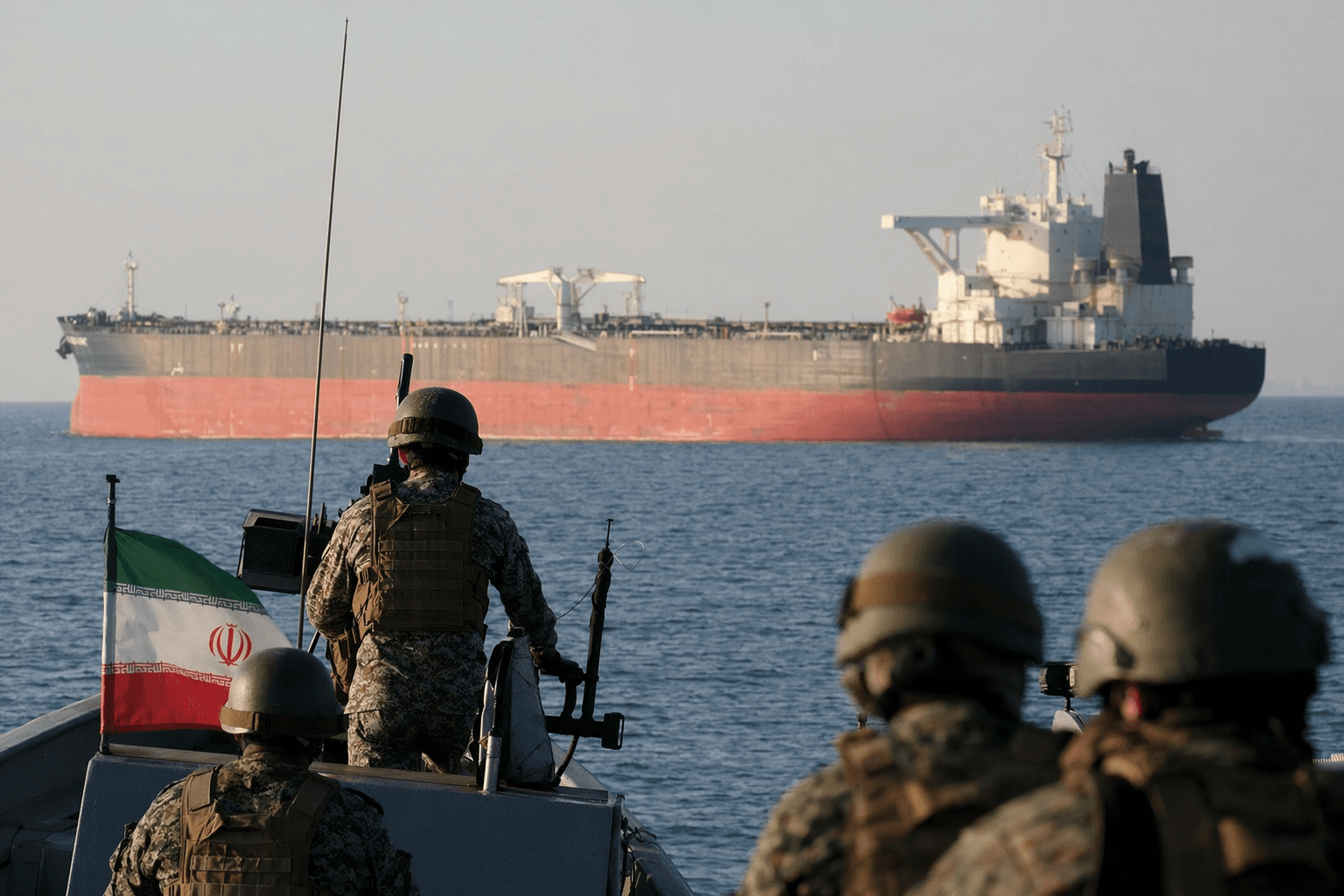
That pressure matters because Hormuz is not just another shipping lane. The International Energy Agency says it is the primary export route for oil from Saudi Arabia, the United Arab Emirates, Kuwait, Qatar, Iraq, Bahrain and Iran. The U.S. Energy Information Administration said oil flow through the strait averaged 21 million barrels per day in 2022, equal to about 21% of global petroleum liquids consumption. As Tehran leans on inspections, routing rules and intermittent detentions, it is raising the cost and risk of moving crude, fuel and other cargo through a chokepoint that the world cannot easily bypass.
The danger is not only bureaucratic. UK Maritime Trade Operations said it received 49 reports of incidents affecting vessels in the Arabian Gulf, the Strait of Hormuz and the Gulf of Oman between February 28 and May 14, including 27 attack reports, 20 suspicious-activity reports and 2 hijack reports. Around the same period, another ship nearby was hit by a projectile and caught fire. On May 21, the U.S. State Department said the United States and Gulf partners had drafted a U.N. Security Council resolution to defend freedom of navigation in Hormuz, while International Maritime Organization Secretary-General Arsenio Dominguez warned on April 24 that transit safety was in serious doubt and urged de-escalation. The pattern is familiar: Iran seized the British-flagged Stena Impero in July 2019, and the latest tanker ordeal shows how the same leverage playbook is now being normalized into daily maritime bargaining.
Know something we missed? Have a correction or additional information?
Submit a Tip