Iran war strikes hit civilians, hospitals, and infrastructure across provinces
Residential blocks in Tehran, a hospital in western Iran and broadcasting offices were hit as the 12-day war spread to 28 provinces and left thousands dead or wounded.
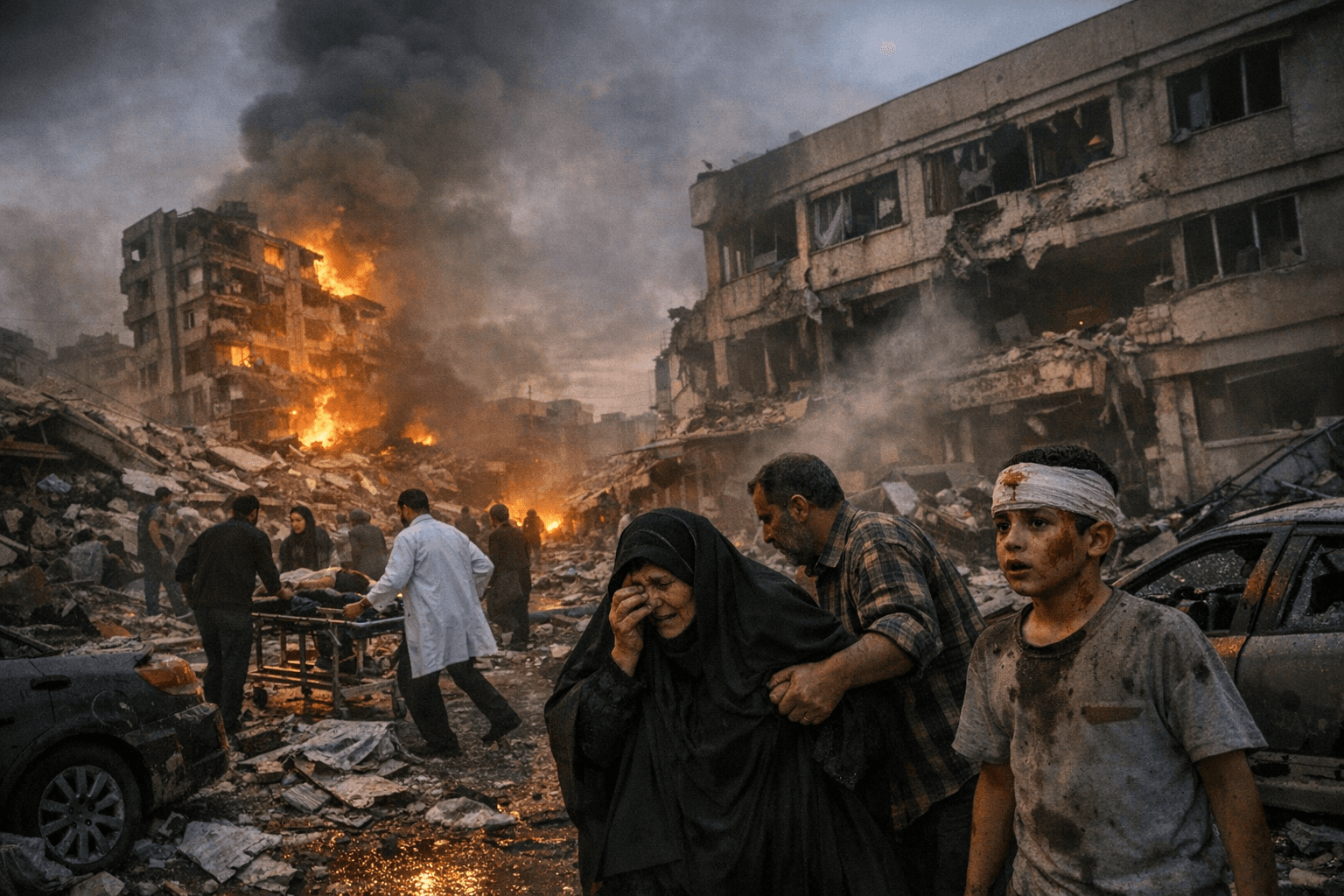
Civilian neighborhoods, hospitals and broadcasting infrastructure were caught in the fighting as Israel’s strikes on Iran widened far beyond declared military targets. In Tehran’s District 3, a densely populated area of about 300,000 people, attacks threatened homes and streets where families were living through the bombardment. Iran Wire reported that Tehran’s governor said 120 residential units were completely destroyed in the capital and more than 500 others were seriously damaged.
The human cost remained hard to pin down, but every count pointed to a broad toll. The House of Commons Library said Iran’s Health Ministry reported around 1,062 people killed as of 22 July 2025. Human Rights Activists News Agency said the 12-day conflict caused at least 5,665 casualties across Iran, including 1,190 killed and 4,475 injured, and said the strikes affected 28 provinces. The Center for Human Rights in Iran said at least 224 people were killed by 15 June 2025, most of them civilians, including 45 women and children, underscoring how quickly the violence cut into ordinary life.
The attacks also reached institutions meant to keep people informed and treated. Reports said the Islamic Republic of Iran Broadcasting headquarters was struck, and a hospital in western Iran was hit as well, highlighting how the conflict endangered emergency services and media infrastructure at the same time. That pattern made the war less a clash of military installations than a campaign that rippled through apartment blocks, clinics and public services.
The wider disruption deepened the public health strain. HRANA said the war disrupted internet access, banking services, public transportation and medical capacity, leaving families with fewer ways to communicate, move money or reach care. Iran Wire estimated the fighting cost Iran billions of dollars, including about $1.4 billion in lost oil revenue after exports fell 94% during the war, a shock that compounded the damage to households already facing destroyed homes and interrupted services.
The conflict began on 13 June 2025, when Israel said it was striking Iran’s nuclear program, ballistic missile sites and energy facilities. The United States joined the attacks on 22 June 2025, and the ceasefire announced by Donald Trump took effect on 24 June 2025. Even after the guns fell quiet, the scale of destruction remained contested and the damage to Iran’s nuclear programme was still being assessed by the International Atomic Energy Agency and U.S. intelligence, while the civilian toll was already written into ruined homes, strained hospitals and a battered social fabric.
This article was produced by Prism’s automated news system from verified source data, official records, and press releases, then run through automated quality and moderation checks before publishing. The system is built and supervised by the people who set the standards it runs under. Read our full AI policy.
Did this article answer your question?


