Iran Warns of Devastating Retaliation as Hormuz Tensions Escalate, Haifa Attacked
Iran threatened "much more devastating" retaliation after Trump set a Tuesday 8 p.m. deadline to reopen the Strait of Hormuz, as an Iranian missile killed 2 in Haifa.
Iran threatened sweeping retaliation Monday after President Donald Trump set a hard deadline of Tuesday at 8 p.m. Eastern Time for Tehran to reopen the Strait of Hormuz, or face strikes on power plants and bridges across the country. Iranian officials flatly rejected the ultimatum, warning that the region itself was at risk of being consumed by the escalation.
Trump issued his deadline in an expletive-laden social media post, demanding Iran reopen the vital waterway by Tuesday evening or face what he described as "Power Plant Day, and Bridge Day, all wrapped up in one." Iran responded defiantly, saying the Strait of Hormuz will remain blocked until it receives compensation for war damages. Iranian officials condemned Trump's threats as "incitement to war crimes" and warned of "much more devastating" retaliation if civilian targets are struck.
Trump has issued such deadlines before but extended them when mediators have claimed progress toward a ceasefire, in a conflict that has already killed thousands and shaken global markets over more than five weeks of fighting. The Hormuz strait carries a critical share of global oil supply, and its continued blockade has spiked fuel prices worldwide.
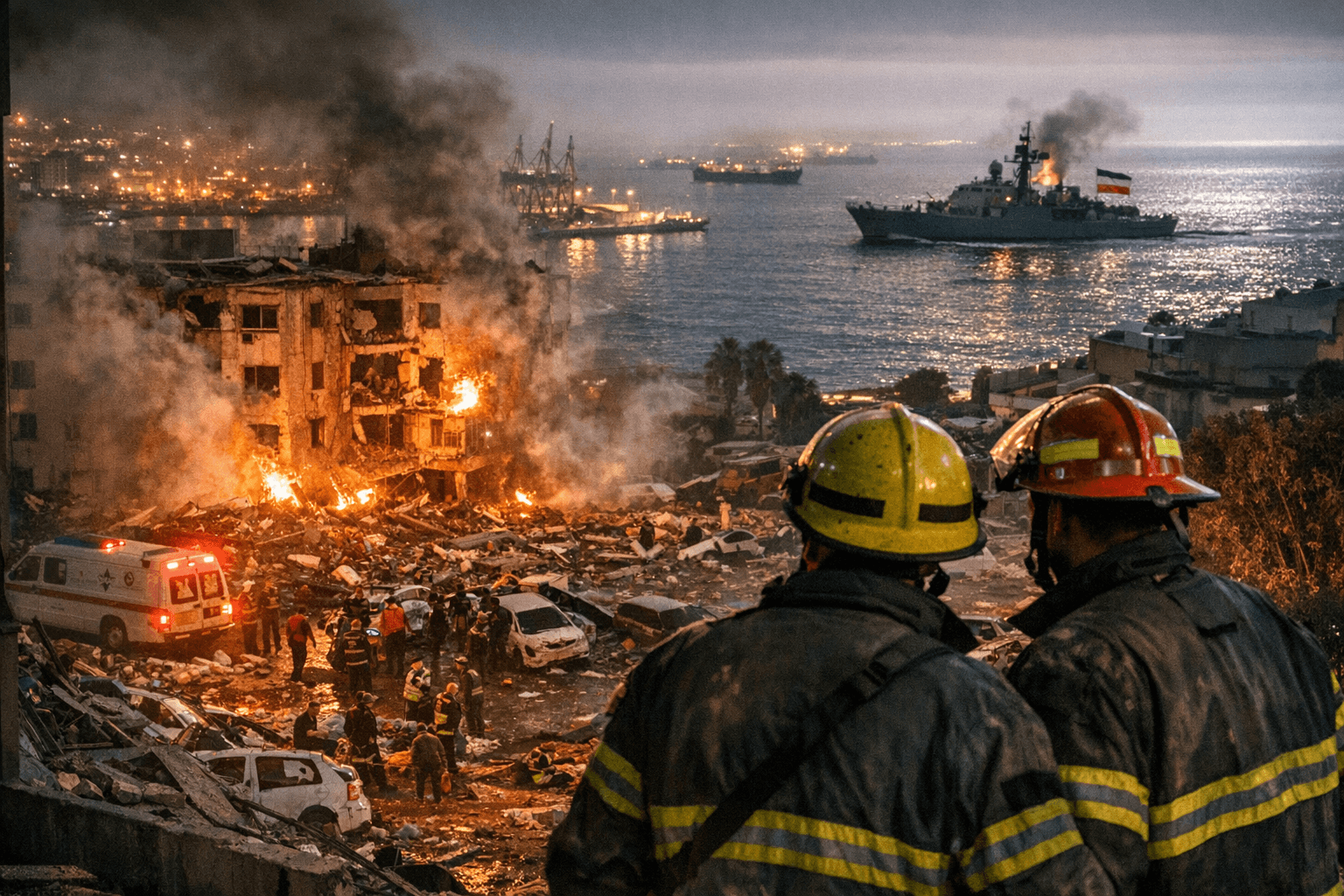
An Iranian ballistic missile struck a six-story residential building in the Israeli city of Haifa, killing two people, as the conflict extended its reach deep into Israeli civilian territory. Rescue teams worked for hours to free four additional people feared trapped under the rubble, with rescue unit commander Yair Pinto directing search efforts toward a known area of the building.
The rescue of a downed U.S. airman added another dimension to the crisis. A U.S. Air Force weapons system officer, whose F-15E fighter jet was shot down over Iran on Friday, evaded capture in the mountains for more than 24 hours before being recovered by U.S. special forces in a CIA-coordinated operation inside Iranian territory. Prime Minister Benjamin Netanyahu said he spoke with Trump to congratulate him on the "perfectly executed American mission," writing that "Israel could contribute to saving a brave American warrior" and that the two countries' cooperation "on and off the battlefield is unprecedented."
The IRGC, meanwhile, signaled it was planning what it described as a "new Persian Gulf order" in response to Trump's Hormuz pressure, a phrase suggesting Tehran views the standoff not as a negotiating concession but as a redefinition of regional control. Iranian officials called Trump's threats a "dangerous game" and warned that his actions risked setting the entire region ablaze.
With Trump's Tuesday deadline now hours away and Iran showing no movement toward reopening the strait, the next phase of the conflict may hinge on whether ongoing mediated talks, described by Israeli political sources as unlikely to succeed, can produce even a temporary pause before the deadline expires.
This article was produced by Prism’s automated news system from verified source data, official records, and press releases, then run through automated quality and moderation checks before publishing. The system is built and supervised by the people who set the standards it runs under. Read our full AI policy.
Know something we missed? Have a correction or additional information?
Submit a Tip