Iranian strike hits Kuwait airport, tests fragile U.S.-Iran ceasefire
An Iranian drone and missile strike hit Kuwait International Airport’s Terminal 1, killing one person and injuring 63, as Gulf aviation again came under fire.

An Iranian drone and missile attack struck Kuwait International Airport’s Terminal 1 and left one person dead and 63 injured, forcing Kuwait to suspend commercial flights, divert arriving planes and then shift some Kuwait Airways operations to Terminal 4. The dead included an Indian national, and Kuwaiti officials said the assault also damaged civilian infrastructure and diplomatic missions.
The strike on Wednesday hit one of the Gulf’s most sensitive travel nodes at a moment when regional airspace was already being stressed by repeated attacks. Kuwait said the damage at Terminal 1 was severe. The Kuwait Public Authority for Civil Aviation and Kuwait Airways scrambled to keep operations moving, but the attack still cut across a hub that links passenger travel, cargo movement and emergency routing through Kuwait City.
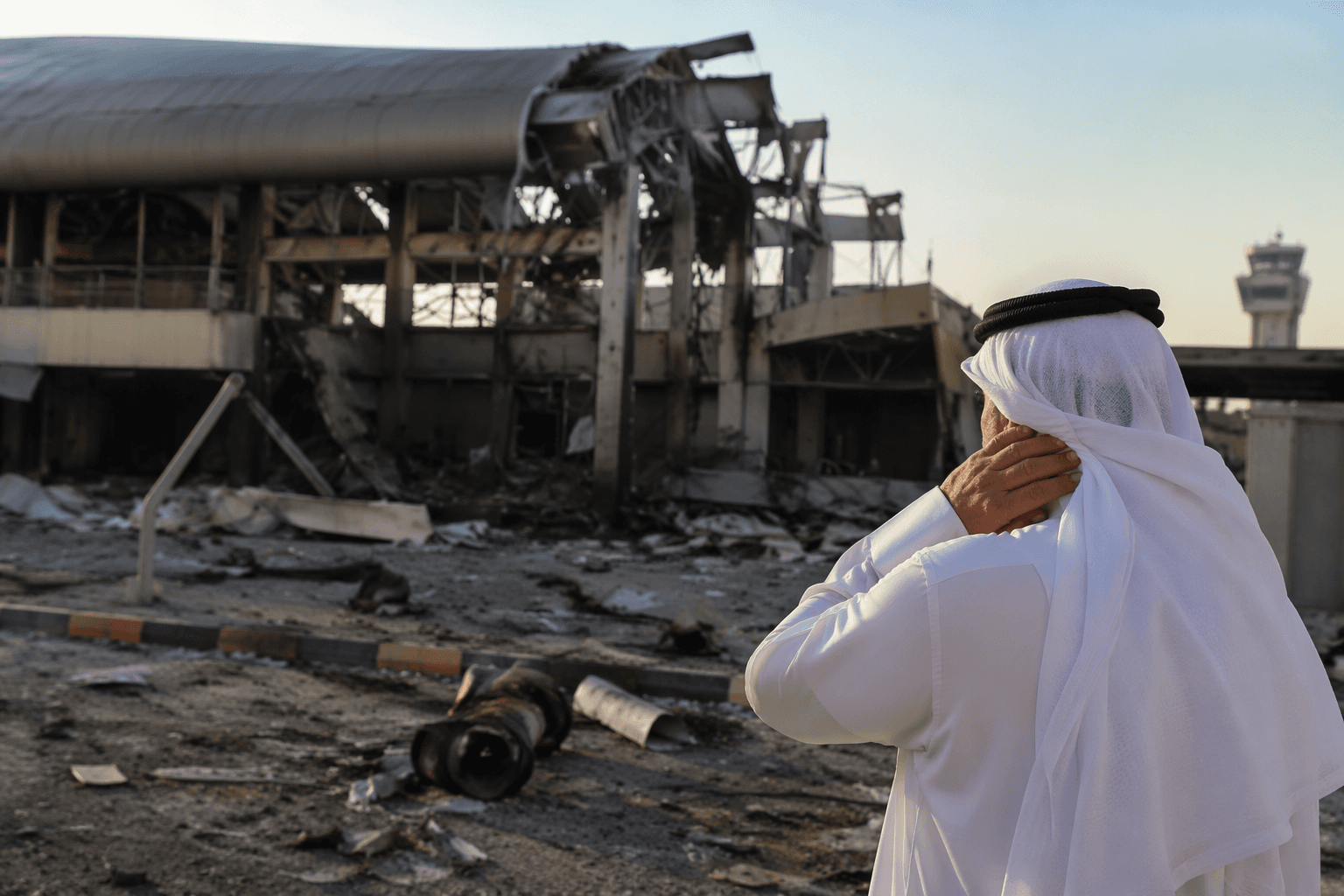
The assault landed as the fragile U.S.-Iran ceasefire announced on April 8 was already under strain, and Reuters described the airport strike as one of the most severe tests yet of the truce. The earlier escalation had already sent shock waves through airport and airport-adjacent facilities in the United Arab Emirates, Kuwait, Bahrain and Iraq, showing how quickly civilian infrastructure can be pulled into a wider conflict that does not respect national borders or commercial schedules.
U.S. Central Command said Iranian missiles fired toward Kuwait fell short or broke apart in flight, while drones targeting American forces in Kuwait failed to hit their intended targets. CENTCOM also said U.S. and Bahraini forces intercepted three missiles aimed at Bahrain. In its account of the fighting, CENTCOM said U.S. forces carried out self-defense strikes on Iran’s Qeshm Island, in the Strait of Hormuz area, targeting a military ground control station.
Iranian officials and the Revolutionary Guard said the retaliation was in response to earlier U.S. strikes. The geography of the conflict matters: airports in Kuwait, Bahrain, Iraq, the UAE and Iran have all been touched by the violence, and some of those sites serve both civilian and military functions. That overlap raises the stakes internationally, because a strike that disables a passenger terminal can just as easily disrupt evacuations, trade routes and the movement of aid.
Kuwait International Airport reopened on June 1 before closing again after the latest attack, underscoring how quickly normal life can be reversed when mixed civilian-military infrastructure becomes a target. For passengers, airport workers and nearby communities, the latest strike turned a transit point into another front line.
This article was produced by Prism’s automated news system from verified source data, official records, and press releases, then run through automated quality and moderation checks before publishing. The system is built and supervised by the people who set the standards it runs under. Read our full AI policy.
Know something we missed? Have a correction or additional information?
Submit a Tip