Iranians Feel Relief After War Pause, but Fear Government Crackdown
Relief washed over Tehran when bombs stopped falling, but rights groups warn Iran's government may now turn its attention inward toward the dissidents who spoke out.
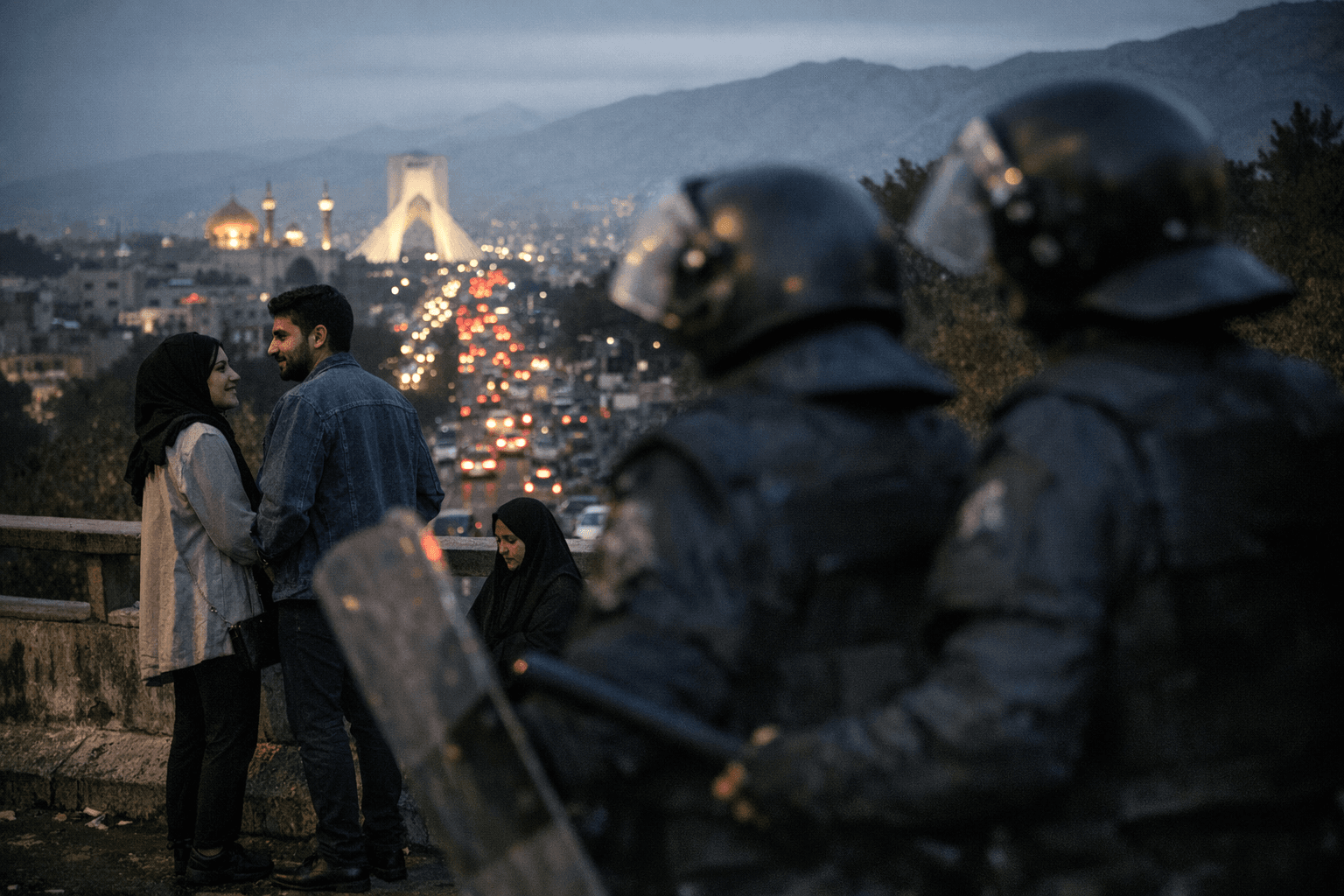
When traffic began returning to Tehran's streets in daylight on Wednesday, it was the first visible sign that the mental strain of living under daily bombardment had partially lifted across Iran. The two-week ceasefire brought an exhale. But for many Iranians, the silence carried its own dread.
The ceasefire, mediated by Pakistan, halted 40 days of U.S.-Israeli attacks on Iran that had pushed the region toward wider war. President Donald Trump agreed to suspend planned attacks on Iranian infrastructure for two weeks, backing away from threats to destroy Iran's "whole civilization." Iranian President Masoud Pezeshkian declared the pause "achieved through acceptance of Iran's core principles," framing it as a victory for the Islamic Republic.
The ordinary costs of six weeks of war, however, were not resolved by any ceasefire announcement. Residents of Tehran described rising prices, in some cases around 40 percent since the war began, and a reluctance to buy anything other than necessities. One art gallery owner in the capital said her business was "effectively dead." Infrastructure damage from the weeks of airstrikes resulted in energy shortages and could take years to repair.
The deeper anxiety, though, is political. With Iranian officials hailing the ceasefire as a triumph for the system that took power in the 1979 Islamic Revolution, rights groups fear emboldened authorities will launch a mass new domestic crackdown. A 40-year-old broker on the Tehran stock exchange, who asked not to be identified, captured the mood bluntly: "This feels like unfinished business. I think eventually it's going to be war again." He added: "They hit nuclear and missile sites and bought some time for themselves. But in reality nothing changed for the people in Iran."
Analysts who track the Islamic Republic's behavior after periods of external pressure offered little comfort. Thomas Juneau, an Iran specialist, warned that "the regime will repress them as brutally as ever," and that "the domestic crackdown will be brutal," with authorities also likely to target dissidents abroad.
That pattern was already visible before the ceasefire took effect. Iran's government detained family members and threatened to seize property of Iranian opposition figures in exile, in a crackdown on dissenting voices as the war raged on. Executions in Iran reportedly doubled in 2025 compared to 2024, with the trend rising since 2022; activists alleged the Islamic Republic used executions as a tool of political suppression.
Some Iranians described the truce as a missed opportunity for political change, one that would instead allow authorities to intensify domestic repression. During the war itself, nationwide strikes were conducted by businesses, stores, cafes, workers, online shops, and social media influencers. Protests took the form of street demonstrations, chanting slogans, car honking, lighting fires, and removing surveillance cameras.
The ceasefire's own durability remains uncertain. Israeli Prime Minister Benjamin Netanyahu explicitly stated the ceasefire does not apply to Lebanon, meaning Israeli strikes against Iran-backed Hezbollah could continue. For Iranians who survived six weeks of bombardment only to find themselves staring at a 14-day clock, the word "pause" carries more weight than the word "peace.
This article was produced by Prism’s automated news system from verified source data, official records, and press releases, then run through automated quality and moderation checks before publishing. The system is built and supervised by the people who set the standards it runs under. Read our full AI policy.
Did this article answer your question?