Iran’s foreign minister flies to Muscat as Oman hosts U.S.-Iran talks
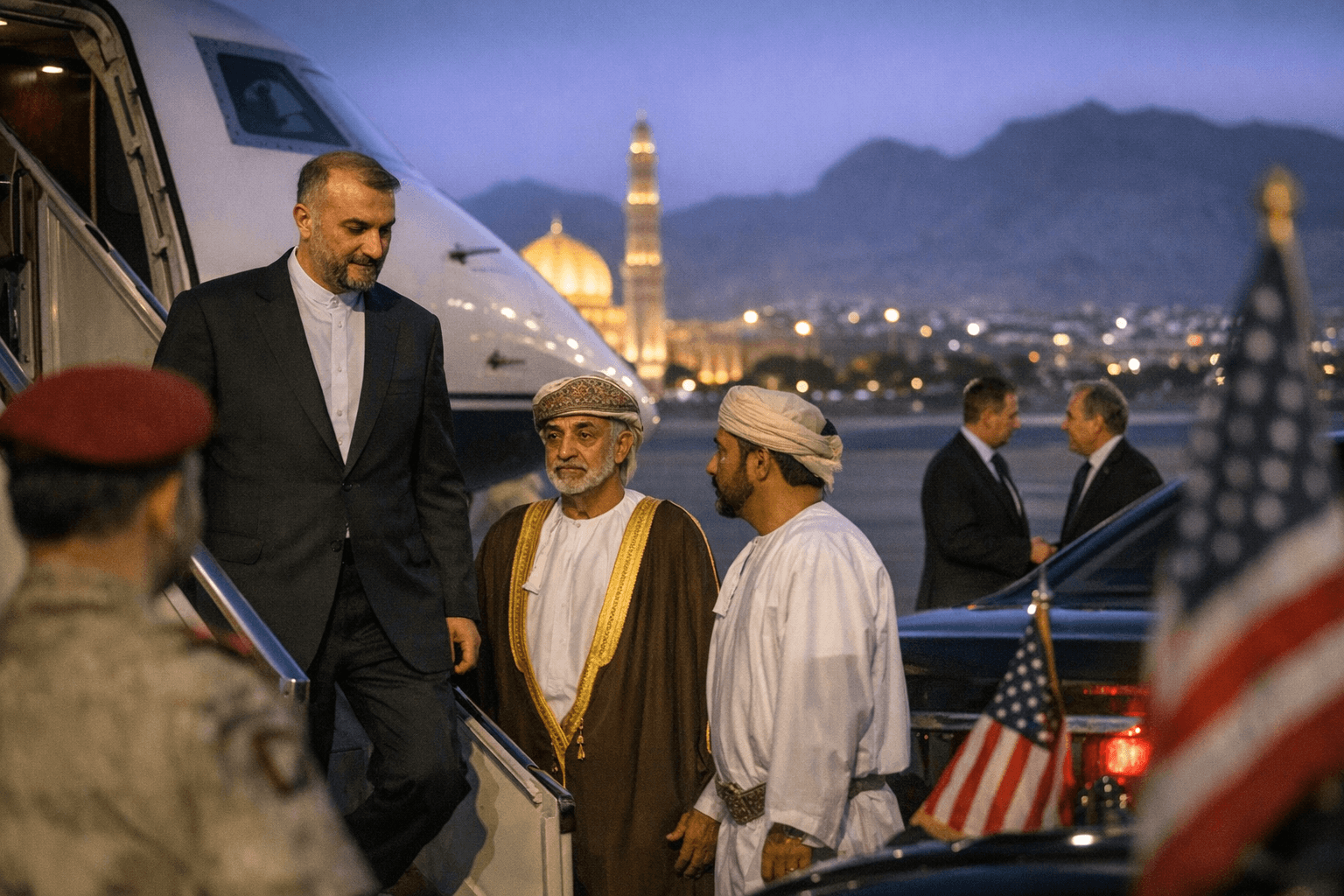
Iran’s foreign minister traveled to Muscat ahead of talks in Oman scheduled for Friday, a fragile mediation effort after last-minute disputes over venue and agenda.
Iran’s foreign minister left for Muscat on Thursday at the head of a diplomatic delegation as U.S. and Iranian negotiators prepared for face-to-face nuclear talks in Oman set to begin Friday. The talks arrive after days of uncertainty over the venue and the scope of discussions, and follow heightened regional tensions that have underscored the stakes.
Abbas Araqchi, also rendered in English as Abbas Araghchi, posted on X on Wednesday evening, “I’m grateful to our Omani brothers for making all necessary arrangements,” signaling Tehran’s acceptance of Muscat as the host. Iranian officials had pressed for Oman rather than Turkey and for an initial focus limited to nuclear issues, seeking to keep ballistic missiles and regional proxies off the opening agenda.
Organizers planned to begin the sessions at about 10 a.m. Muscat time on Friday. U.S. envoys were reported to travel to the Gulf for the encounter led on the American side by the U.S. special envoy for the region. Reports circulating in diplomatic circles named Steve Witkoff as the U.S. lead; other accounts suggested additional senior U.S. participants would attend.
The talks nearly collapsed in the hours before Tehran’s departure as negotiators haggled over format. U.S. officials were said to have resisted demands that the meeting be narrowed to nuclear issues only and that the venue be moved. An Axios account quoted a senior U.S. official saying bluntly, “We told them it is this or nothing, and they said, ‘Ok, then nothing.’” Arab capitals and Turkey intervened in recent days to press both sides to proceed, urging the United States not to walk away even as the White House expressed deep skepticism about the prospects for success.
Regional leaders have framed the negotiations as an urgent priority after a spike in tensions that included U.S. military encounters in the Arabian Sea and a domestic crackdown in Iran that has heightened international scrutiny. Israel’s leadership has urged caution, with security officials convening on the eve of the talks to assess risks should the negotiations focus narrowly on Tehran’s nuclear program without addressing missiles or militia support. Gulf states, including the United Arab Emirates, publicly called for a long-term solution and urged Tehran and Washington to seize the diplomatic opening.
Beyond diplomacy, markets reacted to the late-night uncertainty. Reporting from Tehran’s currency markets indicated that rumors of a canceled meeting sent the Iranian rial to fresh lows before calmer signals restored some stability. Moscow has also weighed in, saying a proposal to remove Iranian uranium under a deal “remains on the table,” leaving the substance of any agreement subject to Tehran’s decision.
Oman’s role as host recasts Muscat once more as a discreet diplomatic hub in the Gulf, a position it has occupied in previous U.S.-Iran engagements. The outcome of the talks will depend on whether negotiators can translate fragile compromises on venue and agenda into a durable framework that addresses nuclear constraints while containing wider regional conflicts. U.S. and Iranian officials declined public comment on final participant lists and the detailed agenda as delegations moved into Muscat.
This article was produced by Prism’s automated news system from verified source data, official records, and press releases, then run through automated quality and moderation checks before publishing. The system is built and supervised by the people who set the standards it runs under. Read our full AI policy.
Did this article answer your question?