Iran’s foreign minister heads to Russia amid stalled U.S. talks
Araghchi landed in Russia after stops in Oman and Pakistan, as Tehran tried to widen its options while Trump said the U.S. had “all the cards.”
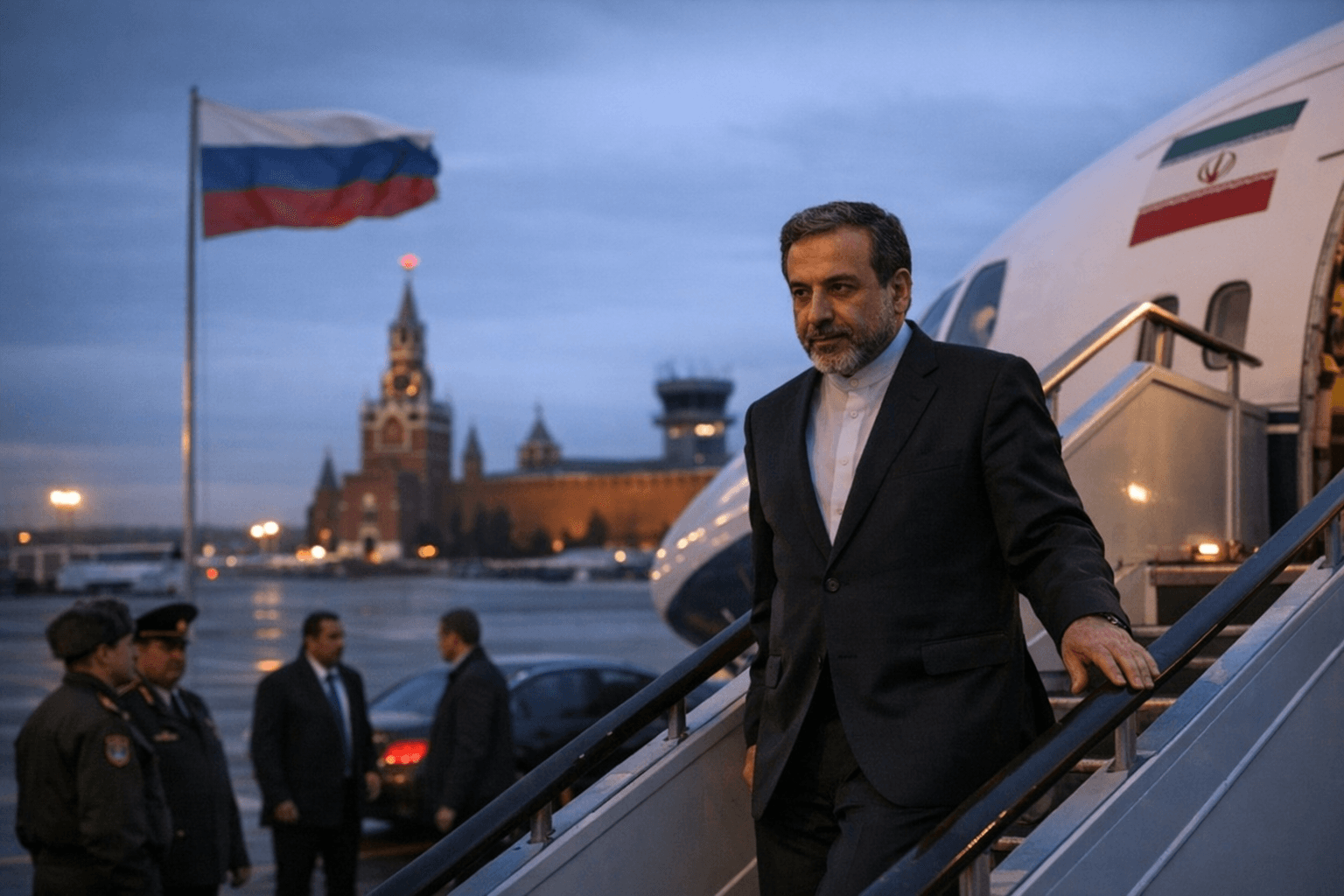
Iranian Foreign Minister Abbas Araghchi landed in Russia and headed for talks with President Vladimir Putin, capping a fast-moving diplomatic sprint that showed how hard Tehran is working to avoid isolation while U.S.-Iran peace talks stay frozen. Russian officials described the meeting in St. Petersburg as coordination on the conflict, while Iranian officials were trying to turn regional contact into negotiating leverage.
Araghchi had spent the weekend moving through Oman and Pakistan before reaching Moscow. In Pakistan, he met Prime Minister Shehbaz Sharif, Foreign Minister Ishaq Dar and the military chief, Asim Munir, whom reports described as a key mediator. Iranian state media said Tehran had sent written messages to the United States through Pakistani intermediaries on nuclear issues and the Strait of Hormuz, a sign that even without direct negotiations, both sides were still testing channels and red lines.
The White House and the Iranian government have been locked in a contest over who holds the stronger hand. Donald Trump said he canceled a planned trip to Pakistan by U.S. envoys Steve Witkoff and Jared Kushner, then argued that the United States had “all the cards” and that if Iran wanted to talk, “all they have to do is call.” Iranian officials have pushed back, saying direct talks with U.S. negotiators were never planned and accusing Washington of setting demands that helped sink the discussions.
The leverage on each side is concrete. Washington still has sanctions, diplomatic pressure and the ability to withhold relief. Iran has its regional ties, its role in the Strait of Hormuz and the ability to make any escalation there costly for global energy flows. The conflict has already disrupted air travel and shipping across the region, and Iran only resumed commercial flights from Tehran’s Imam Khomeini International Airport on April 25, the first such flights since the war began about two months ago. That tentative reopening underscored the wider stakes as Tehran sought help from Russia and nearby intermediaries while formal talks with Washington remained on hold.
This article was produced by Prism’s automated news system from verified source data, official records, and press releases, then run through automated quality and moderation checks before publishing. The system is built and supervised by the people who set the standards it runs under. Read our full AI policy.
Did this article answer your question?


