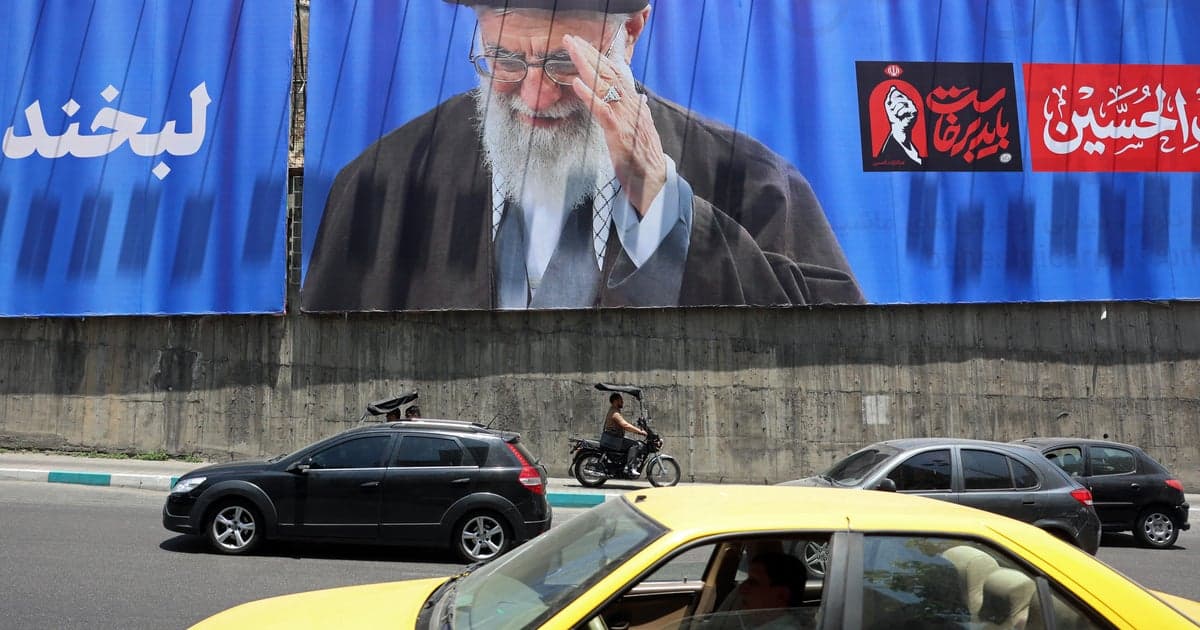
Iran's Hormuz threat shows how chokepoints can deter rivals
Hormuz is Iran’s sharpest nonnuclear lever, a narrow waterway that can rattle oil, LNG and military planners without ever being fully closed.
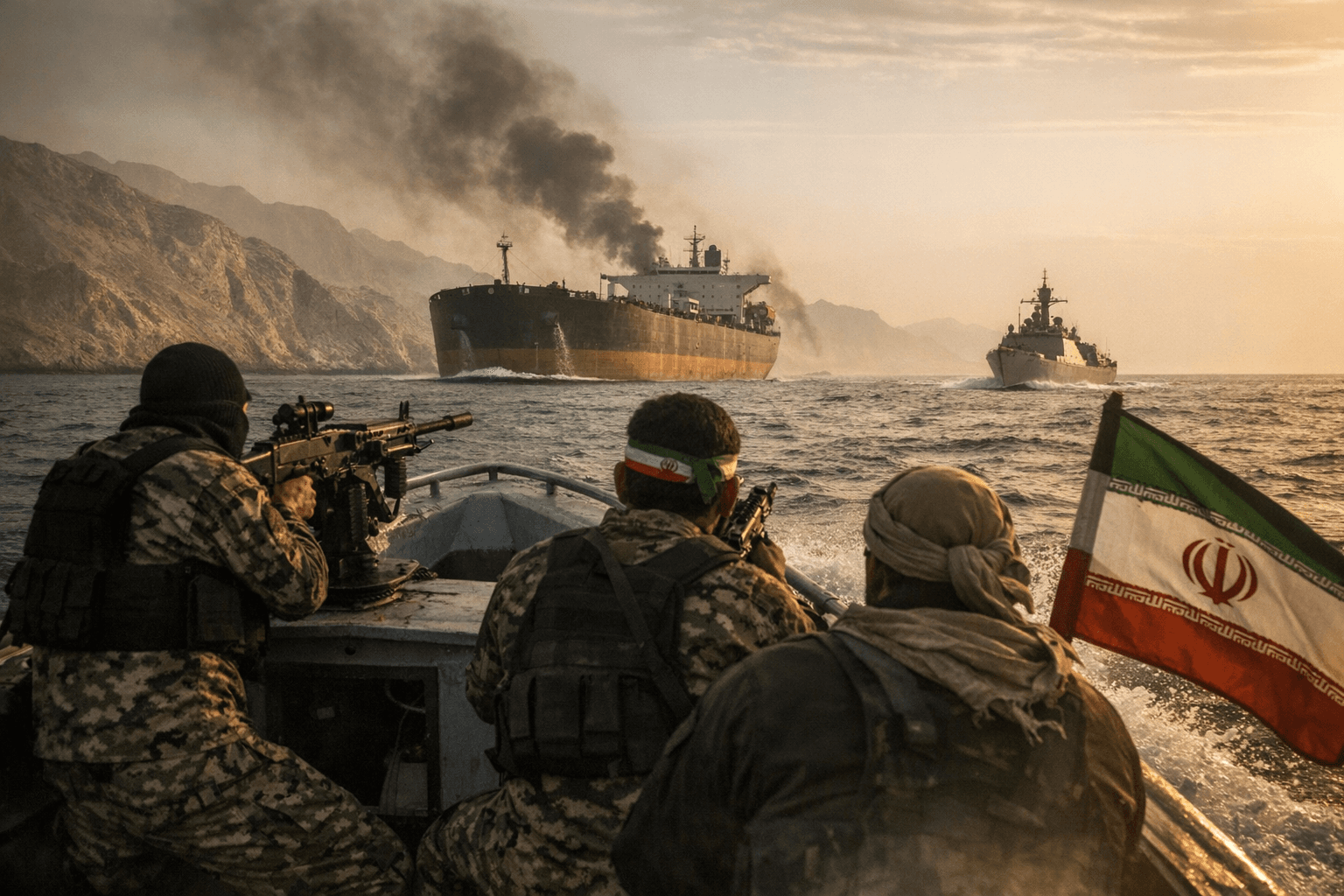
Hormuz as Iran’s pressure point
The Strait of Hormuz gives Iran something close to a strategic trump card: the ability to threaten global energy flows without crossing the nuclear threshold. Even the prospect of interference can move markets, because this narrow passage carried an average of 20 million barrels a day of crude oil and oil products in 2025, while around 20% of today’s global oil and liquefied natural gas supplies still flow through it.
That scale is why Hormuz matters far beyond the Persian Gulf. The strait is only 29 nautical miles wide at its narrowest point, with two 2-mile-wide navigable shipping lanes separated by a buffer zone, a layout that makes it easy to harass and hard to defend. A temporary disruption here does not just slow tankers. It can force traders, insurers, refiners and navies to reprice risk at the same time.
Why a chokepoint can deter rivals
Iran does not need to close Hormuz to make it useful as a deterrent. Repeated threats, selective attacks and the uncertainty of safe passage are often enough to raise the cost of confrontation for adversaries. That is the essence of the lever: create enough disruption risk that rivals must factor in higher energy prices, tighter shipping conditions and a more complicated military response.
The International Energy Agency has warned that disruptions to oil and gas flows through the strait, together with attacks on regional energy infrastructure, have major implications for global energy security and affordability. The agency has gone further, describing the combined effects as "the greatest threat to global energy security in history." That language captures the core economic reality: when a chokepoint moves, the shock is immediate, global and difficult to isolate.
History shows the threat does not require a full shutdown
Hormuz has never been truly closed, but it has been disrupted often enough to prove the point. The most important historical precedent is the Tanker War, the maritime phase of the Iran-Iraq War, which ran from May 1984 to the end of the war in 1988. During that period, Iran and Iraq attacked oil tankers and merchant shipping in the Persian Gulf, turning a regional war into a maritime security crisis with worldwide energy consequences.
The wider Iran-Iraq War lasted from 1980 to 1988 and left estimated total casualties ranging from one million to twice that number. The scale of that conflict mattered because it showed how quickly a regional struggle could draw in outside powers. International naval intervention followed, including U.S. and western European efforts to keep shipping moving, and U.S. forces entered direct confrontation with Iranian forces in 1987. The lesson for today is clear: Hormuz can generate leverage precisely because the response to instability is so expensive.
How disruption hits energy markets
The market reaction to Hormuz risk is not limited to crude prices, although oil is usually the first place the tension appears. When the IEA said in March 2026 that the Middle East conflict had triggered the largest supply disruption in the history of the global oil market, it underscored how fast a shipping threat can become a pricing event. The agency also said shipping through the Strait of Hormuz had been impeded and global LNG supply had been reduced by around 20%.
That matters because the strait is not just an oil route, it is a gas route too. Liquefied natural gas cargoes are harder to reroute at short notice than many people assume, and a 20% hit to global LNG supply is large enough to ripple through power markets, industrial users and winter storage planning. In practice, the disruption can also feed into freight costs, war-risk insurance and scheduling decisions, because vessels facing GPS jamming, AIS spoofing or periods when ships go dark are more expensive to move and harder to coordinate.
Why militaries take the threat seriously
Hormuz is also a military planning problem, not just an energy one. The IEA’s Middle East Maritime Chokepoints Shipping Monitor highlights operational risks such as GPS jamming, AIS spoofing and vessels going dark, which means a danger zone can emerge even without a formal blockade. For navies, that raises the burden of escort operations, surveillance, mine countermeasures and rapid response.
That is why the United States has long treated free passage through the Gulf as a core mission. The historical pattern from the Tanker War still shapes doctrine today: once shipping becomes vulnerable, outside powers are pulled toward the waterway to keep traffic moving. In that sense, Hormuz is not merely a geographic bottleneck. It is a standing test of maritime deterrence, alliance credibility and escalation control.
The reserve cushion is real, but so is the vulnerability
There are reasons not to overstate Iran’s long-term advantage. In response to the March 2026 disruption, the 32 IEA member countries agreed to make 400 million barrels of oil from emergency reserves available to the market. That stock-release capacity can soften the immediate price shock and buy time for refiners and importers.
Longer term, the market is also building some resilience into the system. The IEA says spare crude oil production capacity is expected to rise to 8 million barrels per day by 2030, and new LNG projects could add almost 50% to export capacity by then. Those figures suggest that while a Hormuz disruption can still be destabilizing, the world may become somewhat better able to absorb the blow over time.
Still, that is not the same as removing the threat. Chokepoints work because they magnify uncertainty faster than markets can adapt. Hormuz remains Iran’s most potent nonnuclear pressure point because it can impose pain without permanence, and that makes it a powerful short-term shock weapon. Whether it becomes lasting strategic leverage depends on how much spare capacity, naval protection and market resilience the rest of the world can build before the next crisis arrives.
This article was produced by Prism’s automated news system from verified source data, official records, and press releases, then run through automated quality and moderation checks before publishing. The system is built and supervised by the people who set the standards it runs under. Read our full AI policy.
Did this article answer your question?