Iran's Military Rejects Trump's Hormuz Ultimatum, Warns of Hell's Gates
Iran's top military commander called Trump's 48-hour Hormuz ultimatum "stupid" and warned "the gates of hell will open for you."
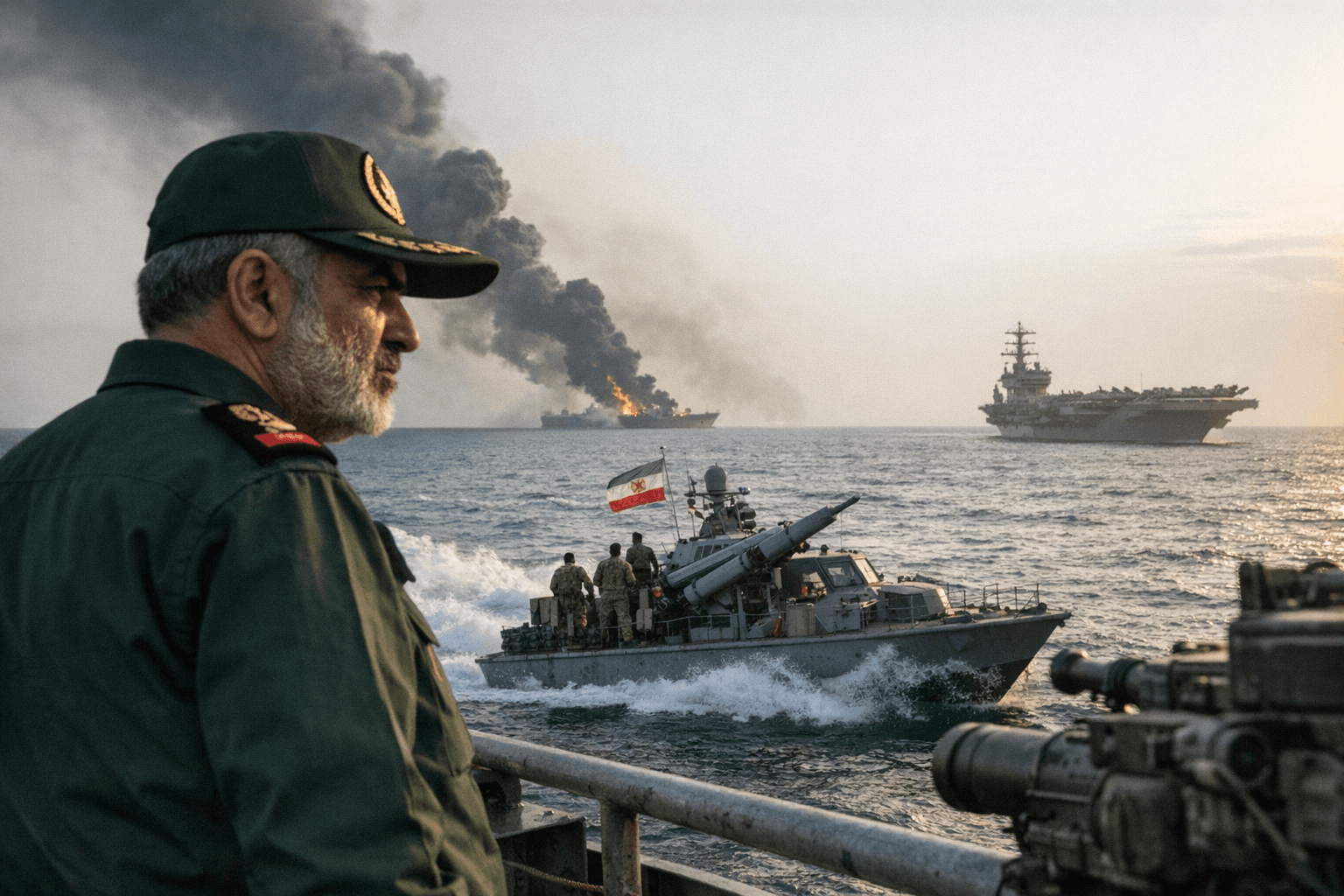
Gen. Ali Abdollahi Aliabadi, commander and spokesperson of Iran's Khatam al-Anbiya Central Headquarters, dismissed President Trump's renewed 48-hour ultimatum over the Strait of Hormuz on Saturday as "a helpless, nervous, unbalanced and stupid action," then turned Trump's own apocalyptic language directly back at him: "the simple meaning of this message is that the gates of hell will open for you."
Trump had posted the warning on Truth Social on Saturday, April 4, telling Iran it had 48 hours before "all Hell will reign down on them." The deadline expires Monday, April 6, the same date as a previously extended 10-day ultimatum Trump first issued on March 21, 2026. That original deadline had been pushed back after a four-nation mediation effort appeared to be gaining ground.
The crisis stems from February 28, 2026, when U.S. and Israeli forces launched Operation Epic Fury, a coordinated strike campaign targeting Iran's nuclear infrastructure, ballistic missile programs, and military command. The strikes killed Supreme Leader Ali Khamenei. By March 2, the Islamic Revolutionary Guard Corps formally confirmed the Strait of Hormuz was closed and threatened any vessel attempting unauthorized transit.
The economic damage has been immense. Approximately 20 million barrels of oil per day transited the Strait in 2025, roughly one-fifth of global supply. The closure has removed an estimated 10 million barrels per day from world markets, prompting the International Energy Agency to label the disruption the largest to global energy supply since the 1970s oil crisis. Brent crude surged 10 to 13 percent to around $80 to $82 per barrel in early March, and analysts from Wall Street and the Dallas Federal Reserve have raised scenarios where prices reach $200 per barrel if the blockade holds. About 80 percent of the oil flowing through the Strait is destined for Asian markets, with China, India, and Japan as the primary importers. Europe faces a compounding crisis as Qatari LNG shipments have been suspended; gas storage across the continent stood at roughly 30 percent capacity following a punishing 2025 to 2026 winter.
Diplomatic channels have offered little relief. Pakistan, Turkey, Egypt, and Saudi Arabia convened a quadrilateral meeting in Islamabad on March 29 to discuss reopening the Strait. U.S. envoy Steve Witkoff delivered a 15-point action list to Tehran via Pakistan, proposing a ceasefire framework tied to Strait reopening and nuclear restrictions. Iran rejected the proposal outright, countering with a five-point plan that included demands for reparations and international recognition, while insisting on a permanent, not temporary, end to hostilities.
On March 30, Treasury Secretary Scott Bessent said the U.S. would gradually "take control" of the Strait. Three days later, in a nationally televised address on April 1, Trump told the country the military operation was "near completion." As of Saturday, search-and-rescue operations were ongoing for a missing U.S. crew member after Iran shot down two American fighter jets earlier in the conflict.
With ceasefire talks at a near dead-end and both sides now invoking hell as their preferred metaphor, the 48-hour clock runs out Monday.
This article was produced by Prism’s automated news system from verified source data, official records, and press releases, then run through automated quality and moderation checks before publishing. The system is built and supervised by the people who set the standards it runs under. Read our full AI policy.
Did this article answer your question?


