Iran’s Revolutionary Guards tighten grip, war pushes regime toward military rule
War is pulling Iran’s center of power toward the Revolutionary Guards. That shift could leave clerical institutions weaker, succession more militarized, and diplomacy more confrontational.
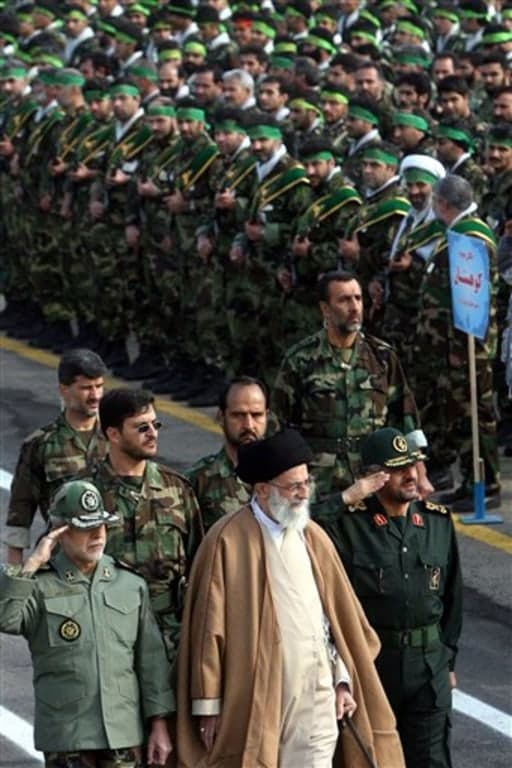
The Guards were built to protect the revolution, not to replace it
The Islamic Revolutionary Guard Corps was created shortly after the 1979 Islamic Revolution to defend the clerical ruling system and balance Iran’s regular armed forces. That original mission now looks increasingly secondary to something larger: the Guards have become a state within the state, with their own army, navy, air force and intelligence wing, plus command over the Basij militia and the Quds Force. Reuters said in August 2024 that the IRGC had about 125,000 military personnel, while analysts said the Basij may number in the millions, with more than 1 million active members.
That size matters because it gives the Guards more than battlefield reach. It gives them administrative depth, a loyal manpower base, and the ability to shape politics inside Tehran while projecting force abroad. AP described the Guards as a power center that grew in prominence during the 1980s Iran-Iraq war, then expanded further when Supreme Leader Ayatollah Ali Khamenei later allowed it to move into private enterprise. The result was a force that became both a military machine and an economic empire.
War has accelerated the shift inside the regime
The current conflict has not simply tested the IRGC. It has elevated it. Reuters reported on March 4, 2026, that the Guards had tightened their grip on wartime decision-making even after losing top commanders, with senior sources saying they were driving a harder-line strategy. Reuters also reported that authority had already been pushed down the ranks before the U.S.-Israeli attack, a decentralization plan designed to preserve command continuity if leaders were killed.
That matters because it changes how the war is being run. Mid-ranking officers were empowered to act more independently, which may help keep the machinery moving under fire, but it also raises the risk of miscalculation and wider regional escalation. In practical terms, the IRGC is no longer just executing policy from above. It is increasingly helping define policy itself, especially when military pressure and political survival are becoming the same problem.
The Institute for the Study of War said on April 18, 2026, that IRGC Commander Major General Ahmad Vahidi and his inner circle had likely secured at least temporary control over both Iran’s military response and its negotiating position. The same assessment said the Guards were using attacks on commercial shipping in the Strait of Hormuz as leverage while consolidating their control over talks. That is a major sign of how far the balance has shifted: the institution tasked with protecting the revolution is now helping set the terms of diplomacy.
Succession is becoming a military question as much as a clerical one
The biggest long-term implication may come after Ayatollah Ali Khamenei’s death. Reuters reported in March 2026 that the choice of the next supreme leader could further cement the Guards’ role, and that Mojtaba Khamenei was widely seen as a likely candidate because of his close ties to the IRGC. That places succession at the center of the power shift. If the next leader depends on the Guards for support, the clerical hierarchy could become more constrained than ever by the security establishment.
Reuters also said senior IRGC figures were present in key meetings and that the force’s overriding objective remained the survival of the Islamic revolutionary system. But survival now appears to be defined less by doctrinal authority than by coercive control, battlefield cohesion, and the ability to manage elite transitions. Israeli strikes the previous year killed the Guards’ overall head and the heads of its intelligence, aerospace and economic units, yet Reuters reported that the organization had already built in named successors down several ranks to preserve continuity. That planning suggests a force preparing not for decline, but for entrenchment.
The IRGC’s regional reach gives it leverage inside Iran
The Guards’ domestic rise cannot be separated from their external network. Reuters reported in August 2024 that the Quds Force manages Iran’s ties to the Axis of Resistance, including Hezbollah, Hamas, the Houthis and armed groups in Iraq. Reuters also said the IRGC oversees Iran’s ballistic missile program, which experts consider the largest in the Middle East. Those capabilities make the Guards central to every major regional file: Lebanon, Gaza, the Red Sea, Iraq, Yemen and the Strait of Hormuz.
That reach helps explain why the IRGC can translate military pressure into political capital at home. Reuters reported that in 1982 the Guards helped found Hezbollah in Lebanon, and in March 2026 Reuters-linked reporting said they had taken a more hands-on role in rebuilding Hezbollah’s military command after heavy losses in 2024, deploying roughly 100 IRGC officers to help restore the group’s structure. In other words, the Guards are not just guarding Iran’s borders. They are managing a regional architecture of proxy power that reinforces their domestic standing.
The Strait of Hormuz has become especially important in that equation. The Institute for the Study of War said the IRGC attacked commercial vessels on April 18, 2026, and declared that no vessel of any type or nationality was permitted passage through the waterway. That kind of action serves two purposes at once: it pressures Iran’s adversaries and demonstrates that the IRGC can shape both warfighting and bargaining conditions.
What a militarized republic would look like
The question is no longer whether the Guards matter. They already do. The real issue is whether Iran is moving from a clerically led republic toward a more centralized military regime, one in which the IRGC becomes the decisive institution in security, diplomacy, succession and even economic control. The evidence points in that direction: a wartime command structure built for continuity, a succession process likely to reward IRGC loyalty, a vast proxy network, and an economic footprint that has grown since Khamenei opened the door to private enterprise.
That does not mean the clerics disappear overnight. It means the old balance changes. Iran’s revolutionary order was built on overlapping centers of power: the supreme leader, clerical institutions, regular armed forces, and bureaucratic layers that helped slow sudden shifts. War is stripping away those checks. If the regime survives, it may emerge more centralized, more militarized and less constrained by the ideological and bureaucratic balances that once defined it.
This article was produced by Prism’s automated news system from verified source data, official records, and press releases, then run through automated quality and moderation checks before publishing. The system is built and supervised by the people who set the standards it runs under. Read our full AI policy.
Did this article answer your question?


