IRS, FBI warn AI is supercharging cryptocurrency fraud losses
Fake voices, polished videos and WhatsApp outreach helped scammers strip a 73-year-old woman of $300,000, as federal losses tied to crypto topped $11 billion.

Artificial intelligence is giving cryptocurrency scammers a sharper and more convincing playbook: fake social profiles, cloned voices, forged identity documents and believable videos that can keep victims engaged long enough to move money out of reach. Federal investigators say that mix is helping fraud crews pressure older adults and other vulnerable people at scale, turning a single pitch into a fast-moving financial catastrophe.
Kyle Holder, 73, lost her entire $300,000 in retirement and savings after scammers first contacted her on WhatsApp around Christmas 2024 with an offer to coach her on crypto investing. Within under three months, the money disappeared into the cryptocurrency universe, and Holder later moved into assisted living paid for by Medicaid. Her case shows how these schemes can drain not just bank accounts, but future housing, care and stability.
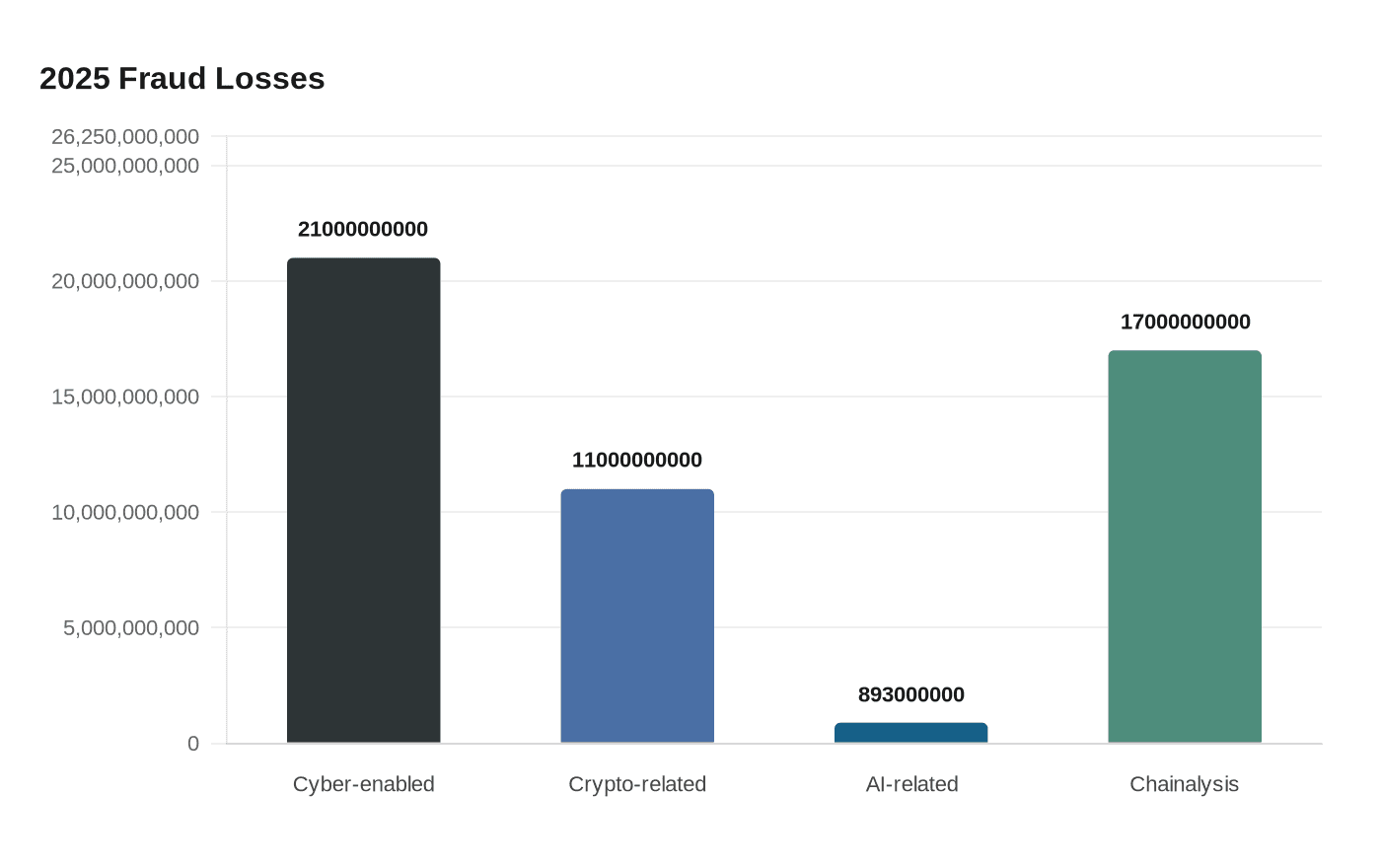
The FBI said Americans lost nearly $21 billion to cyber-enabled crimes in 2025, and more than half of those losses were tied to cryptocurrency. In its 2025 Internet Crime Report, the bureau said it received 1,008,597 complaints, with cryptocurrency-related complaints totaling more than $11 billion in losses. The report also included a dedicated AI section for the first time, citing 22,364 AI-related complaints that cost victims nearly $893 million.
The numbers point to a fraud market that is adapting faster than many defenses. The U.S. Treasury’s March 2026 National Money Laundering Risk Assessment singled out the use of AI in fraud and scams as a special focus area, underscoring that fraud remains one of the top money-laundering threats in the United States. Chainalysis put the damage even higher, estimating that $17 billion was stolen in crypto scams and fraud in 2025 and saying AI-enabled scams were 4.5 times more profitable than traditional scams. The average scam payment also jumped, from $782 in 2024 to $2,764 in 2025.
Federal enforcement is trying to keep pace. On March 30, 2026, IRS Criminal Investigation announced indictments in an international cryptocurrency market-manipulation case involving ten foreign nationals and four firms, with more than $1 million in cryptocurrency seized so far. Investigators say the broader threat is no longer just crypto hype or phishing alone, but a layered fraud model that blends impersonation, social engineering and AI to make losses harder to spot, harder to trace and far harder to unwind once the money is gone.
This article was produced by Prism’s automated news system from verified source data, official records, and press releases, then run through automated quality and moderation checks before publishing. The system is built and supervised by the people who set the standards it runs under. Read our full AI policy.
Did this article answer your question?