Israel and Iran's Twelve-Day War Brought the World to the Brink
Twelve days of Israeli and Iranian fire in June 2025 brought the region to the edge — then Israeli jets were already airborne before a phone call pulled them back.
The Moment the World Almost Tipped
Israeli jets were already airborne, en route to a new wave of strikes on Iran, when Donald Trump got on the phone with Benjamin Netanyahu and ordered them turned around. That detail, largely overshadowed by the announcement of a ceasefire on June 23, 2025, captures the terrifying thinness of the margin between a contained twelve-day conflict and something far worse. The Twelve-Day War, as Trump himself labeled it, was not simply a flare-up between two long-standing adversaries. It was a collision of miscalculation, diplomatic failure, and last-second intervention that, at multiple points, could have broken an entirely different way.
The Decision Points That Led to War
On June 13, 2025, Israel conducted a major operation against Iran, targeting nuclear facilities, military sites, and regime infrastructure. Specifically, Israel launched strikes against Iran's nuclear program, ballistic missile sites, and energy facilities, with the stated aim of stopping Iran from developing a nuclear weapon, a claim Iran rejected.
The first critical miscalculation was timing. The strikes came while U.S.-Iran diplomatic negotiations over Tehran's nuclear program were still actively underway, a fact that drew sharp international condemnation. Critics argued Israel had deliberately torpedoed diplomacy; Israeli officials argued the talks were cover for continued enrichment. Either way, the decision to act while channels remained open removed the possibility of a negotiated pause before the first missile flew.
Iran and Israel became adversaries following the Iranian Revolution in 1979, when Iran severed ties and adopted an openly hostile stance toward Israel. Over the following decades, the rivalry expanded through proxy forces and regional influence campaigns, including Iran's support for Hezbollah and Hamas, as well as its nuclear program and ballistic missile development. By 2025, that rivalry had been sharpening for over a year through direct clashes, and the conditions for open conflict had been building steadily, even if the precise moment of ignition surprised many observers.
Iran's Retaliation and the Scale of the Exchange
Iran retaliated with over 550 ballistic missiles and over 1,000 suicide drones, hitting civilian population centers, one hospital, and at least twelve military, energy, and government sites. Twenty-eight people were killed in Israel; top military leaders and hundreds of civilians died in Iran from Israeli strikes. The United States entered the fight directly: the United States intercepted Iranian attacks and bombed three Iranian nuclear sites on June 22. On June 23, Iran escalated further still, launching 14 missiles at Al Udeid Air Base in Qatar, targeting U.S. forces stationed there, in an attack that caused no casualties but dramatically widened the conflict's geographic footprint.
The Nuclear Wild Card
Three days into the war, Iran introduced a pressure point that rattled European capitals and international institutions: the prospect of formally abandoning the global nuclear non-proliferation framework. On June 16, the Iranian foreign ministry reported that the Islamic Consultative Assembly, the nation's parliament, had begun drafting a proposal to exit the Non-Proliferation Treaty, while insisting that Iran did not intend to pursue nuclear weapons. Several foreign ministers of European countries told Iran to return to diplomacy and "avoid escalation."
The timing had additional urgency: the E3 nations, France, Germany, and the United Kingdom, held the legal power to invoke snapback sanctions against Iran under the 2015 nuclear deal, but that authority was set to expire in October 2025. The United States, having withdrawn from the deal in 2018, had no standing to invoke those same sanctions. The window to use existing treaty mechanisms as leverage was closing fast, even as the treaty itself appeared in jeopardy.
The Ceasefire Negotiations: A Channel Built on Trust
With direct communication between Tehran and Washington fractured, Iran turned to two intermediaries it could work with: Iran approached the governments of Qatar and Oman to contact the United States in order to request a cessation of Israeli attacks. Qatar, which has long hosted U.S. military assets and maintained working relationships with both Washington and Tehran, was uniquely positioned to hold this channel open. Trump confirmed that "many calls and meetings" were underway, and announced on June 23 that a deal had been reached.
The structure of the agreement reflected the deep mutual distrust of the parties. The ceasefire agreement included 12 hours of cessation of hostilities by Iran followed by another 12 hours of cessation of hostilities by both Iran and Israel. Rather than a simultaneous mutual stand-down, Iran would demonstrate compliance first, and only after that initial period would both sides be bound. The ceasefire between Iran and Israel took effect on June 24, 2025, ending the Twelve-Day War; it was mediated by the United States and Qatar.
The Moment Israeli Jets Were Called Back
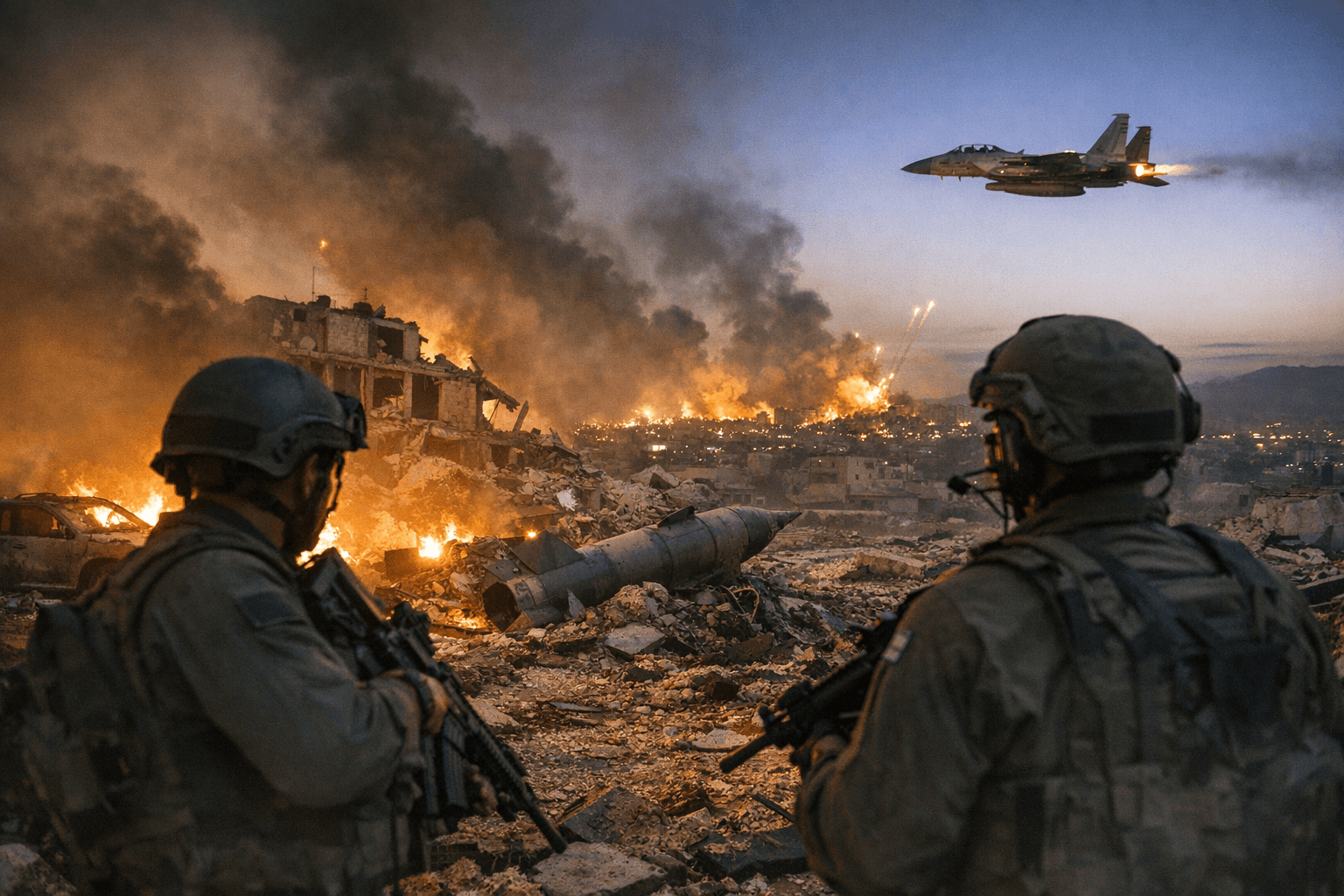
Even as the deal was being announced, the machinery of war was still in motion. Israeli jets were already en route to new strikes on Iran when Trump personally intervened and pressured Netanyahu to abort the mission. The planes turned back. It was the closest the world came to watching a ceasefire collapse before it formally began.
Despite initial violations by both Iran and Israel during the early ceasefire hours, killing 16 people in Iran and 4 in Israel, it continued to hold. Trump, expressing his frustration on live television and using an expletive, vented that both sides "did not know what they were doing," an unusually candid moment that underscored how precarious the arrangement was and how much of its survival depended on personal intervention from the U.S. president rather than any formal guardrail.
Global Reactions and Market Signals
Trump deemed the ceasefire a "victory for everybody," but stressed his willingness to preempt Iranian designs by resuming strikes in the future, adding that American action had lessened the need for a new nuclear deal. The Qatar Ministry of Foreign Affairs issued a brief statement welcoming the ceasefire, reaffirming that Iran's violation of its airspace was part of the dangerous escalation in the region.
The UK warned that Iran might retaliate on British soil. Australia's Prime Minister Anthony Albanese called for the ceasefire to be upheld. At his June 25 general audience in St. Peter's Square, Pope Leo XIV invoked the prophet Isaiah. Iran's Supreme National Security Council, for its part, demanded not just a ceasefire with Israel but an end to hostilities against the entire Axis of Resistance: Hamas, Hezbollah, and the Houthis. That demand signaled that Tehran was not treating the agreement as a stand-alone resolution but as leverage in a broader negotiation.
Crude oil prices increased by 10% over the course of the 12-day conflict, as OPEC+ producers made substantial cuts to output. Oil prices then experienced a significant decline after Iran's attack on Al Udeid Air Base. The Strait of Hormuz, through which roughly a fifth of the world's oil supply transits, remained open throughout the war, and markets priced that access as the primary variable determining whether a regional conflict could become a global economic shock.
The Ceasefire That Didn't Hold
The June 2025 agreement gave the world a pause, not a resolution. In late February 2026, after the breakdown of U.S.-Iran negotiations, Israel and the United States conducted coordinated military operations against Iranian targets. The second round of strikes was strategically different in character: where the Twelve-Day War targeted nuclear and military infrastructure, the 2026 campaign included what analysts described as "decapitation" strikes against Iranian leadership, fundamentally altering the rules of engagement and making a quick off-ramp far harder to find.
By April 2026, Iran was rejecting new ceasefire proposals outright. Trump threatened to bomb Iranian bridges and power plants if the Strait of Hormuz was not reopened, setting a public deadline. The channel that eventually moved was once again a third-party one: Pakistani Prime Minister Shehbaz Sharif wrote that "diplomatic efforts for peaceful settlement of the ongoing war in the Middle East are progressing steadily, strongly and powerfully." Trump announced he agreed to suspend planned attacks on Iranian infrastructure for two weeks, subject to Iran agreeing to the "complete, immediate, and safe opening of the Strait of Hormuz." The decision was based on conversations with Prime Minister Shehbaz Sharif and Field Marshal Asim Munir of Pakistan.
What the Near Miss Reveals
The Twelve-Day War's most consequential lesson is not about military capability; it is about the absence of institutional guardrails when bilateral communication breaks down entirely. In June 2025, a ceasefire depended on Qatar and Oman carrying messages between adversaries who would not speak directly, on a staged compliance structure because neither side trusted the other to stop simultaneously, and ultimately on a personal phone call from the U.S. president to an Israeli prime minister to abort a live strike mission. None of those mechanisms are treaties. None are binding. None survived the collapse of nuclear talks eight months later.
The snapback sanction authority the E3 held under the 2015 deal has since expired. The NPT's standing with Iran remains uncertain. The Strait of Hormuz has become an explicit bargaining chip where it was previously treated as a red line. The chain reaction that nearly ran out of control in those twelve days in June 2025 has already restarted; the question now is whether the intermediaries available, Pakistan in April 2026, Qatar and Oman before that, are equal to a conflict that has grown considerably more dangerous in both scale and intent.
This article was produced by Prism’s automated news system from verified source data, official records, and press releases, then run through automated quality and moderation checks before publishing. The system is built and supervised by the people who set the standards it runs under. Read our full AI policy.
Did this article answer your question?


