Israel Threatens Iran's Entire Train Network as War Enters Week Six
The IDF warned all Iranians to avoid trains Monday as Trump dismissed war crimes concerns and threatened to destroy Iran's power grid by an 8 p.m. Tuesday deadline.
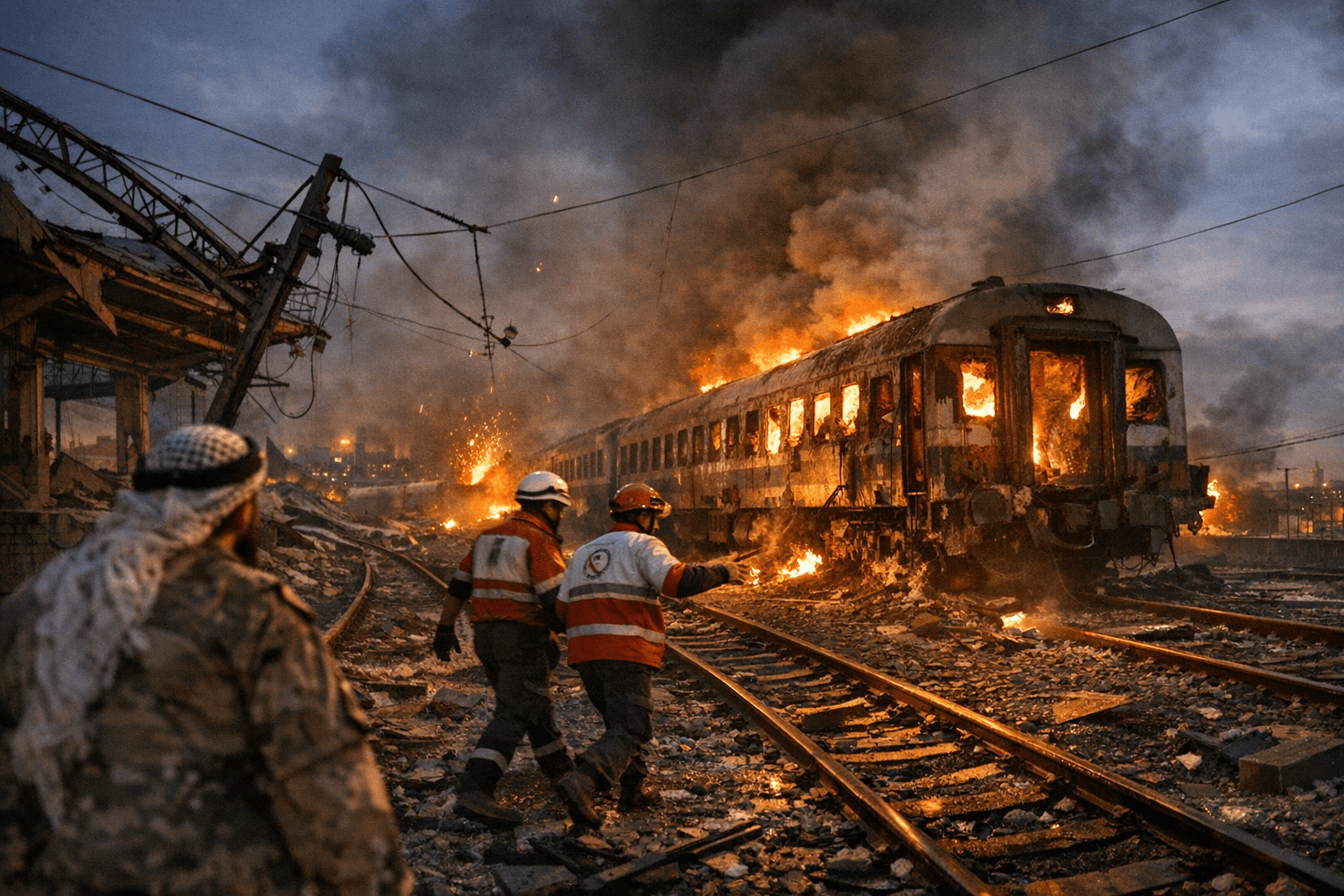
The Israeli military issued a sweeping warning in Farsi on Monday urging all Iranians to avoid trains until at least 9 p.m. local time, signaling a potential strike on Iran's national rail network. The IDF's @IDFFarsi account had previously issued evacuation notices ahead of strikes near Isfahan; the train warning extended the threat to civilian transportation nationwide, marking a new phase in a conflict now 37 days old.
The threat arrived as President Donald Trump declared himself "not at all" worried about possible war crimes at a White House press briefing, doubling down on his ultimatum to destroy Iranian power plants and bridges if Tehran did not reopen the Strait of Hormuz by 8 p.m. ET Tuesday. An Easter Sunday Truth Social post had set the tone: "Tuesday will be Power Plant Day, and Bridge Day, all wrapped up in one, in Iran." Trump signed off that message with "Praise be to Allah."
When pressed on the war crimes question, Trump redirected. "You know the war crime? The war crime is allowing Iran to have a nuclear weapon," he said, calling Iranian leaders "animals." Legal experts warned that strikes on civilian power plants and bridges would likely constitute war crimes under international law, with proportionality and minimizing civilian harm as the central legal tests. The White House maintained that the U.S. military would always act in accordance with the law.
Monday's U.S.-Israeli strikes across Iran killed at least 34 people, including six children, bringing the total Iranian death toll above 555, among them 180 killed at a girls' school earlier in the campaign. Airstrikes targeted the Sharif University of Technology in Tehran, completely destroyed the Rafi-Nia Synagogue belonging to Iran's legally recognized Jewish community, and struck a petrochemical plant at the South Pars gasfield, killing two IRGC commanders. QatarEnergy's CEO said the South Pars strikes knocked out 17% of Qatar's LNG export capacity for up to five years.
Democratic condemnation was immediate. Senator Jeff Merkley called Trump's threats "the words of a frustrated and immoral madman" and urged military commanders to refuse illegal orders. Representative Elissa Slotkin argued the strikes on civilian infrastructure directly contradicted the administration's stated goal of aiding the Iranian people. Representative Yassamin Ansari, an Iranian-American Democrat, announced plans to introduce articles of impeachment against Defense Secretary Pete Hegseth over his conduct of the war. Republicans largely backed Trump's position.
Iran rejected a U.S. ceasefire proposal Monday and declared the Strait of Hormuz "will never return to its former state," pledging "zero restraint" if energy facilities were struck again. Tehran organized civilian human chains around power plants as a deterrent. Iran's parliament stated: "We will stand hand in hand to say: Attacking public infrastructure is a war crime." Iranian Foreign Minister Seyed Abbas Araghchi separately condemned the targeting of Sharif University of Technology.
An Iranian ballistic missile struck a residential building in Haifa, seriously wounding an 82-year-old and leaving 24 others lightly injured, with several people unaccounted for. Israeli Defense Minister Israel Katz threatened to destroy Iran's national infrastructure entirely and to "hunt down" the country's leaders if strikes on Israeli civilians continued.
The Atlantic Council warned that destroying Iran's power and water systems could trigger life-threatening shortages across Iraq, Israel, and Gulf states. Iran supplies roughly one-third of Iraq's energy needs. UN Secretary-General António Guterres warned the region stood at "a dangerous precipice," while G7 foreign ministers meeting in France called for an immediate halt to attacks on civilians and infrastructure. Egypt, Turkey, and Pakistan continued coordinating diplomatic efforts to broker direct U.S.-Iran talks before Trump's deadline elapsed.
This article was produced by Prism’s automated news system from verified source data, official records, and press releases, then run through automated quality and moderation checks before publishing. The system is built and supervised by the people who set the standards it runs under. Read our full AI policy.
Did this article answer your question?


