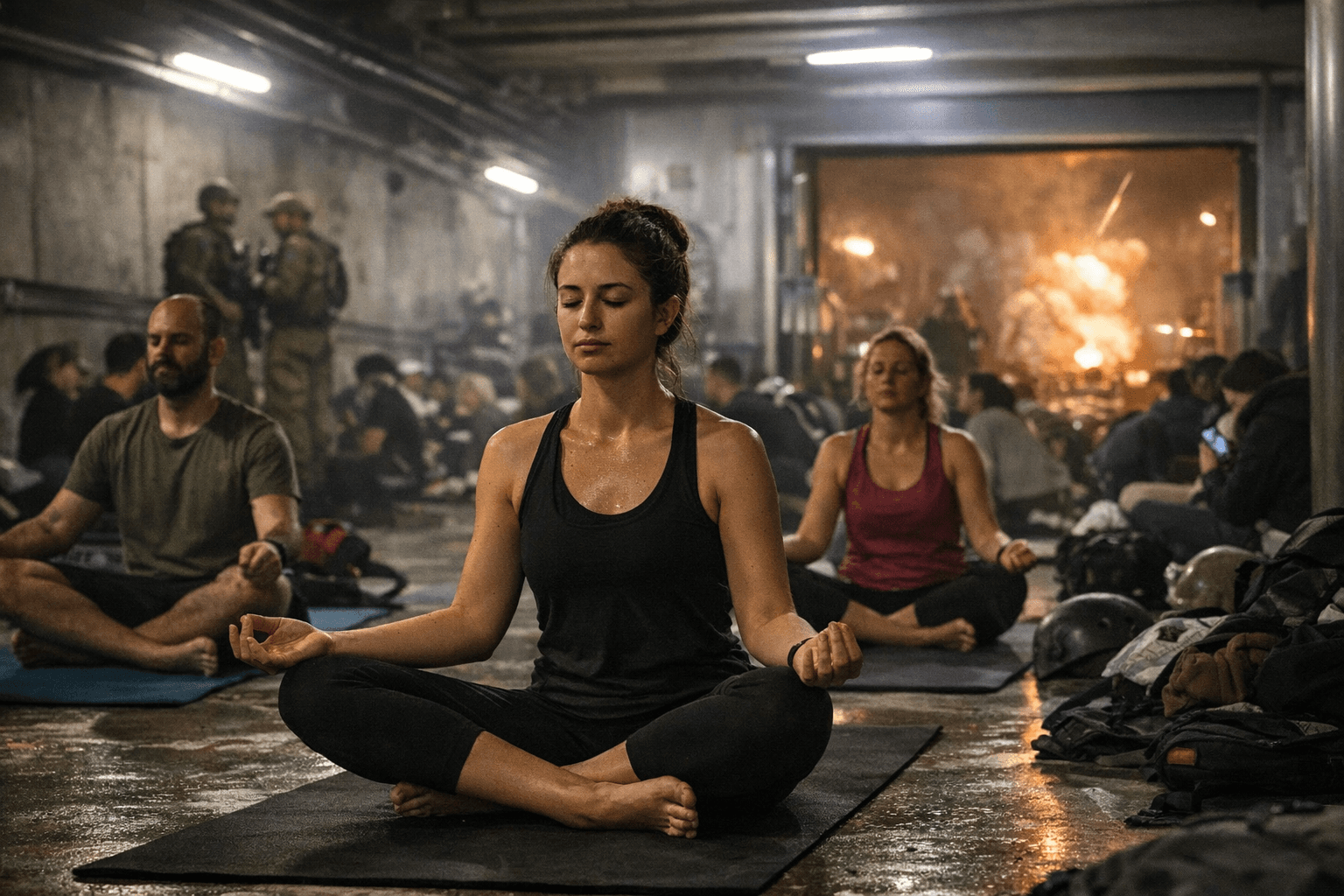
Israeli Civilians Practice Yoga in Tel Aviv Shelter Amid Iranian Missile Barrage
Civilians in a Tel Aviv-area underground metro station practiced yoga as nonstop Iranian missile salvos struck on Feb. 28, 2026; video clips on X sparked both praise and criticism.
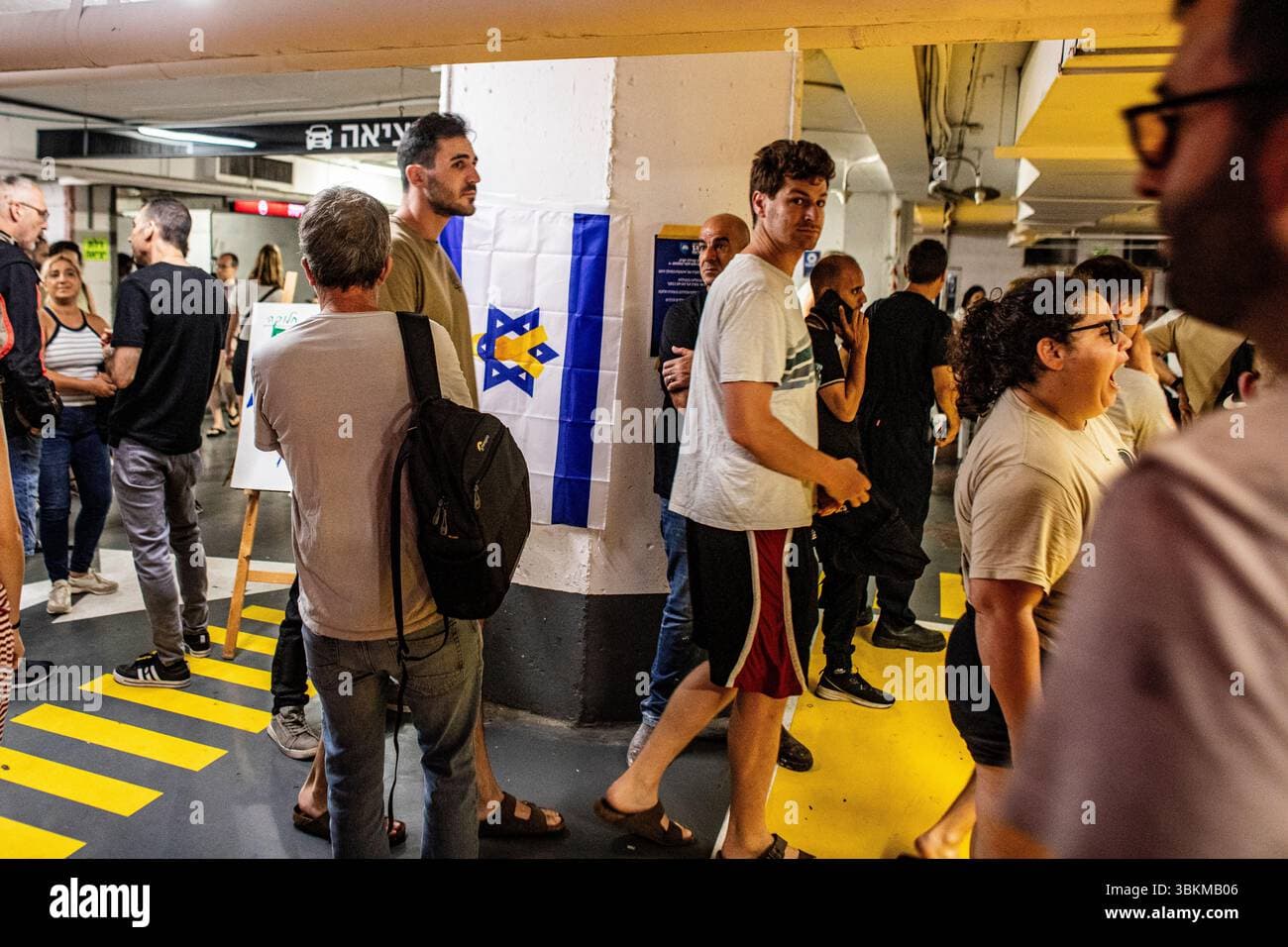
Civilians took shelter in a Tel Aviv-area underground metro station and practiced yoga as nonstop Iranian missile salvos struck central Israel on Saturday, Feb. 28, 2026; video clips of the scene spread rapidly on X and drew both praise as a sign of resilience and criticism as insensitive. One photo captioned from an underground metro station identified the shot as Ramat Gan, part of the Tel Aviv metropolitan area, while social posts described people doing yoga in an “underground metro station” and adding the phrase Am Yisrael Chai.
Air-raid sirens sounded throughout the day as residents scrambled between shelters, with beaches in Tel Aviv emptied and boardwalks taped off while runners and surfers were forced to halt activity. Hospitals moved patients into underground parking lots and security personnel wheeled recovering patients away from exposed wards, and traces of air-defense interceptions were seen over Tel Aviv as missiles were launched from Iran.
Maya Tutian, sheltering in a public shelter in the northern part of Tel Aviv, framed the moment in longer-term terms: “We look at this in the long term. We suffer today but we do hope that it will resolve the problems of tomorrow,” she said, adding that “the Iranian regime is not just a threat of us, people who live here in Tel Aviv, but for the entire world.” Her remarks came as central Israel experienced repeated sirens and people repeatedly ran for cover throughout the day.
Shira Pinkas, a 52-year-old writer and yoga teacher from the Tel Aviv suburb of Kiryat Ono who lives with twin six-year-old daughters, said she kept a small suitcase ready and leaned on perspective to cope. “I find that to survive situations like this, when you don't know what the future holds, whether or not there will be a threat to your life, to be able to cope with it all you have to change your perspective, become resilient,” Pinkas said. Pinkas added that during last year’s war her family slept in her basement yoga studio a few streets away and that memories of a strike in nearby Petah Tikva still haunt her: “Last time (in June), 10 minutes from here in Petah Tikva, there were people who had taken refuge in a mamad on the fifth floor and were killed by a missile,” she told AFP by phone.
Other residents described practical preparations. A person identified only as Cohen said, “We always have a safe place. It's actually our bedroom in our house,” and added, “We have water, we have an emergency kit, we always have things that are ready over there in case.” Those ready-kits and bedrooms as shelters sit alongside reinforced safe rooms known as mamads that are required in new buildings, even as people worry that stronger ballistic missiles now in play pose new risks.
The military and political backdrop sharpened tensions: coordinated strikes by Israeli and U.S. forces on Iran preceded the launches, and Israeli Prime Minister Benjamin Netanyahu urged citizens to “stand together,” saying that “Iran must not be allowed to gain nuclear arms.” President Donald Trump urged Iranians to take over their government as U.S. forces began large-scale attacks on Iranian military targets, while Israeli military spokesman Effie Defrin said in a video statement that “we are aware of the sense of uncertainty and the tension felt by the public in light of regional developments,” that “the military is closely monitoring developments in Iran and remains alert and prepared to defend you,” and that “we are operating in full coordination with our partners in order to strengthen our defensive posture,” noting that “the guidelines for the public had not changed.”
Residents and responders still point to recent history as a warning: last year’s war killed 30 people and caused considerable damage, notably to a hospital and public institutions including some army bases, and many without home shelters resorted to sleeping in Tel Aviv’s underground light-rail stations and underground mall parking lots. As sirens continued and the city moved between shelter and brief reprieve, the images of people rolling out yoga mats in an underground station crystallized the day’s contradictions — a mix of preparedness, community routines, and a search for calm amid an escalating regional confrontation.
Know something we missed? Have a correction or additional information?
Submit a Tip