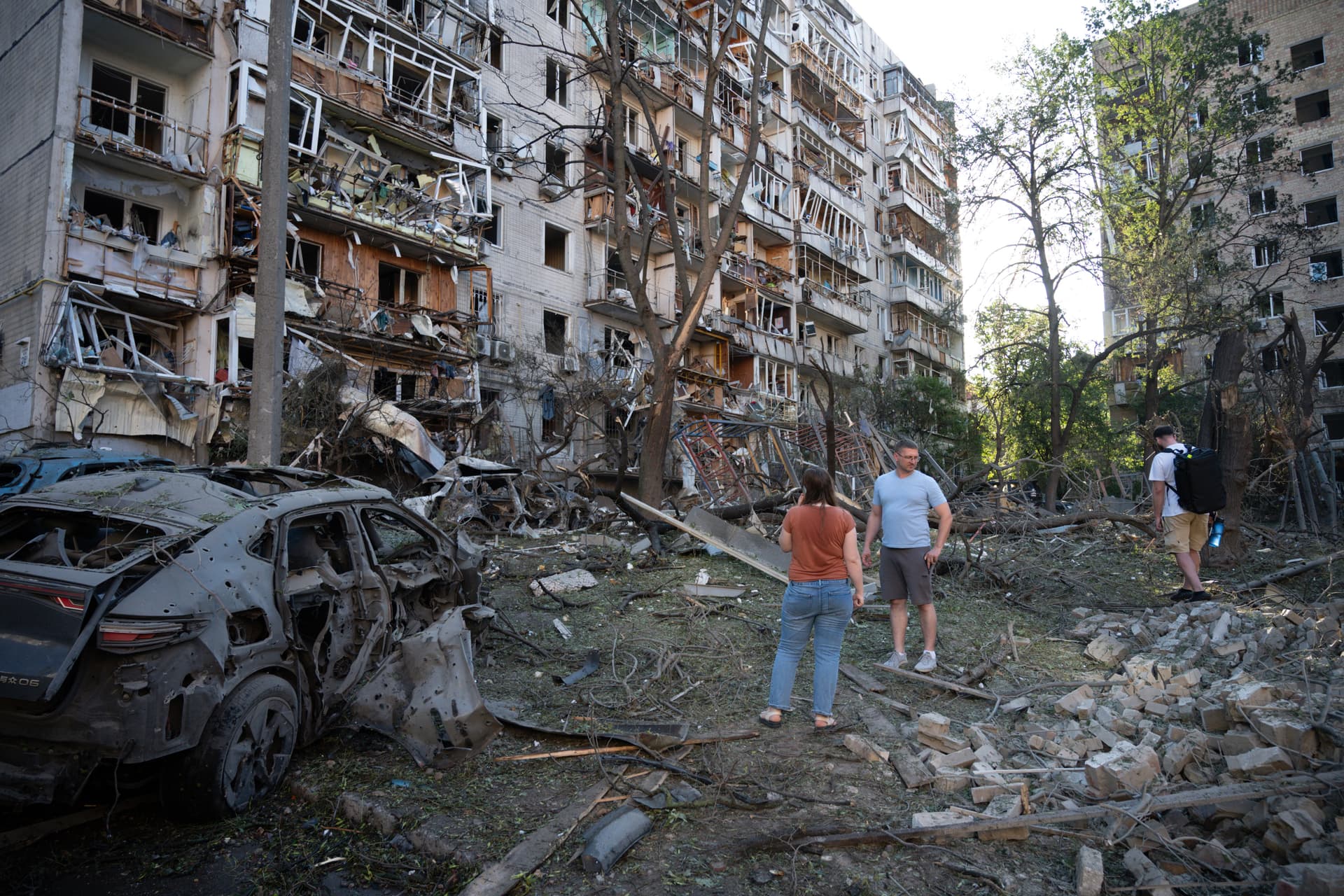
Israeli strikes in Deir al-Balah reportedly kill local Hamas commander, reports vary
Palestinian officials say air strikes in central Gaza killed a man identified as a Hamas local commander and several family members; casualty totals differ across sources.
Palestinian officials and Gaza health authorities said Israeli air strikes struck homes in Deir al-Balah in central Gaza on 15–16 January, killing multiple people including a man identified by local sources as Mohammed al-Holy, also reported as Abu Fouad al-Holy. Accounts differ on the death toll, with reported totals ranging from five to seven fatalities; health authorities said one of those killed was a 16-year-old.
Local media and health ministry statements reported that family members were among the dead, with some accounts naming a wife and a daughter. The Israeli military did not immediately confirm the strike or the identity of the man described locally as a senior commander in Hamas’s armed wing. Hamas condemned the operation and accused Israeli forces of violating the fragile ceasefire that took effect in October 2025.
The conflicting tallies underscore the difficulty of establishing independent counts in Gaza, where access is tightly restricted and communications are often disrupted. Some reports cited five fatalities; others cited six or seven, and one health ministry source specifically identified a teenage victim. Journalists and aid agencies will need to reconcile hospital records, morgue tallies and on-the-ground witness accounts to reach a clearer figure.
The strike comes amid a pattern of targeted operations against militant figures that has recurred across 2024 and 2025, and it coincided with reports of Israeli strikes hitting targets in southern and eastern Lebanon on the same day. Analysts say such actions risk reigniting broader exchanges between Israel and armed groups in Gaza and Lebanon, testing the durability of the ceasefire and complicating diplomatic efforts to stabilize the enclave.
Beyond the immediate human toll, the incident carries policy and economic implications. Renewed strikes that target individuals in populated neighborhoods raise legal and operational questions about proportionality, civilian protection and intelligence verification. For Israeli authorities, the absence of an immediate public confirmation leaves unanswered whether the operation was an isolated targeted strike or part of a broader campaign of pressure on Gaza’s armed networks.
Financial markets and regional risk indicators tend to be sensitive to spikes in cross-border violence. While there were no confirmed market moves tied to this specific incident at the time authorities had not commented, investors typically price heightened geopolitical risk into energy and regional asset markets, raising risk premiums and prompting safe-haven flows. For Gaza, continued military activity obstructs reconstruction and humanitarian access, adding to the economic devastation that has followed years of blockade, conflict and restricted trade.
Key questions remain: the exact casualty count, independent confirmation of the deceased’s identity and affiliation, the timing and munitions used, and whether the strike deliberately targeted a residence or was aimed at a combatant operating from civilian premises. Addressing those questions is essential for accountability and for assessing whether the incident represents a dangerous escalation that could unravel the tenuous calm established last autumn.
This article was produced by Prism’s automated news system from verified source data, official records, and press releases, then run through automated quality and moderation checks before publishing. The system is built and supervised by the people who set the standards it runs under. Read our full AI policy.
Did this article answer your question?