IUCN Declares Emperor Penguins Endangered as Antarctic Sea Ice Vanishes
More than 20,000 adult emperor penguins vanished in a single decade as the IUCN declared the species endangered, projecting their population will halve by the 2080s.
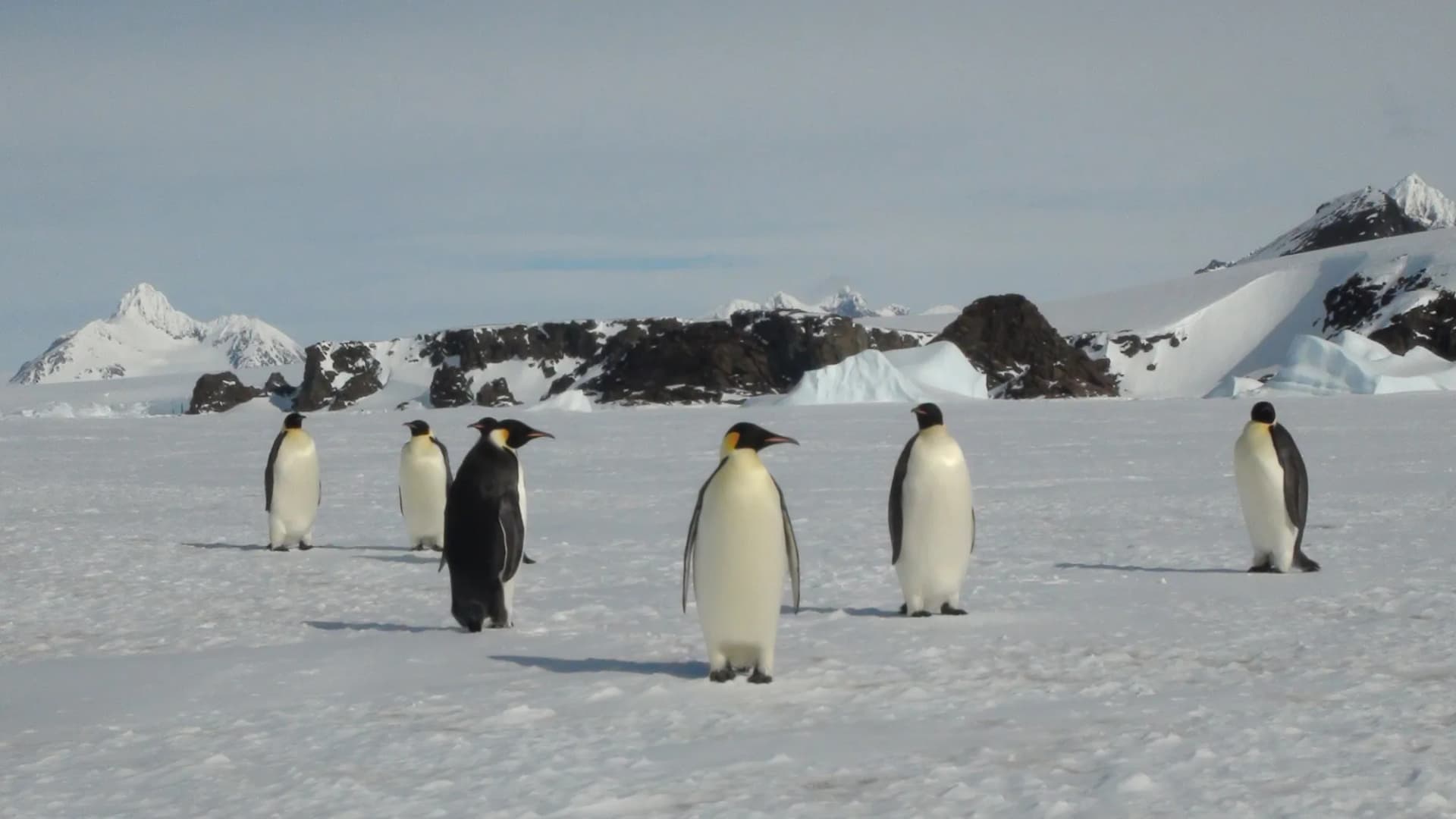
The world's largest penguin species took a critical step toward extinction after the International Union for Conservation of Nature reclassified the emperor penguin from "Near Threatened" to "Endangered" on its Red List of Threatened Species, placing the iconic Antarctic bird two steps from extinction in the wild.
The reclassification, announced April 9, 2026, reflects what scientists describe as an accelerating collapse of the sea ice emperor penguins depend on for survival. Antarctic sea ice has been at record lows since 2016, and roughly half of the more than 60 known emperor penguin colonies have since deteriorated or failed entirely. In 2022, four out of five colonies in western Antarctica's Bellingshausen Sea collapsed due to sea ice loss alone. This year, researchers located new moulting sites for the species via satellite imagery, only to find those sites were melting beneath the birds' feet.
Emperor penguins require stable "fast ice," sheets fixed to the coastline, seafloor, or grounded icebergs, to breed, raise chicks, and moult each year. When that ice fractures too early in spring, chicks that have not yet developed waterproof feathers are forced into the water before they can survive independently. They drown or freeze. Rising water temperatures are simultaneously pushing the fish, squid, and crustaceans that penguins prey on into shifting distributions across the Southern Ocean, compressing foraging opportunities further.
More than 20,000 adult emperor penguins, roughly 10 percent of the total population, disappeared between 2009 and 2018. Remote sensing surveys in 2020 counted approximately 256,500 breeding pairs across 54 colonies. The IUCN projects that number will halve by the 2080s unless greenhouse gas emissions are drastically cut.
Dr. Philip Trathan, who led the emperor penguin assessment for the IUCN SSC Penguin Specialist Group, said experts "concluded that human-induced climate change poses the most significant threat to emperor penguins." His assessment of where the species is headed left little room for ambiguity: "Ultimately, there's only one trajectory, and that's downwards."
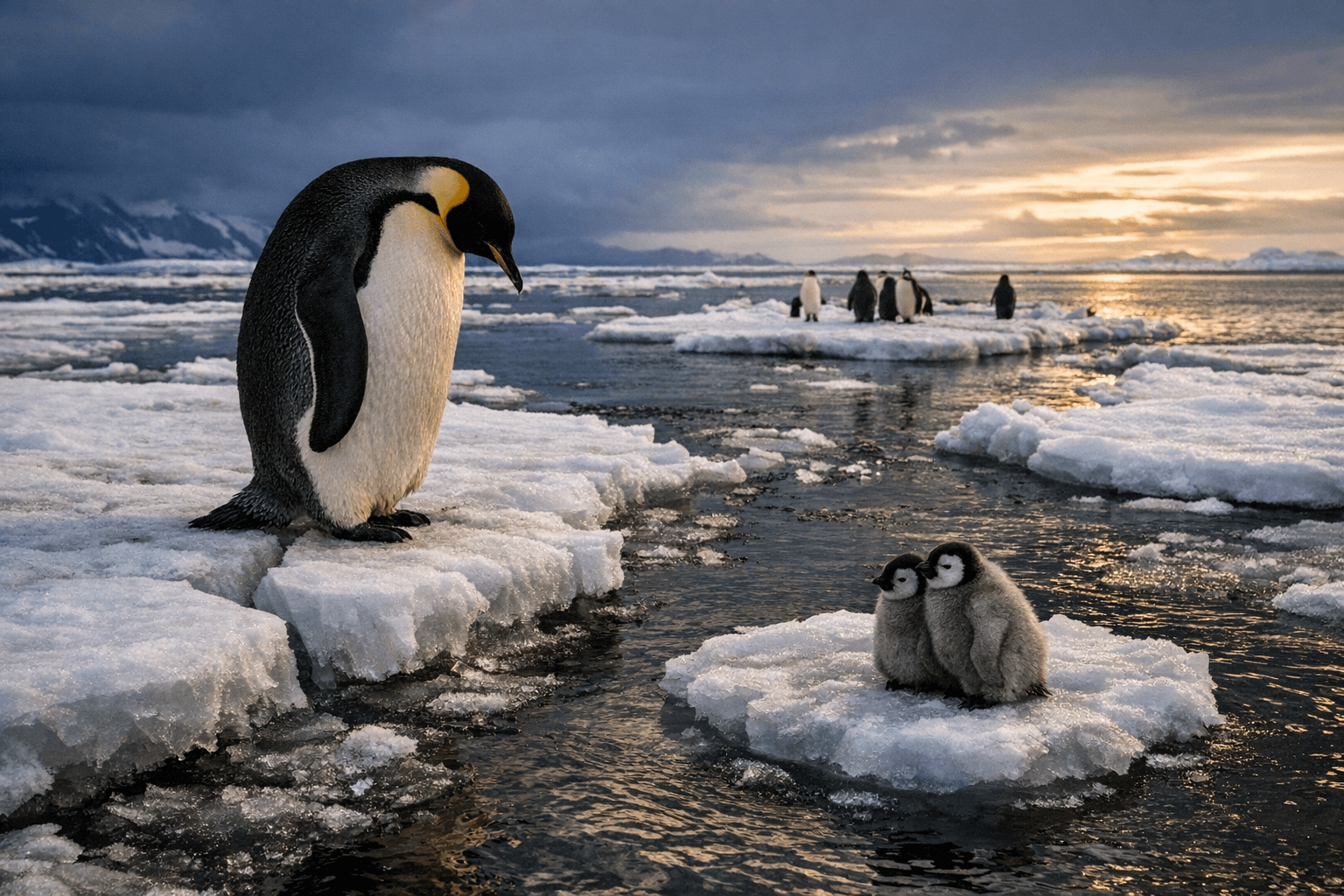
Martin Harper, CEO of BirdLife International, which coordinated the emperor penguin assessment as the official Red List Authority for birds, called the listing "a stark warning: climate change is accelerating the extinction crisis before our eyes. Governments must act now to urgently decarbonise our economies."
The April 9 update also moved the Antarctic fur seal from "Least Concern" directly to "Endangered." The species' population plunged more than 50 percent in 26 years, from approximately 2,187,000 mature individuals in 1999 to just 944,000 in 2025, as rising ocean temperatures push krill to depths beyond the seals' reach. Antarctic fur seals were nearly hunted to extinction for their pelts in centuries past. Their dramatic recovery now faces a second collapse, this time from a warming ocean rather than a hunting ship. The southern elephant seal was simultaneously moved from "Least Concern" to "Vulnerable," following an avian flu outbreak that since 2020 has killed more than 90 percent of newborn pups in some colonies.
IUCN Director General Dr. Grethel Aguilar described the dual listings as "a wake-up call on the realities of climate change," adding that "Antarctica's role as our planet's frozen guardian is irreplaceable." BirdLife International is pushing governments to formally designate the emperor penguin as an Antarctic Specially Protected Species when countries convene at the Antarctic Treaty Consultative Meeting in May 2026.
The IUCN Red List carries no direct legal enforcement power but serves as the globally recognized scientific benchmark that governments and conservation bodies use to shape policy. The U.S. Fish and Wildlife Service listed emperor penguins as "threatened," one tier below endangered, under the Endangered Species Act in October 2022. Trathan has called emperor penguins "a sentinel species that tell us about our changing world and how well we are controlling greenhouse gas emissions that lead to climate change." The IUCN's updated Red List signals that sentinel is now sounding an alarm the world has yet to adequately hear.
This article was produced by Prism’s automated news system from verified source data, official records, and press releases, then run through automated quality and moderation checks before publishing. The system is built and supervised by the people who set the standards it runs under. Read our full AI policy.
Did this article answer your question?


