Six Months After the Cease-Fire, Gazans Face an Uncertain Future
A coalition of five humanitarian organizations concluded the Gaza ceasefire plan is "failing" six months after the October 2025 truce took effect.
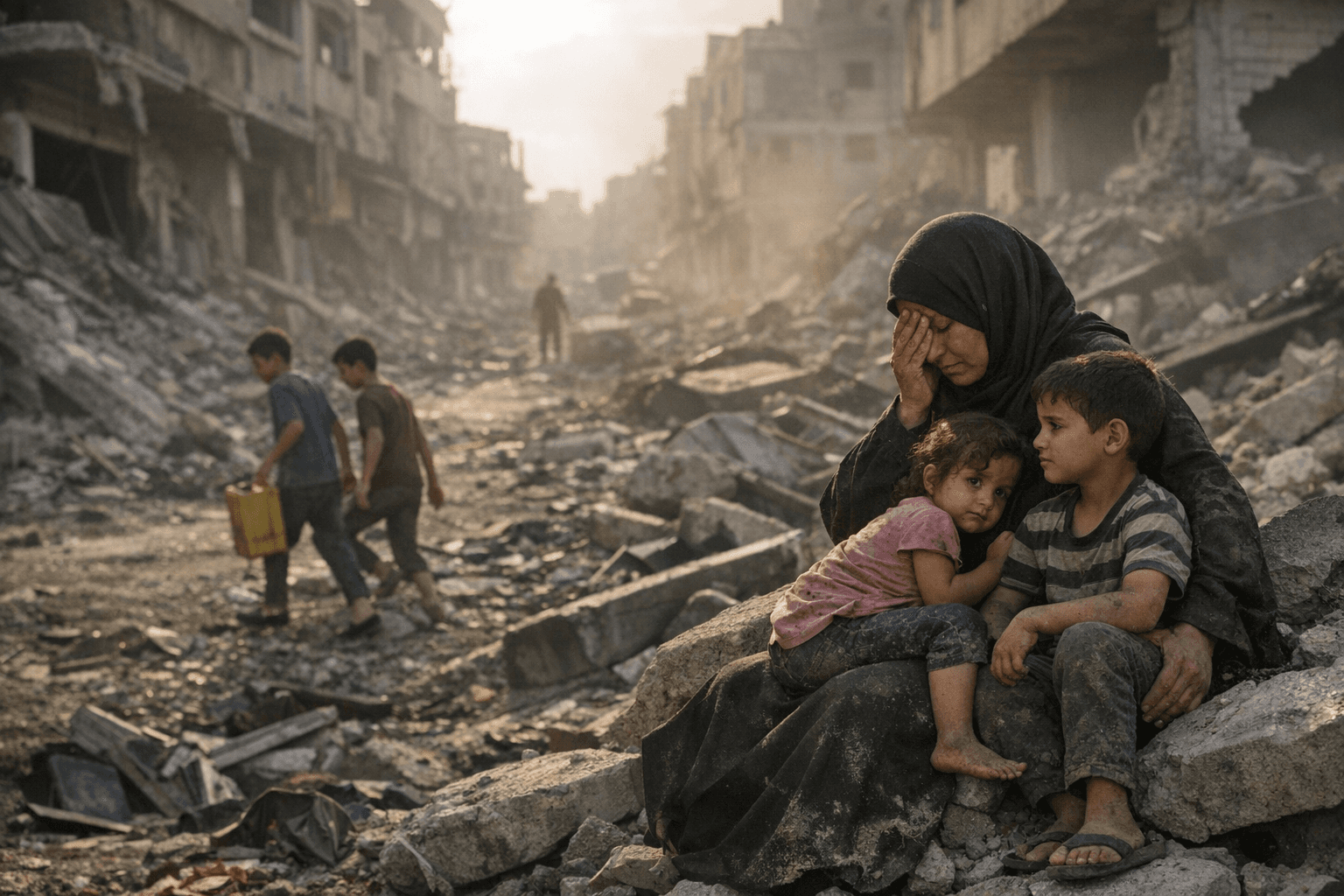
When Abdel Nasser al-Jalousi returned to his home in Khan Younis after the cease-fire, he found walls but little else. No doors. No windows. No lights, no bathroom, no furniture. "Just completely empty, exposed rooms standing on columns, nothing but a damaged, abandoned structure," the 55-year-old told reporters. He had spent months displaced with his 16-member family, shuttling between areas of Gaza before the October 10, 2025 truce gave him the chance to go back. Going back, it turned out, was not the same as going home.
Six months after Israel and Hamas signed the cease-fire agreement in Egypt, brokered under the Trump administration's 20-point Gaza plan and endorsed by UN Security Council Resolution 2803, the territory that housed more than two million people before the war remains a landscape of ruin, displacement, and deepening deprivation.
A scorecard released April 9 by five major humanitarian organizations, including Oxfam, Save the Children, the Danish Refugee Council, the Norwegian Refugee Council, and Refugees International, assessed the ceasefire plan against its own stated objectives and reached a damning conclusion: the implementation of core civilian protection, humanitarian access, and reconstruction provisions is failing. Palestinians, the organizations found, are continuing to suffer extreme deprivation, hunger, injury, and death due to ongoing Israeli attacks, movement restrictions, and aid obstructions.
The scale of physical destruction defies easy comprehension. According to the Palestinian Central Bureau of Statistics, 94 percent of medical facilities across Gaza have sustained destruction or severe impairment, leaving all 36 hospitals operating far below capacity. An Integrated Food Security Phase Classification report covering late 2025 and early 2026 found that 1.6 million people, representing 77 percent of those assessed, faced severe food insecurity. The war, according to figures from the UN's Office for the Coordination of Humanitarian Affairs, has killed more than 69,000 Palestinians.
The cease-fire did produce measurable results in some areas. It reduced the intensity of hostilities and secured the release of all Israeli hostages held in Gaza, along with agreed numbers of Palestinian detainees. UNICEF and the World Food Programme reported delivering more than 10,000 trucks of aid in the weeks following the October truce, providing clean drinking water to more than 1.6 million people. By January, WFP Deputy Executive Director Carl Skau said most families he visited were eating at least once a day, sometimes twice.
But early gains in food security have not closed the gap between survival and stability. Hundreds of thousands of Gazans remain displaced, living in makeshift tents or damaged structures without reliable electricity, water, or sanitation. In northern Gaza, residents like Kamal Abu Hsheish, originally from the Jabalia camp, have watched months pass without a clear path back to ordinary life. His stated wish: to return to the life he knew before the war.
For those like al-Jalousi who did return, the reconstruction effort has so far consisted largely of stopgap measures. A UNDP partial rehabilitation project helped him patch together a temporary solution, replacing doors and windows, but full reconstruction of Khan Younis, Gaza City, and the strip's other devastated urban centers has not begun in any meaningful way. Humanitarian organizations warn that without a sustained international commitment and a political framework capable of moving the cease-fire from its first phase to a durable political settlement, the gap between a reduced war and an actual peace will continue to define life in Gaza.
This article was produced by Prism’s automated news system from verified source data, official records, and press releases, then run through automated quality and moderation checks before publishing. The system is built and supervised by the people who set the standards it runs under. Read our full AI policy.
Did this article answer your question?


