Putin Uses Iran as Blueprint for Outlasting Western Pressure on Autocracies
Russia's playbook for surviving Western sanctions is borrowed directly from Tehran, from shadow fleets to drone factories to coordinated digital repression.
The Proof of Concept
For decades, the Islamic Republic endured crippling Western sanctions, navigating a shrinking economy, diplomatic isolation, and repeated predictions of its imminent collapse, and never fell. Vladimir Putin was paying close attention. When the United States and its allies imposed what they called "swift and severe" economic penalties on Russia after its full-scale invasion of Ukraine in February 2022, the Kremlin did not improvise. It executed a playbook that Tehran had spent years refining, and the two countries have since formalized that alignment into a comprehensive strategic partnership that Western policymakers are only beginning to reckon with.
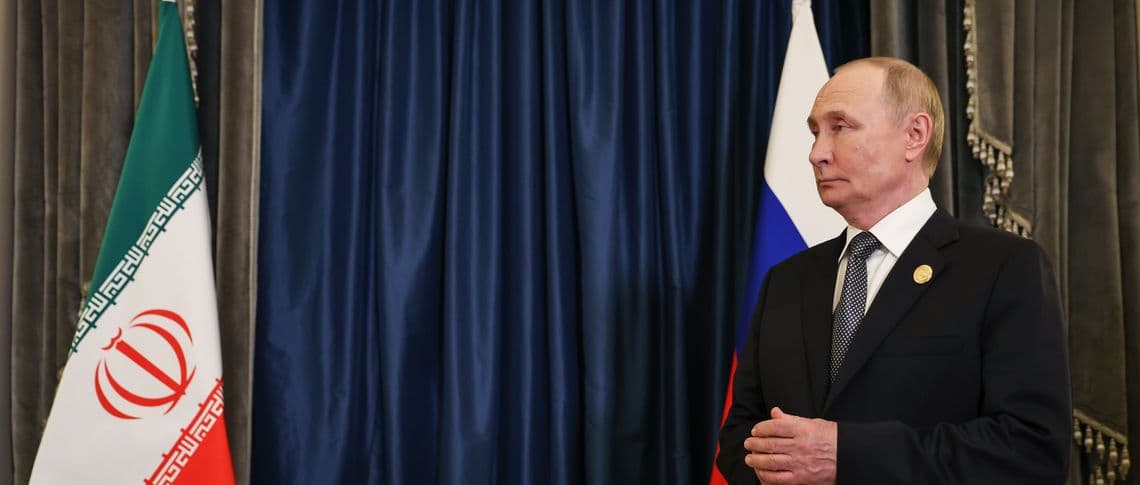
The pace of Russia-Iran rapprochement accelerated after Russia launched its full-scale invasion of Ukraine in February 2022, culminating in the signing of the Iranian-Russian Treaty on Comprehensive Strategic Partnership in January 2025. That treaty is not a diplomatic courtesy. The 2025 Russia-Iran Comprehensive Strategic Partnership Treaty explicitly embeds cooperation on "international information security" and managing national internet segments, giving legal cover to regime-security collaboration in digital repression.
Sanctions Evasion, Transferred
The most immediately consequential lesson Russia absorbed from Iran was how to keep oil money flowing when the world's largest financial systems are closed to you. Russia has benefited from decades of Iran's adaptive learning to evade sanctions and develop techniques to evade Western export controls of restricted technology. When the United States tried to impose "swift and severe" sanctions on the Kremlin for its 2022 assault on Ukraine, the Putin regime employed evasion measures familiar to its Iranian partners.
Russia rented or purchased Iran's shadow tankers, adopted the practice of transferring illicit cargo at sea via ship-to-ship transfers, utilized front companies, worked through third-country intermediaries, and established parallel money exchange mechanisms. These were not crude workarounds; they were battle-tested techniques that Iran had refined over decades of operating under American pressure. Since 2022, Russia has created "a new parallel foreign trade infrastructure integrated into its economic model," in which initially "temporary loopholes" have become "a stable mechanism under de facto state protection" and part of a state-backed "survival infrastructure."
China and India are the primary buyers of sanctioned oil, benefiting from discounted supply while shielding adversaries from American pressure. Beijing has developed methods to import both Iranian and Russian oil while circumventing Western financial architecture, providing both economies with a critical revenue cushion that sanctions alone cannot close.
Drones, Factories, and Military Integration
The partnership extends well beyond oil. Iran's drone program offered Russia something no Western ally could match in 2022: a proven, deployable weapons system built to operate under sanctions constraints. As part of a deal, Iran transferred 600 disassembled Shahed-16 drones, components for 1,300 drones, training, and technical expertise to Russia to assist in its war in Ukraine. By 2025, Moscow had moved roughly 90 percent of Shahed assembly operations to Russian territory. The transfer represented not just a weapons deal but a technology transfer model: rather than remaining dependent on Iranian supply chains, Russia localized production to insulate itself against further pressure.
Since the signing of the 2025 strategic partnership agreement, cooperation between the two states deepened across military and intelligence domains. This depth of integration makes the relationship qualitatively different from the opportunistic arrangements Russia has pursued with Venezuela or Belarus. It is a structural alignment between two states that have concluded, independently and then together, that the Western-led international order is both hostile to their survival and beatable.
The Color Revolution Fear That Binds Them
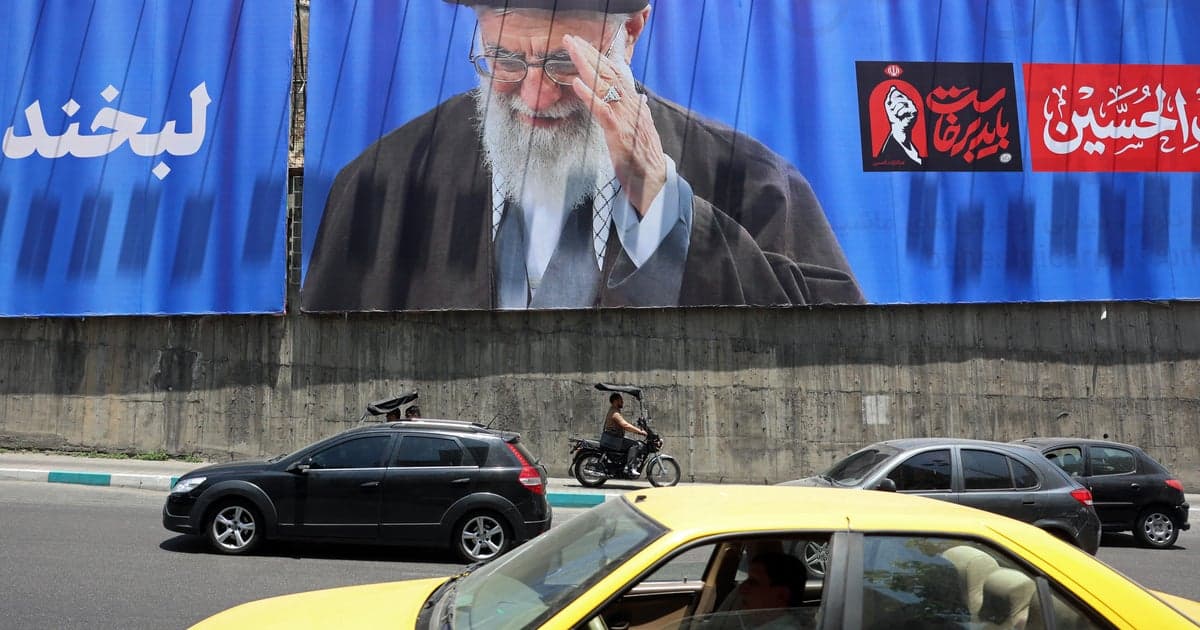
Beneath the economics and the military logistics lies a shared political anxiety. Perhaps more than any other factor, Russian and Iranian concerns about their internal stability, and perceived U.S. attempts to undermine it, have cemented their modern partnership. Both Putin and Khamenei harbor deep-seated fears of color revolutions and have repeatedly resorted to violence to crush the numerous popular uprisings that have threatened their rule.
That fear explains why the 2025 treaty addresses internet governance alongside oil and arms. Russia adopts a more sophisticated approach to digital control than Iran. Prohibiting access to sites is selective; when a foreign service is to be blocked, a domestic alternative is usually promoted in advance. VPNs are banned in name only, with an emphasis on propaganda and controlling the narrative, rather than switching off the internet entirely. Iran, meanwhile, demonstrated its own willingness to reach for the kill switch: beginning on December 28, 2025, millions of Iranians gathered nationwide to protest the Islamic Republic government amid the country's deepest economic crisis in modern history, marked by currency collapse, inflation, and widespread loss of public confidence. In response, the Iranian government imposed a near-total internet blackout.
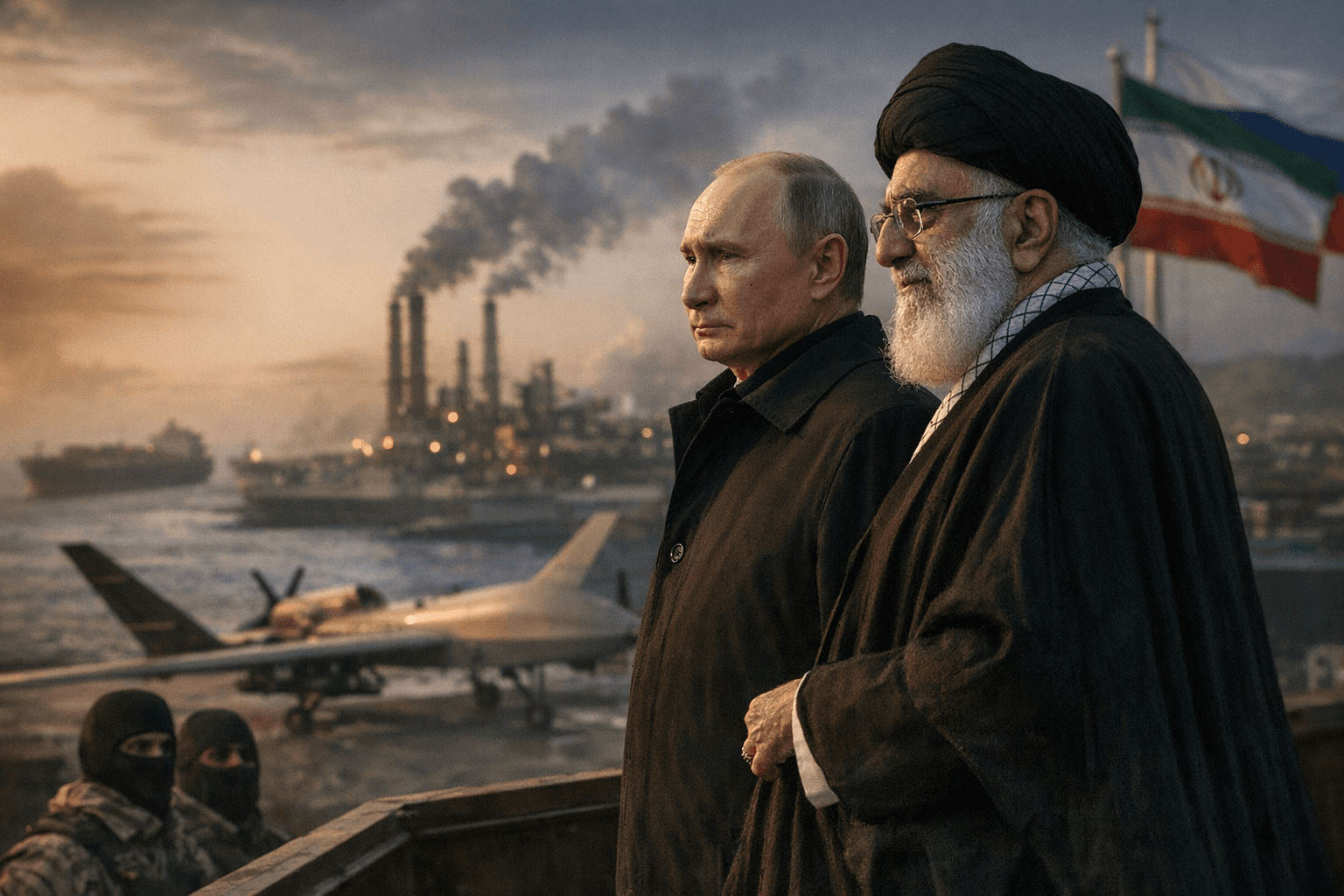
The two regimes compare notes on which methods work, and the 2025 treaty institutionalizes that exchange.
The Broader Coalition of Vulnerability
Russia and Iran do not operate in isolation. China, Russia, Iran, and North Korea have constructed elaborate systems to circumvent and evade U.S. sanctions; third-country procurement networks enable these sanction evasion systems. North Korea provides ammunition and manpower agreements; China provides the economic gravitational pull that keeps the entire system from collapsing under Western pressure. What binds these states together is less shared ideology than a shared enemy and a shared vulnerability.
One analysis from the Foundation for Defense of Democracies describes the dynamic precisely: faced with isolation, resource denial, and the threat of collapse, targeted states have historically responded by forming new alignments and coalitions. What emerges is not a combination of strength, but something more desperate: a coalition of vulnerability. Putin has converted that desperation into a strategic asset, arguing to audiences from Havana to Pyongyang that survival against the West is not only possible but achievable through coordinated resistance.
Iran's War and Russia's Calculus in 2026
The ongoing conflict involving Iran in 2026 has sharpened the strategic picture considerably. Carefully calibrated involvement in the Middle East amplifies Moscow's leverage from Havana to the frontlines in Ukraine, according to analysis from Chatham House, which characterizes Russia's posture in the conflict as simultaneously spectator, beneficiary, and player. A wider war stretching U.S. attention and military resources across two theaters simultaneously is, from the Kremlin's perspective, an outcome worth encouraging even if Russia's direct role remains deniable.
In aiding Iranian strikes, Russia reverts to an old playbook to harm the U.S. The Hudson Institute frames the strategy bluntly: bleeding America, splitting NATO, and keeping Tehran's regime alive all serve the same underlying objective of preserving Moscow's room to maneuver in Ukraine and beyond.
The Limits of the Blueprint
The model is not without cracks. From Armenia and Syria to Venezuela and Iran, Moscow's inability since 2022 to aid its allies in times of crisis has exposed the limits of the coalition, with Russia proving repeatedly that it can leverage relationships for its own benefit but cannot or will not extend itself to protect partners when they come under direct military threat. The Atlantic Council notes that despite much speculation over an emerging "Axis of Autocrats," Putin has "so far proved unwilling or unable to repay Tehran for its earlier backing" in full.
Iran's own internal strains, particularly the economic collapse that drove millions into the streets in late 2025, demonstrate that sanctions do accumulate real damage over time. The question Western policymakers face is not whether the pressure works in principle, but whether it works fast enough against states that have had decades to build the infrastructure to absorb it. The United States, the EU, the United Kingdom, and the broader G7 sanctions coalition need to step up enforcement of their existing sanctions against Russia, including levying additional sanctions on Russia's energy sector, targeting currently unsanctioned oil companies, refineries, ports, and financial institutions that facilitate oil and gas transactions.
Putin's bet is ultimately a temporal one: that Western political will fractures before Russian economic endurance does. Iran, still standing after four decades of sanctions, is the data point he points to. Whether that precedent holds is now one of the defining questions of the post-2022 international order.
This article was produced by Prism’s automated news system from verified source data, official records, and press releases, then run through automated quality and moderation checks before publishing. The system is built and supervised by the people who set the standards it runs under. Read our full AI policy.
Did this article answer your question?