James Webb reveals white dwarf planet likely migrated inward billions of years later
James Webb found WD 1856 b hotter than expected, a clue it slipped inward only after its star became a white dwarf. The planet now skims its remnant star every 34 hours.
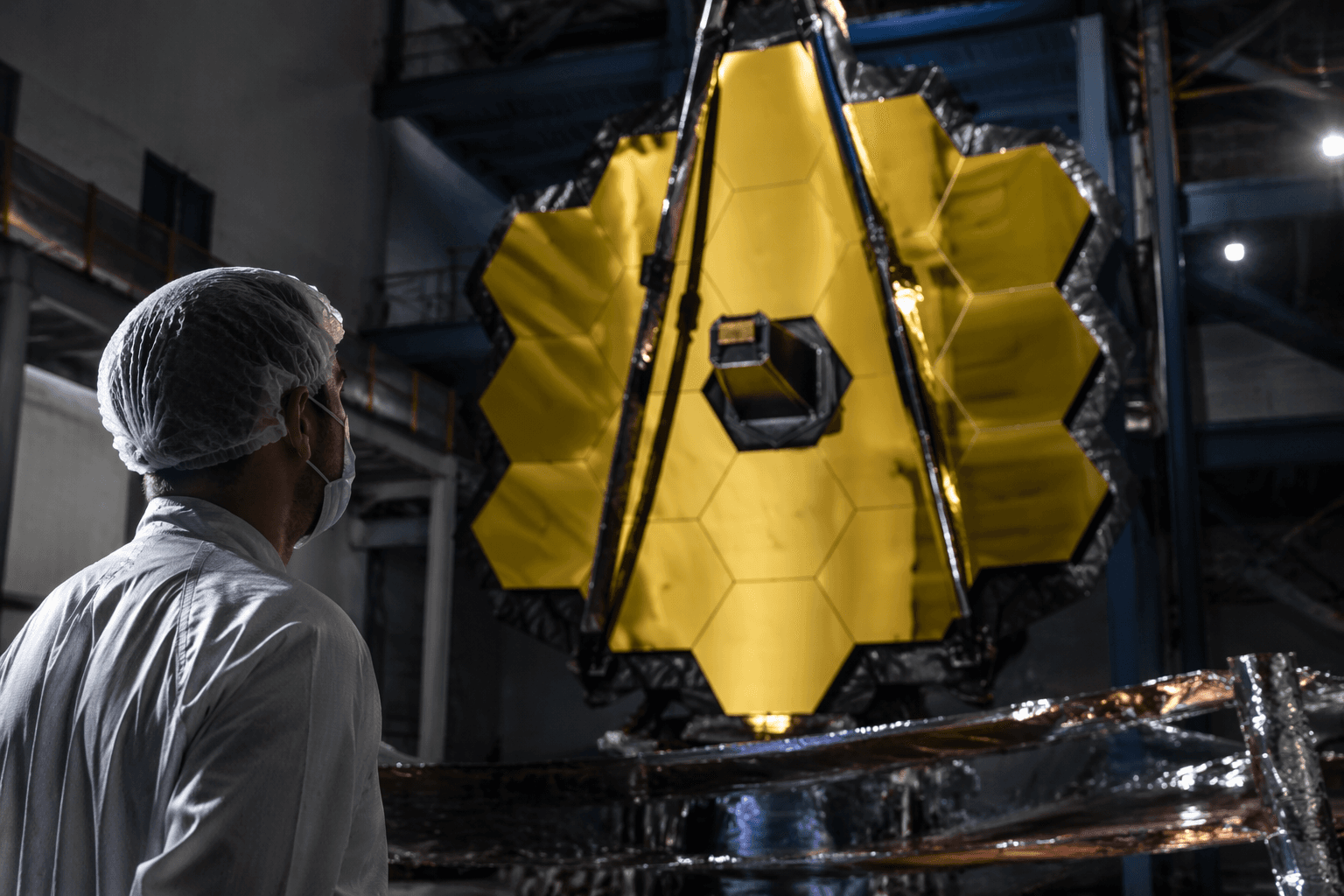
A Jupiter-sized planet 80 light-years from Earth is forcing astronomers to rewrite how they think a world can survive the death of its star. WD 1856 b circles the white dwarf WD 1856+534 every 34 hours, at a distance of less than 2 million miles, or about 3 million kilometers, close enough that it should have been swallowed during the star’s red giant phase.
Instead, the James Webb Space Telescope found evidence that the planet likely did not stay in that tight orbit through the star’s expansion at all. The new measurements show WD 1856 b is significantly warmer than expected, and that extra heat helped researchers conclude the gas giant probably moved inward billions of years after its star became a white dwarf.
The study, published July 1, 2026 in Nature under the title Aerosols and Hydrocarbons in the Atmosphere of a White Dwarf Planet, used Webb to watch the planet transit its host star for the first time and to measure both its temperature and atmospheric molecules. The observations also yielded a mass estimate of four to 11 Jupiter masses, underscoring that this is not a small survivor, but a massive gas giant traveling through a region astronomers have called a danger zone.
Researchers led by Ryan MacDonald, Christopher O’Connor, Victoria Boehm and Nikole Lewis said the planet appears to have formed farther out, where it could remain safe while the star exhausted its fuel and collapsed into a white dwarf. Only later, they said, did something push the planet into its current orbit around the stellar remnant. Cornell reporting said the atmosphere contains methane and hazes, adding another clue to the planet’s unusual history.
The result matters because it offers a rare look at what can happen to planetary systems after a star dies. The original detection of WD 1856 b came in 2020 with the Transiting Exoplanet Survey Satellite and the retired Spitzer Space Telescope, but Webb’s sharper view turned a strange object into a test case for planetary migration. Scientists involved in the work say the Sun will run out of fuel in about five billion years and expand into a red giant, making WD 1856 b a glimpse of how Jupiter-like planets may be rearranged rather than simply destroyed.

Linda B. Glaser of Cornell University described the work as like using a “time machine” to peer into the distant future of the solar system. The fate of outer planets such as Jupiter and Saturn remains uncertain, and Earth’s long-term prospects are even less clear, but WD 1856 b has now given astronomers a concrete example of a world that appears to have arrived late to the wreckage.
This article was produced by Prism’s automated news system from verified source data, official records, and press releases, then run through automated quality and moderation checks before publishing. The system is built and supervised by the people who set the standards it runs under. Read our full AI policy.
Did this article answer your question?