January Wolf Movements Show Territorial Shifts and Wide Exploration in Southwest Colorado
Collared wolves held territory in northwest Colorado while at least one roamed broadly across the southwest, a CPW map shows Dec. 19–Jan. 27 — important for ranchers, recreationists and managers.
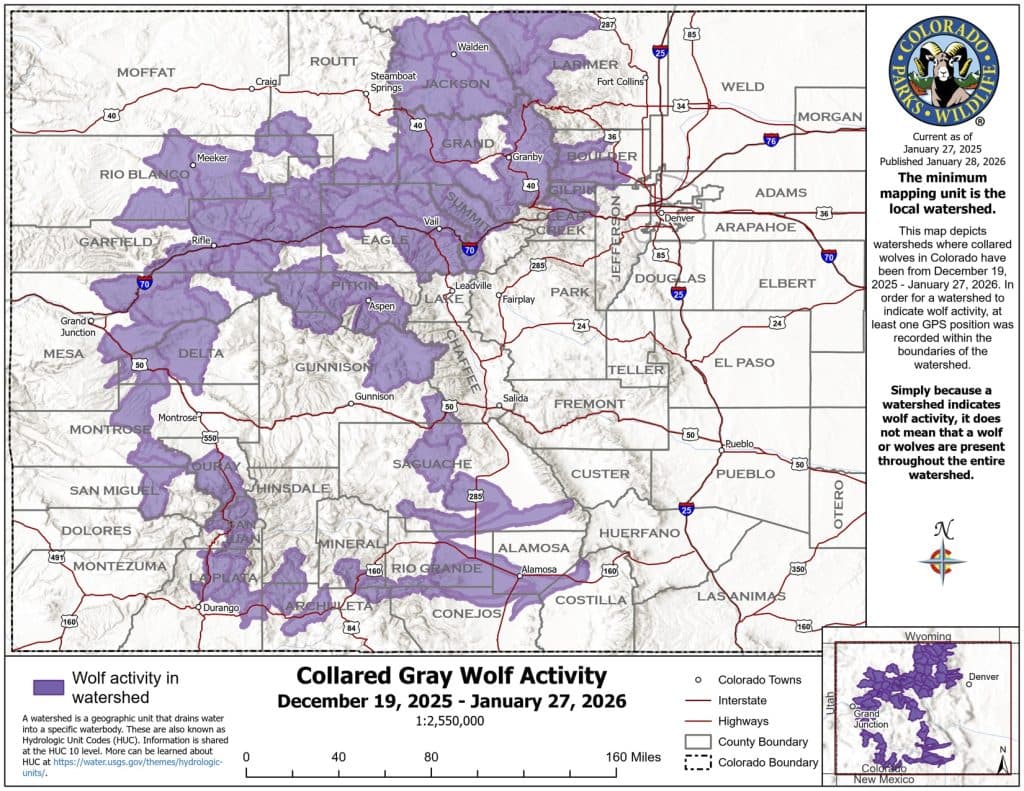
Colorado Parks and Wildlife’s monthly wolf activity map, covering Dec. 19–Jan. 27, shows a split picture: established territories in the northwest and wide exploration across southwestern watersheds. The map plots GPS locations for collared gray wolves and highlights both clustered pack behavior and long-distance movements that affect a broad swath of the state.
Persistent activity appeared in Rio Blanco, Routt, Jackson, Grand, Summit, Eagle, Pitkin and Garfield counties. Four established packs are named on the map and in reporting: the Copper Creek Pack in Pitkin County, the King Mountain Pack in Routt County, the One Ear Pack in Jackson County and the Three Creeks Pack in Rio Blanco County. In those areas, wolves appear to be settling into territories after reintroduction efforts in the program’s first two years.
At the same time, the January map shows expanded detections across southwestern Colorado watersheds. Detections crossed watersheds in Mesa, Delta, Gunnison, Saguache, Rio Grande, Conejos, Archuleta, Hinsdale, San Juan, La Plata, San Miguel and Montrose counties. At least one collared wolf “roamed widely across southwestern Colorado in the last month,” and the map notes that exploration pushed further in the southwest, including near Colorado’s tribal lands.
Those movement patterns match expectations for different life stages and social conditions. Reports note that lone wolves commonly make broad movements as they search for mates, food sources and quality habitat. For managers, predictability improves once wolves pair and establish dens. Reid DeWalt, deputy director of Colorado Parks and Wildlife, told lawmakers at a Jan. 8 Joint Budget Committee meeting: “The program becomes much more predictable when wolves pair and they get into a den site. They will defend that den site and that territory, and they’ll stay put. That makes the program much easier to implement. We can assign those range riders, put those nonlethal techniques (in place), and the predictability goes very high.”
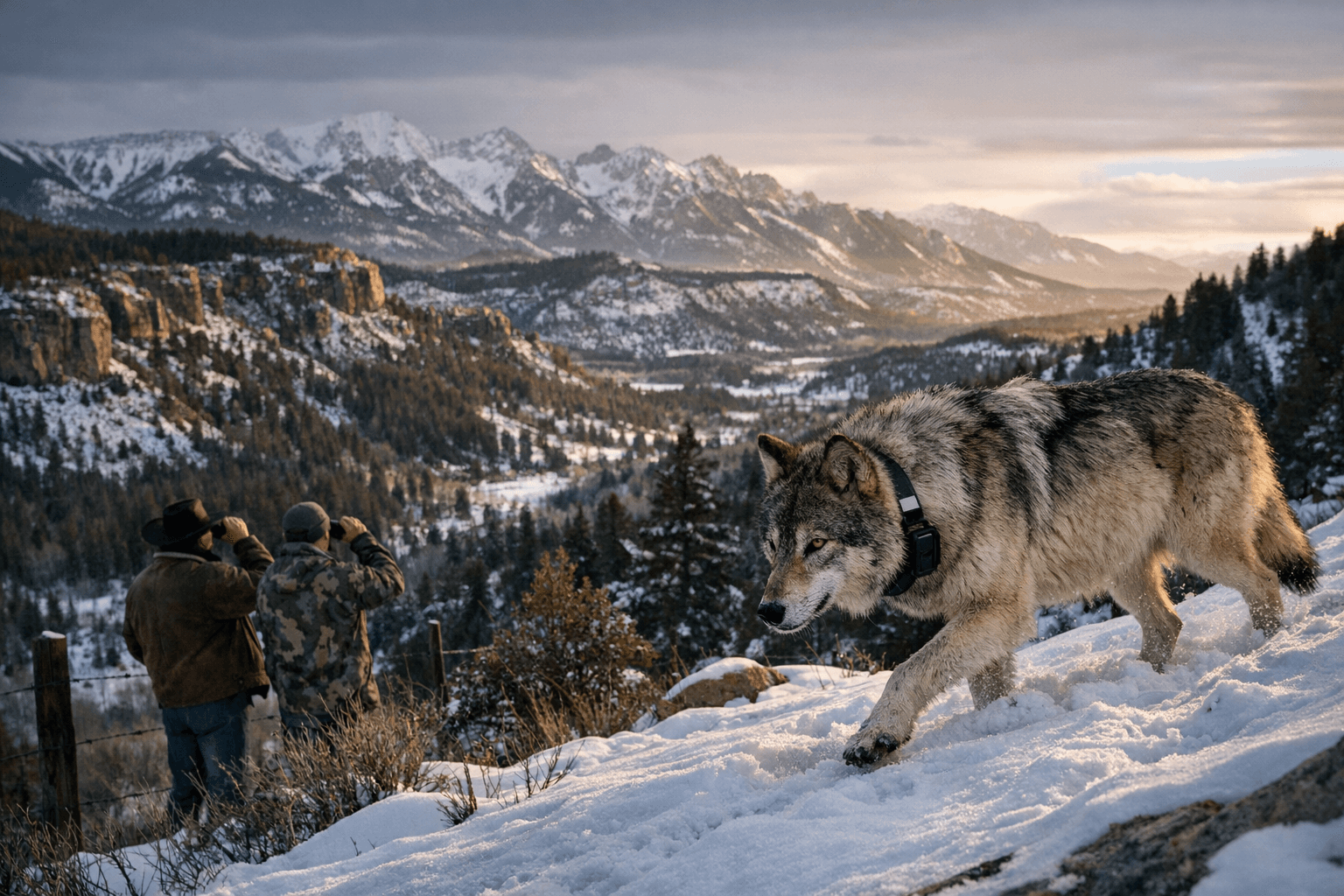
CPW also confirmed no gray wolves will be released this winter and has paused planned winter releases. Agency communications and reporting around the pause point to federal restrictions and survival concerns as factors, and officials have provided federal authorities with information about importing wolves from Canada.
For outdoor businesses, livestock owners and local governments, the practical takeaway is to expect both localized territorial behavior in northwest counties and sporadic, long-range detections in the southwest. Monthly CPW maps and the gif comparison of December and January visuals give the most up-to-date picture; as wolves pair and den, predictability should increase and allow targeted use of range riders and nonlethal tools. Follow-up reporting and CPW releases are likely to clarify the number of collared animals, any detections on or adjacent to specific tribal lands, and the agency’s timeline for future releases.
Know something we missed? Have a correction or additional information?
Submit a Tip