Japan and China trade ministers exchange brief talk at APEC meeting
Japan and China kept their distance in Suzhou, with Ryosei Akazawa and Wang Wentao only exchanging a brief word before dinner. The silence around formal talks said more than the encounter itself.

The most revealing moment in Suzhou was not a meeting, but the absence of one. Japan’s trade minister, Ryosei Akazawa, said he had no formal bilateral talks with China’s commerce minister, Wang Wentao, even though the two exchanged a brief conversation before dinner during APEC ministerial meetings.
Akazawa said he approached Wang before the dinner began on Friday and spoke briefly, but declined to give details, calling it “a diplomatic exchange.” That restraint fit the mood surrounding the encounter. Both governments were present in the same room, but neither was ready to signal a real thaw in a relationship that remains strained by security fears, trade pressure and political anger.
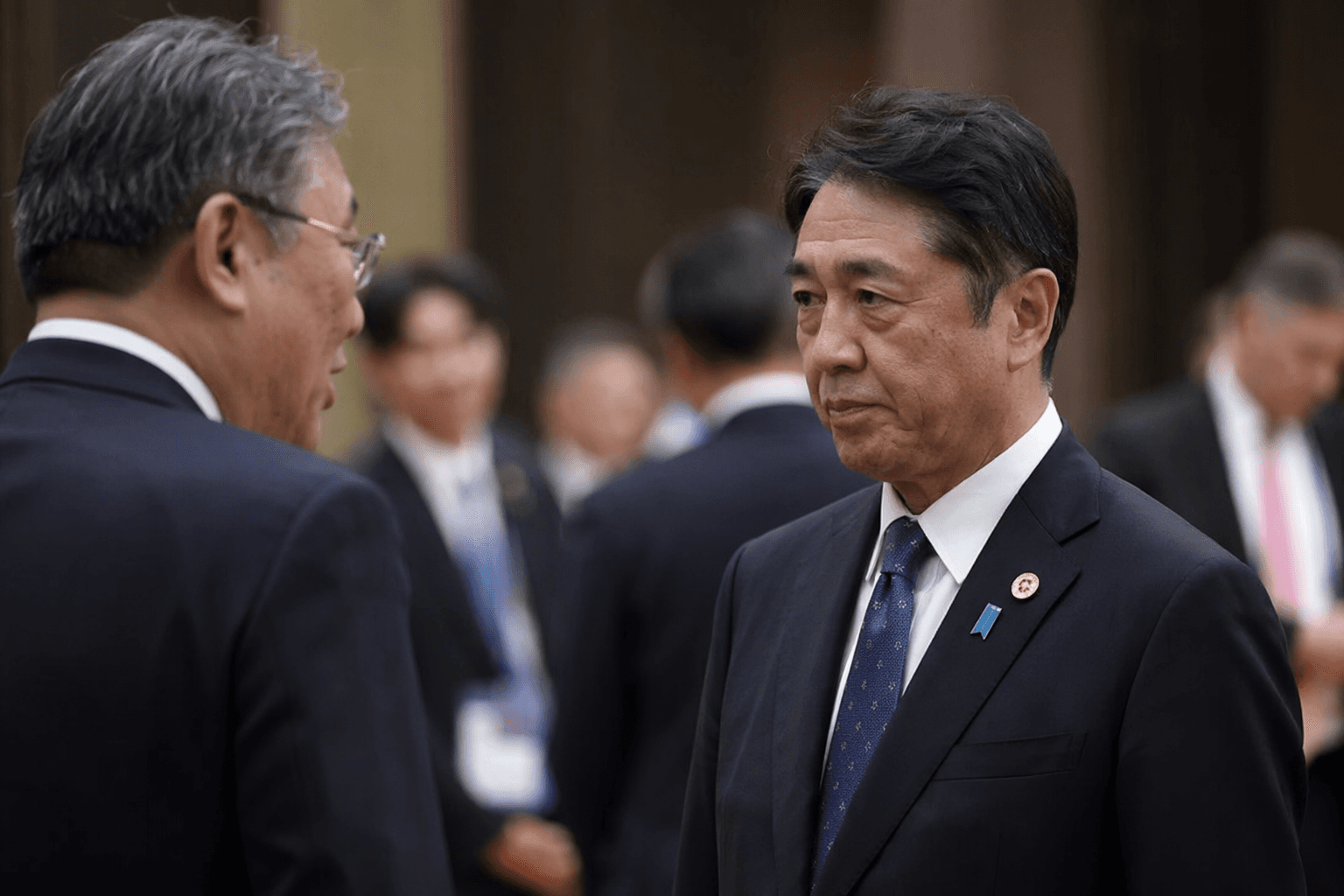
The setting gave the exchange added weight. Wang chaired the APEC Ministers Responsible for Trade meeting in Suzhou, Jiangsu province, on May 22-23, 2026. APEC said the talks centered on regional economic integration, supply chain resilience, digital trade and efforts to reduce barriers to cross-border commerce, all topics that underscored how much both economies still depend on stable contact even as their political relationship deteriorates.
Akazawa’s visit carried unusual significance because he was the most senior Japanese official to travel to China since the diplomatic dispute erupted in November 2025. That crisis began after Japanese Prime Minister Sanae Takaichi said in parliament that a Chinese attack on Taiwan could amount to an existential crisis for Japan and could justify a military response. Beijing reacted sharply, and the dispute quickly spilled beyond rhetoric.
By November 2025, Japan was warning citizens in China to step up safety precautions and avoid crowded places as tensions deepened. By May 2026, Reuters reported that China had cut Japan off from several heavy rare earths and other materials for at least four months, a reminder that the row was not just diplomatic but industrial, with direct implications for advanced manufacturing and supply chains.
That is why even a short exchange in Suzhou mattered. Japan needs dialogue with China to protect trade flows, industrial planning and regional stability. China, for its part, has an interest in showing that communication has not fully broken down, even while it keeps pressure on Tokyo. The brief conversation between Akazawa and Wang did not resolve any dispute, but it did show that the channel remains open, however narrow, in a relationship still defined by confrontation.
Know something we missed? Have a correction or additional information?
Submit a Tip

_updates.jpg&w=1920&q=75)