London phone theft fuels global extortion and smuggling network
Stolen phones in London have become tools for extortion and export, with police tying one network to as many as 40,000 devices and 46 arrests.
_updates.jpg&w=1920&q=75)
A stolen phone in London can now become a gateway to blackmail, account takeover and a cross-border smuggling chain that stretches to China and Hong Kong. Police say the city’s phone theft market has evolved far beyond street robbery, with thieves taking devices for resale, ransom and export.
The Metropolitan Police said mobile phone thefts rose from 91,481 in 2019 to 117,211 in 2024. It also recorded 27,167 thefts in the first quarter of 2025, while warning that later data was still being validated after a system change. Even so, the force said theft fell by about 10,000 incidents in 2025, a 12 percent drop, after a major enforcement push.

At the center of that crackdown is a network police say may have trafficked up to 40,000 stolen phones from the UK to China and Hong Kong in 2024 and 2025. Investigators said the haul may have accounted for around 40 percent of all phones stolen in London during that period. The case began in December 2024, after officers seized about 1,000 iPhones at Heathrow Airport and traced the shipment back through the chain.
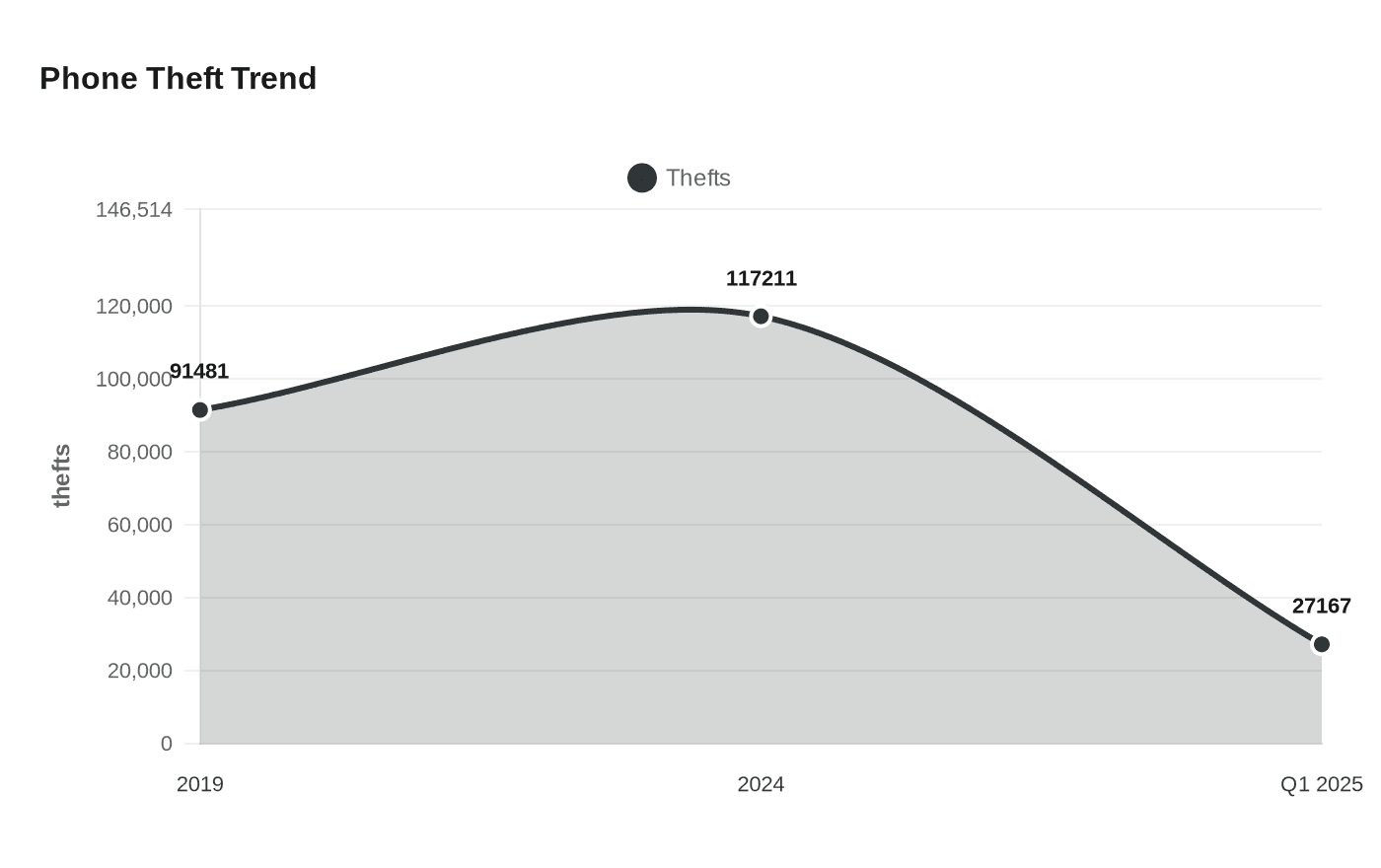
Police said the investigation led to 46 arrests and the recovery of more than 2,000 devices. Officers also said some street thieves were paid up to £300 per stolen phone, a price that helps explain why snatching remains so organized and so persistent across central London, Bermondsey and Greenwich.
The risk to victims does not end at the curb. Apple says Stolen Device Protection adds extra security requirements when an iPhone is away from familiar locations, a safeguard designed to protect accounts and personal information if a phone is stolen. For victims, the first minutes matter: locking the device, protecting account access and moving quickly can determine whether the theft becomes a simple loss or a deeper financial breach.
Police say quick intervention can also bring phones home. In south-east London, a case tied to phone snatching in 35 incidents ended with three people sentenced, 32 phones recovered and 30 returned to their owners. Sir Mark Rowley and Commander Andrew Featherstone have both framed the crackdown as a fight against organized crime, not just a wave of opportunistic theft.
That is the larger warning from London’s phone theft crisis: the crime scene is the street, but the business model is global.
Know something we missed? Have a correction or additional information?
Submit a Tip