Japan Ends Arms Export Ban, Clearing Path for Fighter Jet Sales
Japan scrapped its ban on lethal weapons exports, opening the door to fighter jet and drone sales as Tokyo deepens its military pivot.
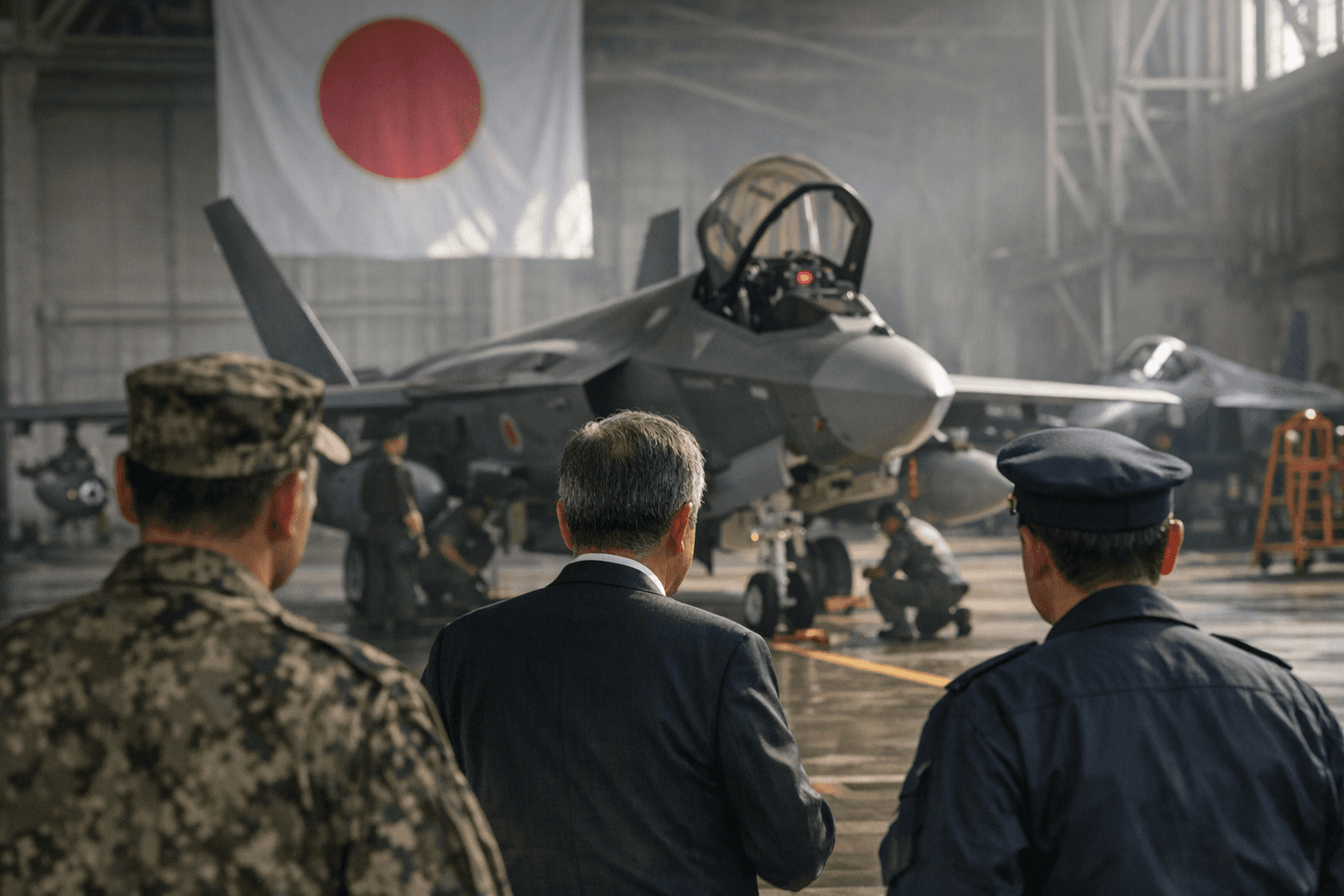
Japan on Tuesday approved scrapping a ban on lethal weapons exports, a decisive break from the postwar restraint that kept the country largely out of the global arms trade and now clears the way for future sales of fighter jets, missiles and destroyers. The Cabinet decision by Prime Minister Sanae Takaichi’s government removes the last formal hurdle for a new guideline that Tokyo says is meant to strengthen its defense industrial base and help build a more resilient security environment as tensions rise around Japan.
The change rewrites a system that began with the Three Principles on Arms Exports in 1967, hardened into an across-the-board ban in 1976, and was only gradually loosened in the decades that followed. Shinzo Abe eased the restrictions in 2014, and Fumio Kishida’s government revised them again on December 22, 2023, to allow some exports of lethal weapons and components made under license from foreign firms. Until now, exports were mostly confined to five categories: rescue, transport, warning, surveillance and minesweeping equipment. The latest move removes those category limits and replaces them with a broader framework for weapons sales.
For now, exports will be limited to 17 countries that have signed defense equipment and technology transfer agreements with Japan. Every shipment will still need approval from Japan’s National Security Council, and the government says it will monitor how the weapons are handled after delivery. Japan says it will not, in principle, export lethal weapons to countries at war, a remaining safeguard that critics say still does not erase the constitutional and political concerns surrounding the shift.
The policy change matters well beyond Japan’s domestic politics. Tokyo joined Britain and Italy in 2022 in the Global Combat Air Programme, a joint effort to develop a next-generation stealth fighter for the mid-2030s, and the new export rules are designed to make future sales of that aircraft possible. Japan has already begun to move further into defense exports, including the 2016 lease of five used TC-90 trainer aircraft to the Philippines for maritime patrols, Mitsubishi Electric’s sale of air-surveillance radars to the Philippines in 2020, and the transfer of Patriot Advanced Capability-3 missiles to the United States in 2023.
The broader significance is strategic as much as commercial. Japan’s 2025 agreement to sell upgraded Mogami-class frigates to Australia, its largest military export so far, signaled how quickly the country’s arms policy was changing even before Tuesday’s decision. China criticized the move, while defense partners including Australia welcomed it, and some Southeast Asian and European countries have shown interest. Public opposition remains visible in Japan, where peace groups have held rallies against the end of the ban, but the direction is clear: Japan is moving away from the strict postwar limits that defined its security policy for generations.
This article was produced by Prism’s automated news system from verified source data, official records, and press releases, then run through automated quality and moderation checks before publishing. The system is built and supervised by the people who set the standards it runs under. Read our full AI policy.
Did this article answer your question?