Japan Ends Decades of Arms Export Limits Amid Rising Threats
Japan loosened decades-old arms export limits, opening the door to warships, missiles and combat drones as it confronts China, U.S. uncertainty and domestic backlash.
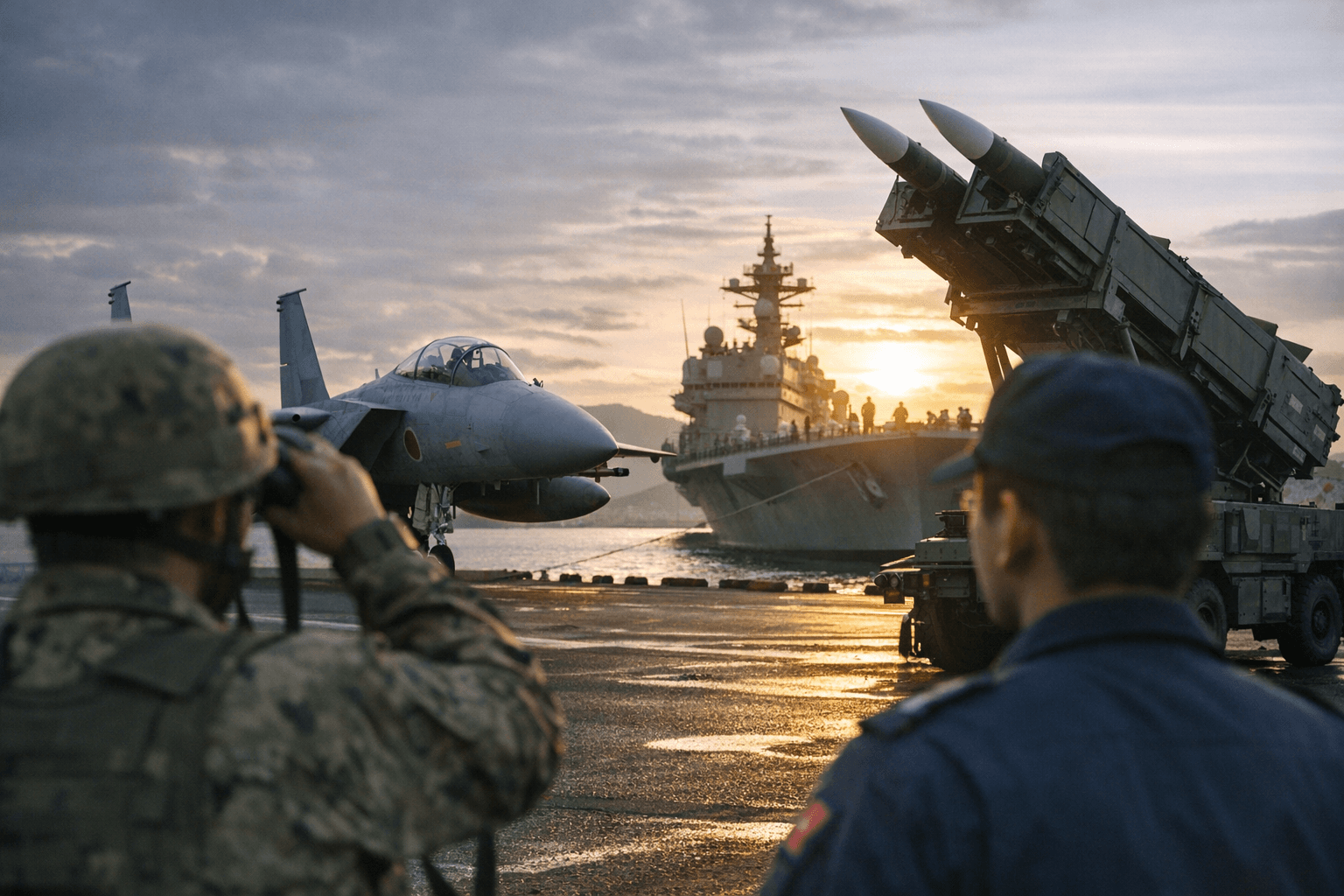
Japan loosened some of the world’s toughest arms-export rules, a move that opens the door to sales of warships, missiles and other weapons and marks one of the clearest breaks yet with the country’s postwar pacifist identity. Prime Minister Sanae Takaichi’s Cabinet approved the overhaul on April 21, removing long-standing limits that had confined most military exports to rescue, transport, warning, surveillance and minesweeping equipment.
The revision changes the legal logic of export control itself. Japan will now distinguish between “weapons” and “non-weapons” based on lethal capability, a shift that could make future exports of a next-generation fighter jet and combat drones easier to approve. The policy also reflects a harder national security posture as Tokyo faces rising pressure from China and growing uncertainty about the reliability of its main ally, the United States.
The new framework did not emerge overnight. Japan’s current export rules trace back to Eisaku Sato’s 1967 Diet remarks and the 1976 collateral policy guideline under Takeo Miki, before the Three Principles on Transfer of Defense Equipment and Technology were formally adopted on April 1, 2014. Those principles were amended on December 22, 2023, March 26, 2024, and again on April 21, 2026, as Japan steadily dismantled restraints that had once sharply restricted overseas arms sales.
Even with the liberalization, the Ministry of Foreign Affairs of Japan says transfers remain prohibited if they violate United Nations Security Council resolutions or are destined for a country party to a conflict. Recipient governments are also, in principle, required to give prior consent for any extra-purpose use or transfer to third parties. That legal fine print matters: Japan is not simply opening its arms industry, it is trying to normalize it without abandoning formal guardrails.
The shift has already drawn attention from Warsaw to Manila, with allies and partners seeking alternatives to strained U.S. weapons supplies as wars in Ukraine and the Middle East strain production lines. Philippine Defense Secretary Gilberto Teodoro welcomed the change, saying it would give the Philippines access to defense articles of the highest quality, strengthen domestic resilience and contribute to regional stability through deterrence. At home, opposition politicians and citizens protested the easing of restrictions, warning that weapons exports could fuel conflicts abroad and further erode Japan’s pacifist principles.
Sources:
Know something we missed? Have a correction or additional information?
Submit a Tip