Japan intervenes in currency markets, yen surges as traders unwind bets
Japan’s yen-buying intervention jolted traders and briefly drove the dollar to 155.5 yen, testing how far governments can push back against rate-driven currency swings.
Japan’s intervention in currency markets showed that officials still have a line in the sand, even when interest-rate gaps keep pulling money toward the dollar. For American investors, a stronger yen can reshape global portfolio flows, ease some import-price pressure in Japan and signal how aggressively governments may try to resist disorderly moves in foreign exchange.
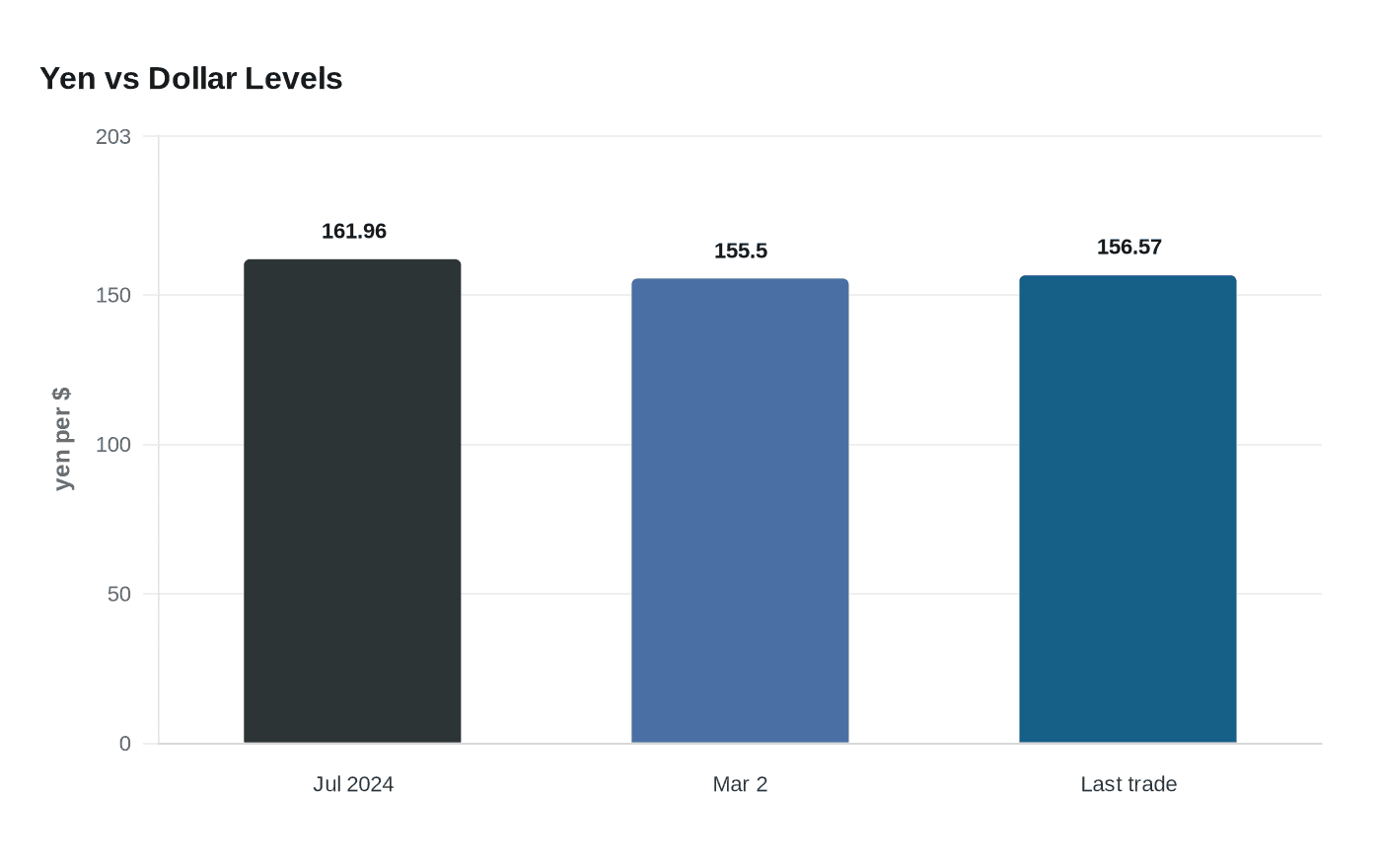
The yen jumped as much as 3% after Japan stepped in on Thursday, its first official intervention in nearly two years. The dollar fell to 155.5 yen, its weakest level since March 2, before recovering part of the move and last trading around 156.57 yen, still down 2.38% on the day.
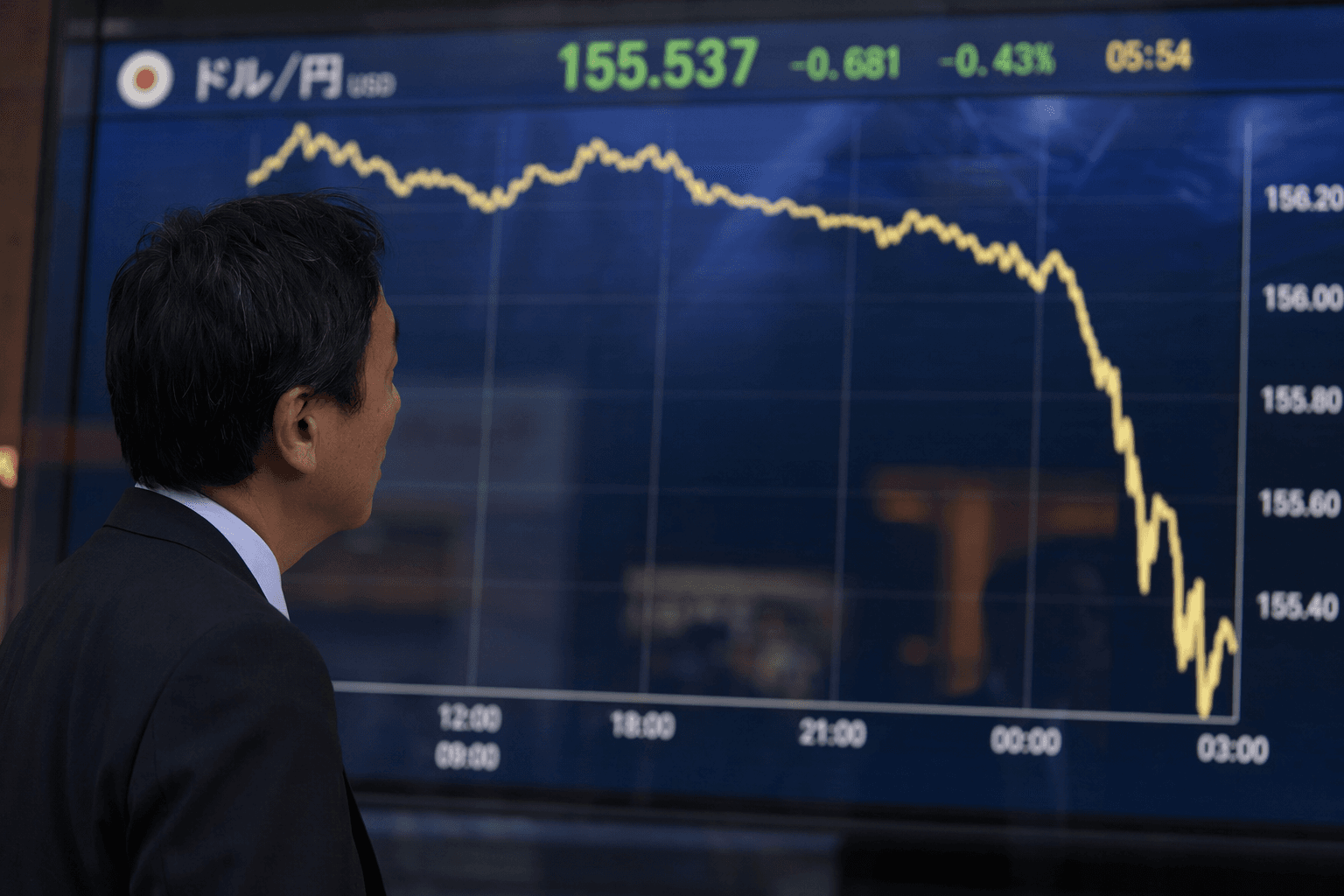
The timing mattered because traders had built the largest short yen position in almost two years, selling the currency not only against the dollar but also against the euro, Swiss franc, British pound and Australian dollar. That left the market vulnerable once Tokyo acted. Marc Chandler said the intervention caught the market “on the wrong side,” and the central question now is whether the move is just a warning or the start of something broader.

Finance Minister Satsuki Katayama had already said the time for “decisive action” was nearing, while top currency diplomat Atsushi Mimura said speculative moves were increasing and that action could come “on all fronts.” The Ministry of Finance had also threatened intervention in both currency and oil markets, widening the message beyond the foreign-exchange desk. That warning carried extra force as oil prices climbed on Middle East conflict, adding to pressure on the yen and increasing the cost of imports for Japan.
The move also revived memories of Tokyo’s earlier efforts to slow the yen’s decline. Japan last intervened to support the currency in July 2024, after it hit 161.96 per dollar, a 38-year low. Before that, authorities carried out a record yen-buying operation in April 2024 and followed with another round in May 2024. BoJ data suggested the latest intervention may have cost as much as 5.48 trillion yen, about $35 billion, underscoring how much firepower Tokyo was willing to deploy.
For global markets, the episode is a reminder that intervention can still matter, but only up to a point. When a currency is being pushed by policy divergence, oil shocks and momentum selling, officials can slow the move, scare off speculators and force short covering. They cannot easily rewrite the larger story. A firmer yen would help Japan contain import costs and inflation pressures, but the battle over 160 yen per dollar also shows how narrow the room has become for governments trying to lean against dollar strength.
This article was produced by Prism’s automated news system from verified source data, official records, and press releases, then run through automated quality and moderation checks before publishing. The system is built and supervised by the people who set the standards it runs under. Read our full AI policy.
Did this article answer your question?

