Japan steadily dismantles arms-export limits, marking break from pacifism
Japan is turning arms exports from taboo into strategy, using new rules, aid and alliances to build a defense industry that now sells ships, radar and missiles abroad.
A postwar restraint is giving way to a new industrial logic
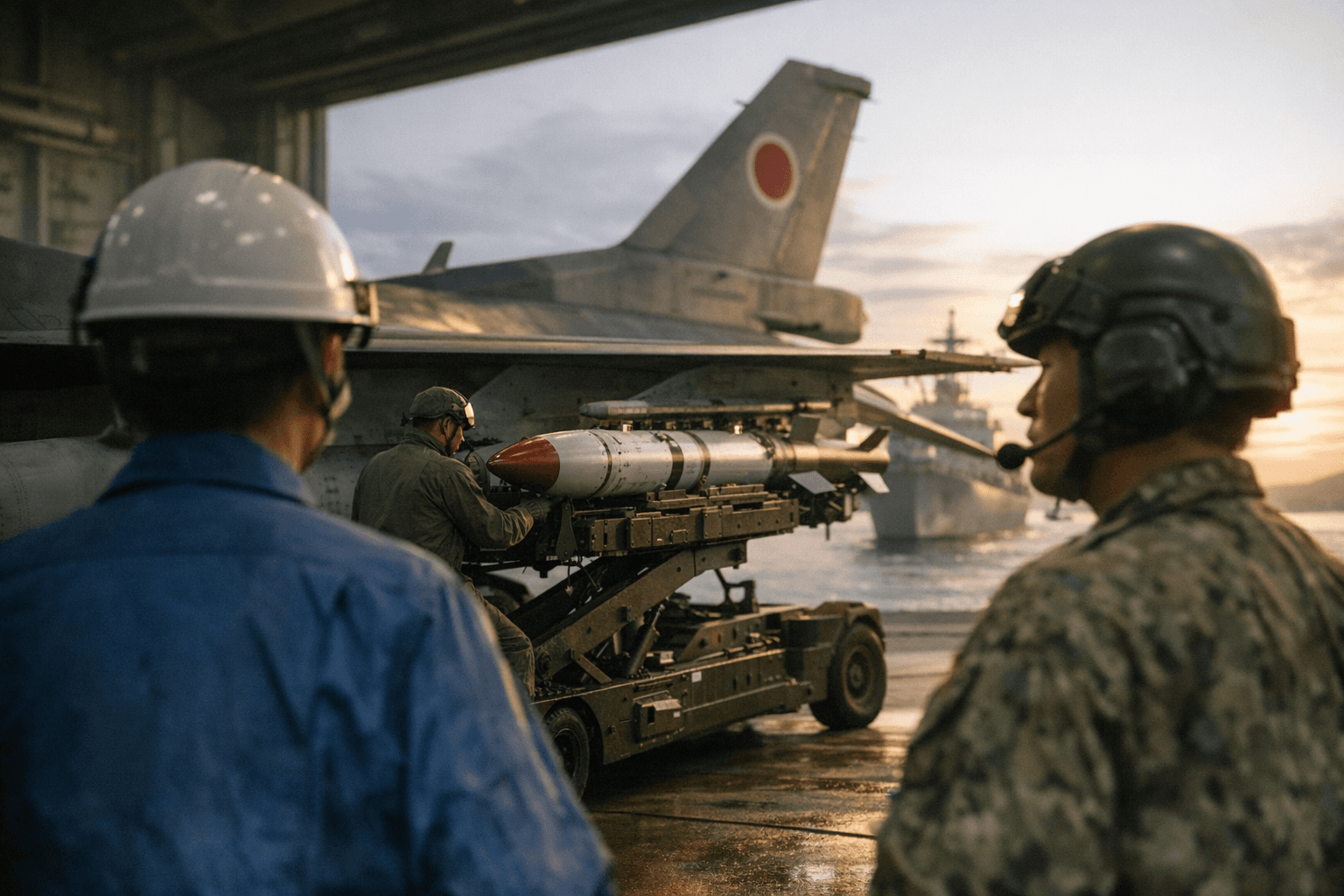
Japan is dismantling one of the clearest symbols of its postwar identity. What began as a near-blanket ban on arms exports has become a managed, selective system that now supports missiles, patrol aircraft, radar, warships and multinational fighter development.
The shift is not just legal. It reflects a larger change in how Tokyo sees security, industry and its role in a tense Indo-Pacific. Regional pressure from China, tighter alliance politics with the United States, Britain and Italy, and the need to keep Japan’s defense-industrial base alive have all pushed the country toward a more normal arms-export posture.
From a taboo to a rules-based exception
The modern framework took shape on April 1, 2014, when the Cabinet adopted the Three Principles on Transfer of Defense Equipment and Technology. Those rules replaced the older near-blanket ban that had governed exports since 1976 and allowed transfers only when they contributed to international peace or Japan’s security. They also imposed strict controls on third-party transfers and end use.
That mattered because the new policy was framed not as a free-for-all, but as a way to support peacekeeping, disaster relief, humanitarian assistance, counterterrorism and anti-piracy efforts. In practice, it created room for Japan to export in narrow, politically defensible cases while still preserving the language of restraint that defined its postwar defense policy.
There was also a longer backstory. During the Cold War, the United States censured Japan for weak export controls, especially after the 1987 Toshiba machine-tools scandal. Since the end of the Cold War, Japanese policymakers have increasingly recognized that exports are not just a diplomatic issue, but a way to sustain the domestic defense industry and support national security.
The first openings were small, but they pointed in one direction
The earliest sign that the new rules had real teeth came in July 2014, when Tokyo approved seeker gyros for the United States for Patriot Advanced Capability-2 interceptor missiles. That was a narrow transfer, but it carried an important signal: Japan was now willing to export components used in lethal systems, even before full weapons sales were politically possible.
The next big test came in 2016, when Japan agreed to lease five used TC-90 trainer aircraft to the Philippine Navy for maritime patrol and surveillance over the South China Sea. The move came as Manila faced rising pressure in disputed waters and wanted more eyes on Chinese activity. It was the first significant military equipment transfer after the rule change, and it showed how Japan could use exports to reinforce regional partners without formally abandoning its cautious posture.
The same year also exposed how far Japan still had to go. Australia ultimately rejected a Japanese-backed submarine bid in a competition worth about $40 billion, handing the contract to France. The loss was more than a commercial setback. It underscored that Japan’s defense-industrial export machine was still far less mature than the Western suppliers it was trying to challenge.
From components to finished systems
The next breakthrough came in 2020, when Mitsubishi Electric became the first Japanese company to sell newly manufactured defense equipment overseas. It supplied air-surveillance radars to the Philippines in a deal worth about US$100 million. That was an important milestone because it moved Japan beyond used hardware and parts into the export of new production, which is what a real defense export industry requires.
By 2022, Japan had moved further still. It joined Britain and Italy in the Global Combat Air Programme, a project to build an advanced stealth fighter expected to enter service from 2035. The partnership was Japan’s first major joint defense project without the United States, and it tied export policy directly to industrial strategy. The economic logic was plain: if the program is going to be worth the cost, export sales will need to be part of the equation.
Japan adjusted its rules again in March 2024 to make that possible. The change allowed licensed defense items to be sold back to the country of origin, which opened the door for Patriot missile components to reach the United States and indirectly free up U.S. stockpiles for Ukraine. In the same period, Japan approved future exports of the GCAP fighter, but only under tight conditions. Sales to countries involved in conflicts remain barred, which shows how carefully Tokyo still separates selective liberalization from open-ended arms trading.
Security aid is becoming part of the export ecosystem
Japan’s export shift is not limited to commercial sales. In 2023, Tokyo created the Official Security Assistance program to provide military aid to like-minded countries in Southeast Asia and the Pacific. The Foreign Ministry says the program is separate from Official Development Assistance and is aimed at armed forces and related organizations, not civilian development.
The program started small. In fiscal 2023, it began with four recipient countries and about 2 billion yen in support. Since then, Japan has used it to deliver patrol boats, drones, radar systems and related equipment to countries including Indonesia, Bangladesh, Tonga, Sri Lanka, Djibouti and the Philippines. Official ministry materials have included patrol boats for Fiji, while other reporting has pointed to patrol boats, coastal radar and rescue equipment for Bangladesh, Malaysia and the Philippines.
The scale of the program is growing quickly. Budget planning for fiscal 2026 put the OSA envelope at 18.1 billion yen, more than doubling the program from where it started. That increase is not just bureaucratic. It shows that Japan is treating maritime security, especially in waters affected by China’s expanding pressure, as a recurring strategic investment rather than a one-off diplomatic gesture.
The commercial payoff is finally arriving
The clearest sign of Japan’s changing status in global arms markets came in 2025, when Australia selected an upgraded Mogami-class frigate in a deal for 11 ships worth about US$6 billion. Built by Mitsubishi Heavy Industries, the ships will replace Australia’s aging Anzac-class fleet and give the Royal Australian Navy a major upgrade in anti-submarine and surface warfare capability.
For Tokyo, the deal matters on several levels. It is one of Japan’s biggest defense export wins since World War II. It also proves that Japanese platforms can compete on quality, cost and reliability in a major allied procurement, not just in niche transfers or component sales. After years of false starts, Japan has shown it can move from tentative participation to serious competition.
The final barrier is political, not technical
Even so, the old caution has not disappeared. In 2026, Sanae Takaichi’s ruling party recommended scrapping the remaining limits that confine sales to five categories: transport, relief and rescue, early warning systems, surveillance and mine clearance. That proposal matters because it would move Japan further away from the idea that defense exports are acceptable only when they look almost civilian.
The domestic resistance is embedded in the existing rules themselves. The current framework still emphasizes end-use restrictions, third-party transfer consent and exclusions for destinations tied to conflict. That is why the shift feels so consequential: Japan is not merely relaxing paperwork, it is negotiating the boundary between pacifist memory and strategic necessity.
What emerges from the decade-long arc is a country that no longer sees arms exports as an embarrassing exception. Japan is building them into alliance management, industrial policy and regional deterrence. The taboo has not vanished, but it is being steadily replaced by a far more pragmatic idea: in a harsher strategic environment, exporting defense capability may be part of how Japan preserves its own security.
This article was produced by Prism’s automated news system from verified source data, official records, and press releases, then run through automated quality and moderation checks before publishing. The system is built and supervised by the people who set the standards it runs under. Read our full AI policy.
Did this article answer your question?