Jefferson Lab KaonLT Beam-Spin Results Challenge GPDs Proton Imaging Validity
Jefferson Lab’s KaonLT press release (Feb 26, 2026) reports first beam-spin asymmetry results and concludes the GPD proton-imaging conditions are not yet met at the studied energies.
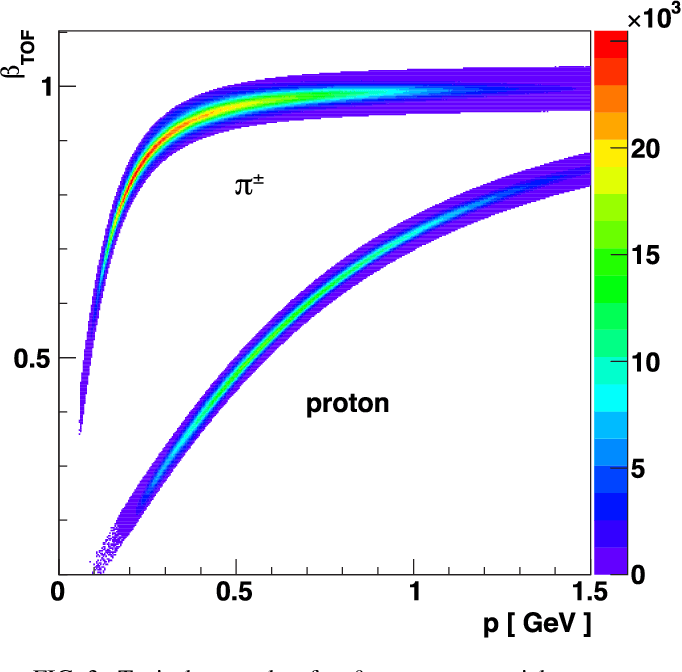
The KaonLT experiment at the U.S. Department of Energy’s Thomas Jefferson National Accelerator Facility has published first results on beam-spin asymmetries for meson production, publicized via a Jefferson Lab press release and Newswise on February 26, 2026, and concludes that the conditions required to interpret meson production within the generalized parton distributions framework are not yet met at the studied energy levels. That assessment directly limits using these meson-production data today to produce detailed proton images.
“The findings indicate that the conditions required for interpreting meson production within the generalized parton distributions (GPDs) framework are not yet met at the studied energy levels,” the distributed summaries state, and they add that “This outcome highlights the need for further investigation before extracting detailed information about the proton’s internal structure.” The KaonLT materials available publicly include a truncated fragment that “analyzes polar,” and a Jefferson Lab fragment preserved verbatim reads: “The KaonLT results discussed here take advantage of Jefferson Lab's expertise in beam-spin asymmetry, where a polarized electron beam (most” — both fragments indicate more technical detail exists but were not included in the publicized snippets.

The press materials and linked summaries explicitly flag further work: ongoing and future analyses, including precision LT-separated cross sections, aim to refine understanding and to guide research at next-generation facilities such as the Electron-Ion Collider. Those LT-separated cross sections are presented as the next concrete milestone for clarifying whether meson electroproduction can be reliably mapped onto GPD-based proton imaging in the relevant kinematics.
Jefferson Lab work on related kaon single-spin asymmetries appears in a separate CLAS12 arXiv/ADS abstract that reports multidimensional measurements in semi-inclusive deep-inelastic scattering with positively charged kaons off protons. The CLAS12 text specifies two incident electron beam energies, 10.6 GeV and 10.2 GeV, and photon virtualities Q2 ranging from 1 GeV2 up to 6 GeV2, with an unpolarized liquid hydrogen target and a longitudinally polarized incident electron beam. That CLAS12 excerpt also states, verbatim, “This is the first published multi-dimensionally binned CLAS12 measurement of a kaon SIDIS single spin asymmetry in the valence quark regime,” and notes constraints on the structure function ratio FLU^{sinϕ}/F_UU and sensitivity to twist-3 PDFs and fragmentation functions.
A discrepancy in publication claims appears in the supplied material. A Lifeboat Foundation post by Saúl Morales Rodriguéz asserts, “The study, published in the journal Physics Letters B,” while the Jefferson Lab press notice dated February 26, 2026 is the explicit publicized item in the supplied notes and does not include a full journal citation in its excerpts. The supplied CLAS12 arXiv/ADS material is detailed and includes beam energies and detector fragments, but no source in the supplied notes explicitly ties the KaonLT name to the CLAS12 paper; the two should not be conflated without confirmation.
For now, the concrete takeaway is firm: KaonLT’s publicized result restricts immediate GPD-based proton imaging at the studied energies and places precision LT-separated cross sections as the next required step to move from suggestive meson asymmetries to reliable three-dimensional proton structure extractions.
Know something we missed? Have a correction or additional information?
Submit a Tip

_82415.jpg&w=1920&q=75)