Jensen Huang joins Trump China trip, raising stakes on AI chip controls
Jensen Huang’s late boarding of Air Force One put Nvidia’s AI chips at the center of Trump’s China diplomacy, where export controls remain a bargaining chip.
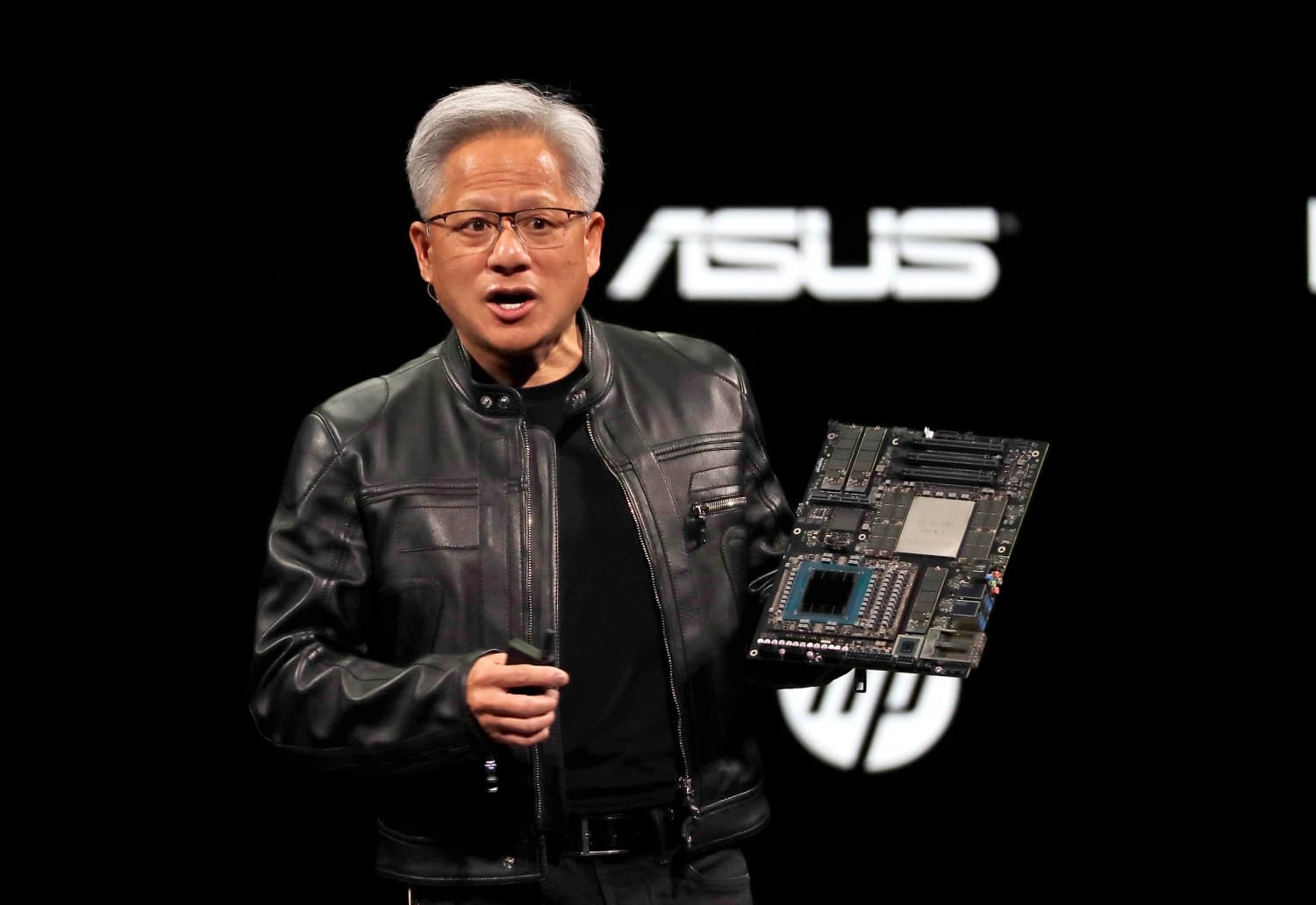
Jensen Huang’s last-minute arrival on Air Force One turned a routine travel detail into a signal about how central AI chips have become to U.S.-China negotiations. The Nvidia chief was added after he was left off the White House’s initial list of invited executives, then flew to Alaska to meet the plane and boarded during the stopover as Donald Trump headed toward Beijing with more than a dozen business leaders.
Nvidia said Huang was attending the summit at Trump’s invitation to support America and the administration’s goals. His presence alongside Apple’s Tim Cook, Tesla’s Elon Musk and Qualcomm’s Cristiano Amon elevated the trip into a case study in business diplomacy, with semiconductor access, market leverage and diplomatic signaling all moving in the same direction. The White House had initially circulated a list of 17 CEOs, a smaller group than the 27 executives who accompanied Trump on his 2017 China trip.
The real significance lies in what Huang represents. He has repeatedly lobbied Congress and the administration to loosen export controls on AI semiconductors, and his inclusion raised expectations that Nvidia’s restrictions could come up in talks with Xi Jinping. That matters because Nvidia’s H200 chips, among its most powerful, had not yet been sold to China, according to a U.S. official in April, while Commerce Secretary Howard Lutnick said Chinese customers were still having trouble getting permission from Beijing to import them. Nvidia’s H200 chips were authorized for export to China last year, but the Chinese government has not approved imports, leaving the issue unresolved.
Huang has warned how far Nvidia has fallen in the Chinese market. In an April 30 interview, he said the company’s market share in China had dropped to zero, after once controlling about 90% of the market before export restrictions and competition narrowed its position. That decline has given the administration a powerful economic lever, but it has also made any relaxation of chip rules politically sensitive in Washington.
Analysts and industry researchers said Huang’s late addition looked more like evidence of his lobbying clout than a sign of a broader policy shift. China hawks in both parties have warned against easing chip export limits, arguing that doing so could strengthen Beijing in the global AI race. For Trump, bringing Huang into the delegation underscored that AI chips are no longer just a trade issue. They are now part of the negotiating architecture of U.S.-China relations.
Know something we missed? Have a correction or additional information?
Submit a Tip