JMGO’s N3 Ultimate aims to solve projector placement problems
JMGO’s N3 Ultimate treats crooked rooms as the norm, pairing lens shift, optical zoom and an AI gimbal with 4K brightness built for real homes.
Why placement has become the projector’s biggest problem
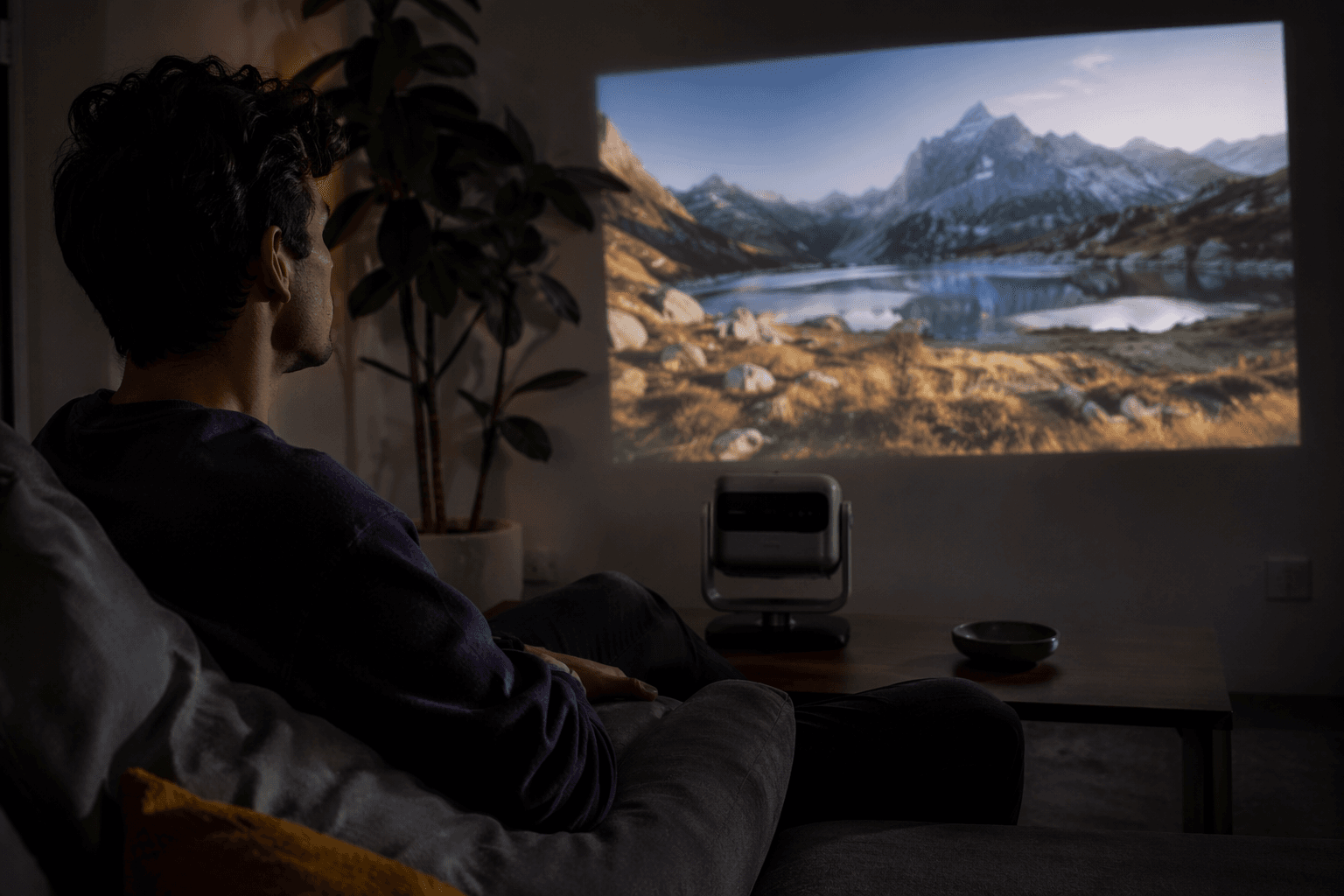
The N3 Ultimate is JMGO’s answer to the oldest frustration in projector ownership: the room is never set up for the image, not the other way around. Most people do not have a perfectly centered wall, a fixed ceiling mount, or the patience to keep nudging a projector into alignment, so the image compromise becomes part of the daily routine.
JMGO is betting that the next wave of premium portable projectors will win by removing that compromise. Instead of asking users to accept soft digital correction, the company built the N3 Ultimate around optical zoom, lens shift, and an AI gimbal, a combination JMGO says is designed to reduce or avoid digital keystone correction while keeping the full 4K image intact. That matters because the category is no longer just about portability, it is about making serious home entertainment work in real apartments, shared living rooms, and multipurpose spaces.
What JMGO says the N3 Ultimate can do
JMGO describes the N3 Ultimate as the world’s first 3-in-1 AI gimbal 4K projector, and the claim is centered on adaptability rather than sheer novelty. The projector’s optical zoom and lens shift handle the image before software intervention is needed, while the AI gimbal gives it physical freedom to adjust to awkward angles that would usually ruin setup. The pitch is simple: you should not have to rebuild a room to get a square picture.
The company also says the projector can “remember” different wall or room setups through an AI spatial-memory system. In practical terms, that means one-click recall of image size, optimization settings, and app preferences, a feature aimed at households that move a projector from one room to another or use the same device for movie night, gaming, and casual streaming in different spaces. That kind of memory feature turns a projector from a one-off setup project into a more everyday appliance.
The specs are built for more than casual use
On paper, the N3 Ultimate is positioned as a serious home-theater machine as well as a gaming projector. JMGO lists peak brightness at 5,800 ISO lumens, a figure meant to help the projector fight moderate ambient light and stay usable in real-world daytime conditions, not just in a blacked-out theater room. The company also lists 20,000:1 contrast and 110% BT.2020 color coverage, which are the kinds of numbers premium buyers look for when they want punchier image depth and broader color performance.
The gaming-friendly side of the spec sheet is equally aggressive. JMGO says the projector supports Dolby Vision and Dolby Audio, along with VRR, a 240Hz refresh rate, and 1ms input lag. Those numbers place it in a category that wants to satisfy both movie viewers and players who care about responsiveness, which reflects where premium portable projection is heading: not toward a single use, but toward being the all-in-one screen for an entire household.
Why this category is advancing now
The broader story here is not just one product, but a shift in how people think about large-screen entertainment. Premium portable projectors are increasingly competing with televisions by offering a huge picture without permanent installation, and that appeal is strongest for people who cannot or do not want to dedicate a room to a fixed setup. Renters, apartment dwellers, frequent movers, and households that share a living room all benefit when the screen can adapt to the space instead of demanding a perfect one.
That is why JMGO’s focus on placement feels timely. The company is not selling a gadget that asks for forgiveness after setup, it is selling flexibility as a premium feature. For consumers, the real value is not only image quality, but the ability to pull a projector out, point it at whatever wall is available, and still get something close to a theater-size result without the usual setup drama.
How JMGO prices the promise
JMGO officially launched the N3 Ultimate on April 23, 2026, and TechRadar reported that the projector went on sale that day with an introductory price of $2,399, down from a regular price of $2,999 through May 13, 2026. That pricing places it firmly in premium territory, which tells you a lot about the intended buyer: this is not a budget stopgap, but a high-end alternative to a large television or a fixed installation.
Carrie Marshall’s TechRadar coverage framed the appeal around a familiar real-world problem, that almost every projector ends up off-center in actual use. JMGO’s answer is to make optical adjustment the first move rather than software correction, and that distinction is important for buyers comparing long-term image quality, not just convenience. The early pricing window also signals how JMGO wants to land in a market where premium portable projectors are being judged less like novelty devices and more like serious home infrastructure.
The N1 Ultra shows JMGO has been building toward this
The N3 Ultimate did not appear out of nowhere. JMGO has been developing its gimbal-projector strategy since the N1 Ultra Kickstarter campaign in 2023, which ran from March 9, 2023 to April 23, 2023 and raised HK$17,592,929 from 1,706 backers. That campaign established that there was real demand for premium portable projection hardware with unusual installation freedom, not just a curiosity market.
Seen in that context, the N3 Ultimate looks like a more mature version of the same idea. JMGO is using higher brightness, broader feature support, and a more explicit positioning around placement to push portable projection deeper into the mainstream living room. The result is a projector built for the way people actually live now: less perfect, more flexible, and increasingly unwilling to choose between convenience and cinematic scale.
This article was produced by Prism’s automated news system from verified source data, official records, and press releases, then run through automated quality and moderation checks before publishing. The system is built and supervised by the people who set the standards it runs under. Read our full AI policy.
Know something we missed? Have a correction or additional information?
Submit a Tip