Judge Upholds Block on Subpoenas Tied to Powell, Spurring Likely Appeal
A federal judge refused to reconsider his block on grand-jury subpoenas targeting the Fed, finding DOJ's arguments unable to "come close" to justifying the probe.
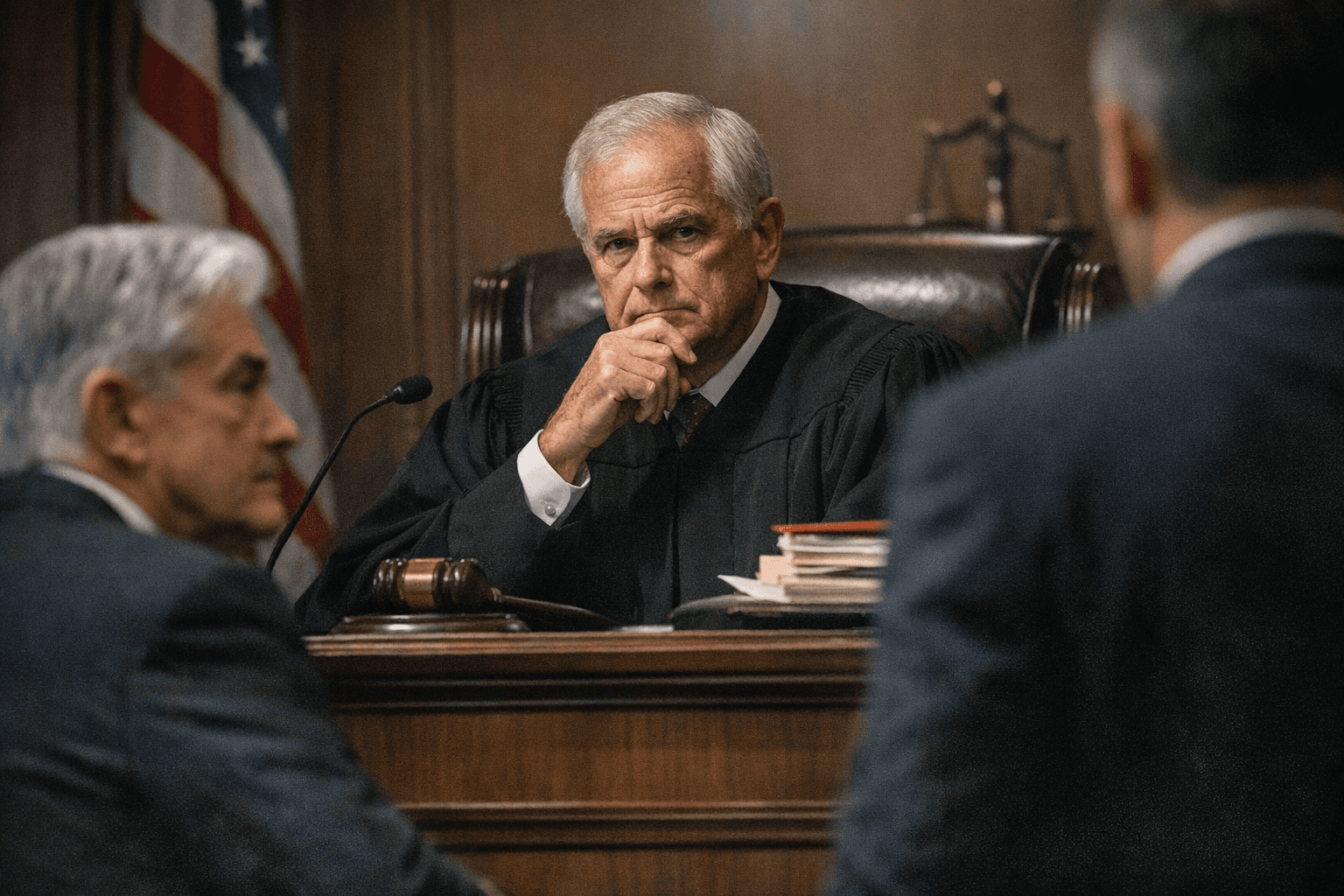
Chief U.S. District Judge James Boasberg declined to reconsider his earlier order quashing grand-jury subpoenas connected to a criminal probe touching Federal Reserve Chair Jerome Powell, writing that the Justice Department's arguments "do not come close" to persuading the court that a different outcome is warranted.
The denial, issued April 3, leaves the subpoenas blocked and the underlying criminal inquiry effectively stalled unless the DOJ succeeds on appeal. The government is expected to take the case to the U.S. Court of Appeals for the D.C. Circuit.
Boasberg originally ruled on March 13 that the subpoenas had been issued for an improper purpose: to pressure Powell into acceding to political demands about interest rates or to force his resignation. At that time, he found that prosecutors had not come close to demonstrating wrongdoing by the Fed chair. Thursday's denial of reconsideration reaffirms that conclusion without revision.
The subpoenas originated from the U.S. Attorney's office in Washington, D.C., led by a Trump-aligned prosecutor who had been examining alleged cost overruns at the Federal Reserve's renovation project and sought documents related to Powell. The investigation carries unmistakable political overtones: President Donald Trump has repeatedly criticized Powell and has pushed for a Fed chair more willing to cut interest rates sharply.
Legal experts have characterized Boasberg's rulings as a check on the use of criminal investigative tools in what the court identified as a politically motivated inquiry. For the Fed itself, the decision preserves operational continuity and shields central-bank deliberative materials from entering prosecutorial files.
The DOJ's anticipated appeal could move quickly. Given the intersection of monetary policy leadership with an active criminal probe, the government may seek expedited review before the D.C. Circuit. How the appellate court rules will define the outer limits of prosecutorial reach into core federal institutions, a question markets and policymakers are watching with close attention.
This article was produced by Prism’s automated news system from verified source data, official records, and press releases, then run through automated quality and moderation checks before publishing. The system is built and supervised by the people who set the standards it runs under. Read our full AI policy.
Did this article answer your question?

