K-beauty reshapes masculinity as men embrace skincare worldwide
Men’s skincare has moved from niche to norm, with South Korea turning K-beauty into a global signal of changing masculinity and spending.
A market signal hiding in plain sight
K-beauty is doing more than selling moisturizer. It is helping redraw the boundaries of what male grooming can look like, turning skincare into a visible marker of modern masculinity rather than a challenge to it.
That shift matters because it is happening at the same time as the category becomes more valuable. K-pop stars like BTS, viral Korean skincare routines, and the global reach of Korean beauty marketing have given men a new cultural script: self-care can be practical, polished and public without reading as a break from masculinity.
South Korea is where the change is most measurable
The scale of the trend is clearest in South Korea, where the market is both a cultural bellwether and a commercial engine. In 2022, the country ranked No. 1 globally in annual purchases of men’s skincare products, and Korean customers spent an average of $9.60 per person on men’s skincare, according to Euromonitor.
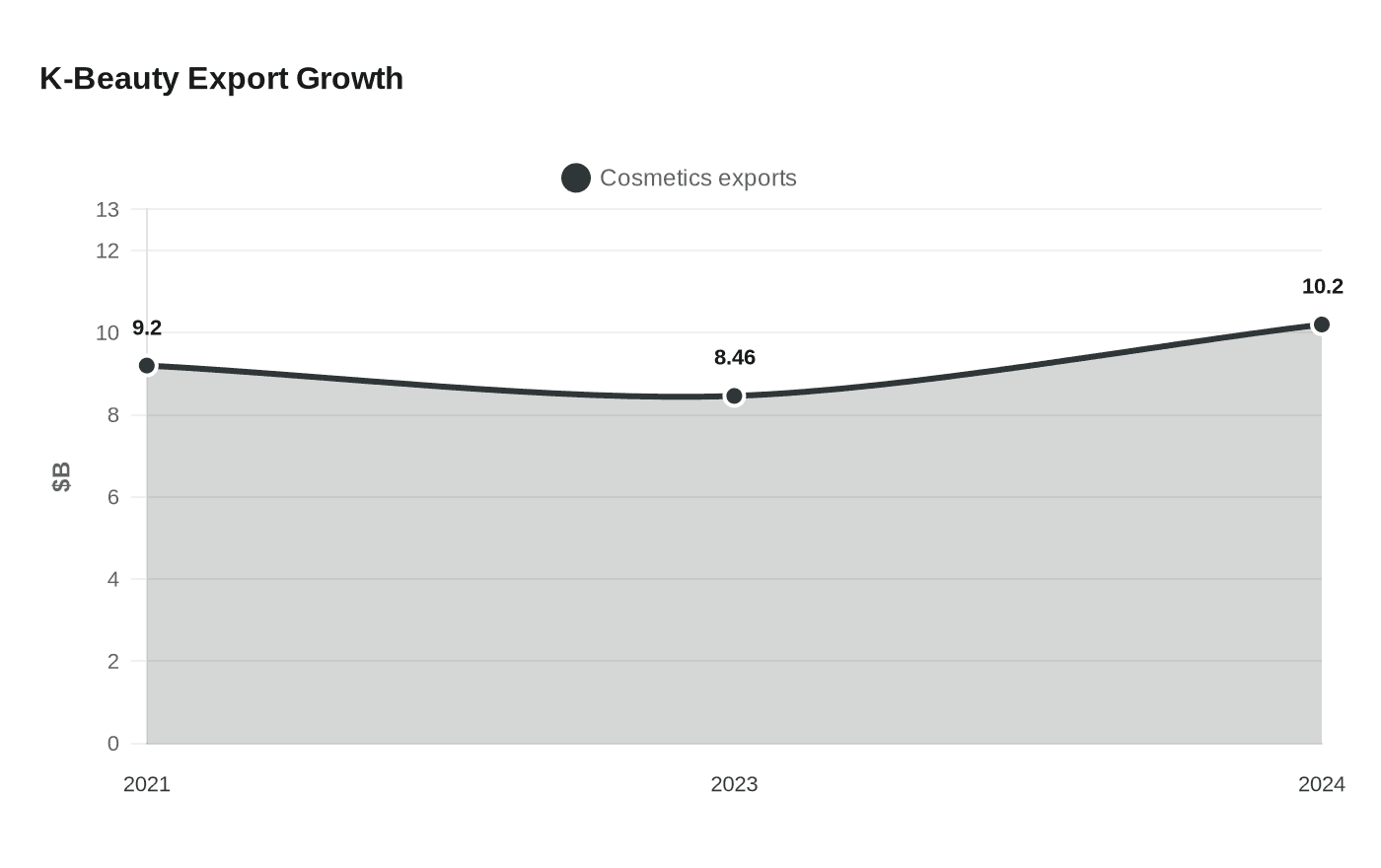
The export numbers show how quickly that domestic behavior has become international business. South Korea’s cosmetics exports reached a record $10.2 billion in 2024, the first time shipments topped $10 billion, after climbing from $8.46 billion in 2023 and $9.2 billion in 2021. Korean cosmetics exports first surpassed $1 billion in 2012, which means the category has gone from early breakout to major trade sector in just over a decade.
Why the trend is changing masculinity, not just grooming habits
The significance of this boom is cultural as much as commercial. Academic research has found that men’s beauty practices have a long history in Korea, which complicates the idea that male skincare is a sudden import from global pop culture. What looks new in today’s market is really a modern, mass-market version of older grooming norms, amplified by media, celebrity influence and faster consumer adoption.
A 2021 study on grooming and corporate masculinity in South Korea sharpened that point further. It found that men’s appearance practices are tied to workplace hierarchies and professional expectations, suggesting that grooming is not only about aesthetics but also about performance at work, status and social legibility. In that sense, men’s skincare is becoming part of the toolkit of professionalism.
Exports show how soft power turns into revenue
K-beauty’s economic footprint now extends far beyond Seoul. In 2024, China was the top destination for Korean cosmetics exports, followed by the United States and Japan, and exports to the United States and Japan overtook French cosmetics in those markets, according to the Ministry of Food and Drug Safety.
That matters because it shows Korean beauty competing not just on price, but on prestige and influence. When consumers in large overseas markets buy Korean cosmetics at scale, they are buying into a broader cultural ecosystem shaped by Korean entertainment, social media and aspirational consumer behavior. This is how soft power becomes trade power: a beauty routine ends up moving export balances.
Brands are capitalizing on a broader definition of male self-care
The commercial opportunity is straightforward. As more men treat skincare as routine maintenance rather than vanity, the addressable market expands, and brands can sell across a wider set of identities, ages and use cases. Euromonitor expects South Korea’s men’s grooming market to see slow and stable retail value growth at constant 2024 prices throughout the forecast period, which points to a durable, not fleeting, category shift.
Retailers are also benefiting from the way the category fits contemporary consumer behavior. Rising self-care habits, the growth of single-person households and changing beauty norms are all reinforcing demand, while the image of men buying skincare becomes more socially normalized. The result is a market that is no longer dependent on novelty or trend cycles alone.
What this says about the future of masculinity
K-beauty is helping soften older Western and Korean norms around masculinity by making grooming feel functional, disciplined and status-aware rather than cosmetic or vain. That is a powerful formula in a consumer culture shaped by video, fandom and constant self-presentation.
The bigger story is not that men are suddenly interested in skincare. It is that global beauty culture now gives them permission to be, and that permission is being monetized across retail shelves, export lanes and digital platforms. In that sense, the rise of men’s K-beauty is not a side trend at all. It is a durable redefinition of how masculinity is packaged, performed and sold.
This article was produced by Prism’s automated news system from verified source data, official records, and press releases, then run through automated quality and moderation checks before publishing. The system is built and supervised by the people who set the standards it runs under. Read our full AI policy.
Did this article answer your question?
%3Amax_bytes(150000)%3Astrip_icc()%2FCertificate-of-deposit-2301f2164ceb4e91b100cb92aa6f868a.jpg&w=1920&q=75)