Karachi rescue teams clear Gul Plaza ruins as tolls and missing counts vary
Rescue crews sift through charred remains of a major shopping complex, as casualties remain uncertain and officials pledge inquiry and compensation.
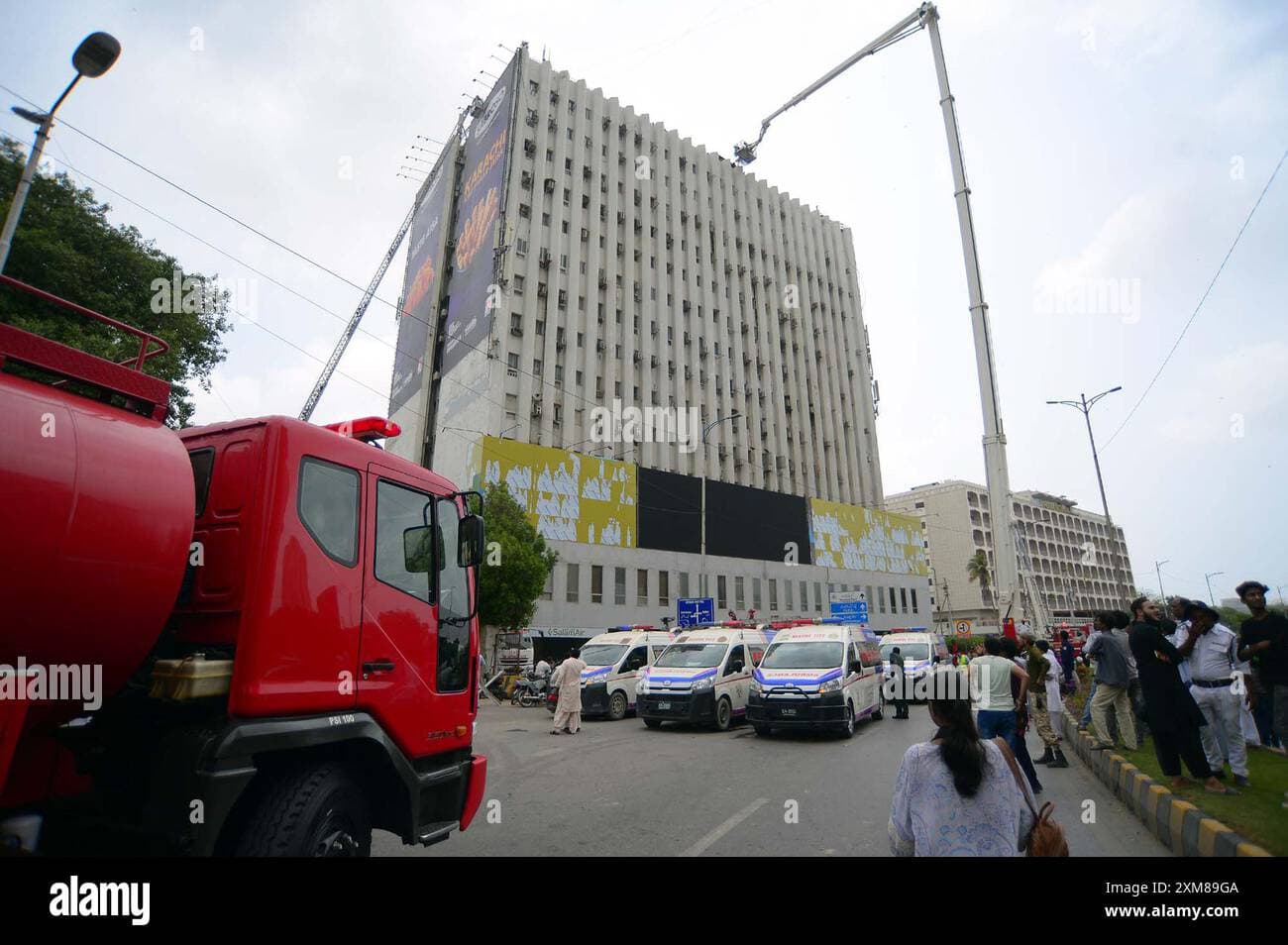
Firefighters and rescue teams are methodically clearing the charred ruins of Gul Plaza in central Karachi after a blaze that officials say burned for roughly 36 hours and overwhelmed the sprawling retail complex. The fire reduced much of the structure on MA Jinnah Road to ash and rubble, with authorities reporting that about 60 percent of the plaza had collapsed and that teams face a high risk of further structural failure.
Gul Plaza housed roughly 1,200 family-owned stores selling wedding clothes, toys, crockery and other goods. The scale of physical damage and the concentration of small traders make the incident a major local economic shock, threatening livelihoods across supply chains that feed Karachi’s informal retail and wedding industries.
Casualty figures remain disputed as recovery proceeds. Rescue 1122 official Rizwan Ahmed reported 21 people killed and 63 missing, while police sources and other agency counts put the numbers higher, with one tally indicating 26 dead and 81 missing and another citing at least 23 fatalities, including one firefighter. Authorities stressed that remains recovered from different sections must undergo forensic verification and that final totals will change as DNA identifications are completed; senior police official Syed Asad Raza said 15 DNA samples had been collected by Monday night.
Operational challenges have slowed recovery. Rescue 1122 Chief Dr. Abid Jalaluddin Sheikh said phased, technically restricted search operations are underway at five marked locations, with three simultaneous teams working cautiously to avoid triggering further collapse. Relief workers reported collecting human remains in sacks for DNA testing, and officials estimate rubble clearance could take 15 to 17 days.
Access problems compounded the emergency response. Narrow roads and large crowds of onlookers hindered water tankers and emergency vehicles, and surveillance footage time-stamped at 10:22 p.m. on Saturday showed traffic moving as smoke began billowing from the mall, suggesting rapid spread before a full emergency response could be mounted. Public anger was visible at the scene, with some crowds blaming delayed rescue efforts.

Provincial authorities have ordered an inquiry and begun collecting evidence, with Commissioner Naqvi directing a committee to focus on both cause and the adequacy of the emergency response. The Karachi Chamber of Commerce and Industry has demanded a judicial inquiry and questioned whether Gul Plaza had functional fire exits, whether safety regulations were enforced and whether firefighters had proper protective equipment.
The Sindh government announced compensation of 10 million rupees, roughly $35,000, for each family that lost a loved one. For many of the 1,200 family-run businesses, however, that payment may cover neither the replacement value of stock nor the long-term loss of income and supply relationships. The destruction of wedding apparel inventories, in particular, could ripple through suppliers and artisans who rely on seasonal demand.
Beyond immediate relief and identification, the disaster highlights persistent governance challenges in dense urban markets: aging structures, narrow access routes, and uneven enforcement of safety standards increase risks for densely packed commercial zones. For Karachi, the city’s largest fire in more than a decade lays bare how a single conflagration can cascade into broader economic and social costs, intensifying calls for stricter building codes, routine inspections and improved emergency access planning to reduce the probability and economic severity of future disasters.
This article was produced by Prism’s automated news system from verified source data, official records, and press releases, then run through automated quality and moderation checks before publishing. The system is built and supervised by the people who set the standards it runs under. Read our full AI policy.
Did this article answer your question?