Kazakhstan jails 11 activists after Xinjiang rights protest, HRW says
Kazakhstan sent 11 activists to prison after a Xinjiang protest, deepening concerns that Beijing’s pressure is shaping how the region polices dissent.
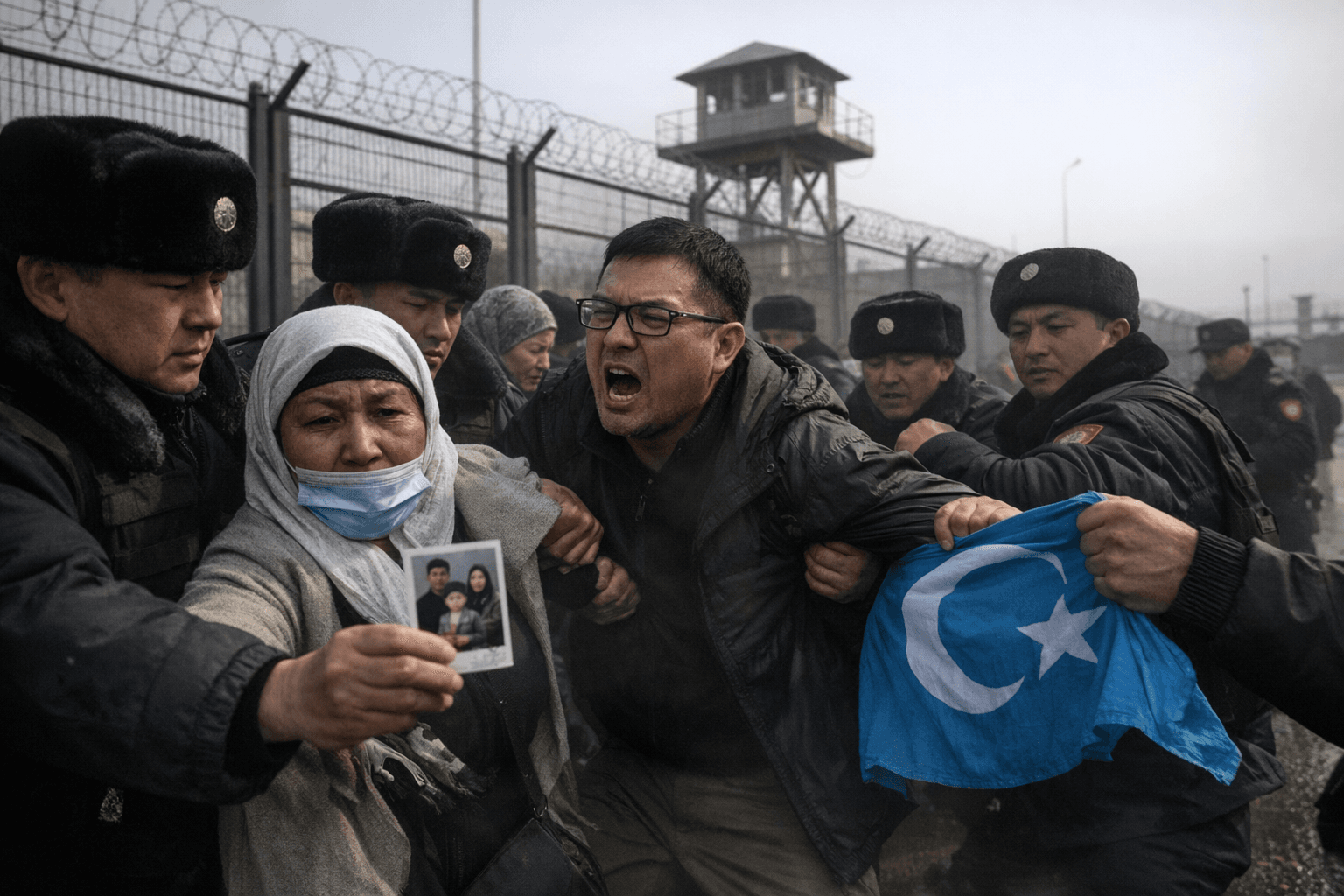
China’s reach into Central Asia is again visible in a Kazakh courtroom, where 19 activists were convicted after a peaceful protest over human rights abuses in Xinjiang. Human Rights Watch said the case shows how far neighboring governments may go to protect warmer ties with Beijing by punishing criticism of Chinese policy.
The court sentenced 11 members of the Nagyz Atajurt Volunteers Group to five years in prison on charges of inciting discord. Two women had their sentences deferred because they have small children, and eight others received noncustodial restricted-freedom sentences on the same charge. All 19 were also banned from public or political activity for three years.
The convictions stemmed from a protest in November 2025 in support of Alimnur Turganbay, a Kazakh citizen originally from Xinjiang who has been detained by Chinese authorities on unknown grounds since July 2025. During the demonstration, activists condemned Chinese government abuses, burned Chinese flags and displayed a portrait of Xi Jinping, an open challenge that quickly drew official attention.
HRW said that a day after the protest, the Chinese consulate in Almaty urged Kazakh authorities to take appropriate measures. Local authorities then opened a criminal investigation, turning a public rights protest into a prosecution that ended with prison terms for nearly two dozen people.
The rights group said the case matters because Kazakhstan has long relied on the broadly worded inciting discord offense to curb dissent. What makes this case notable, HRW said, is the scale: it is the first time such a large group of activists advocating for Xinjiang rights has been imprisoned together. The verdict, the organization said, sends a chilling message to people in Kazakhstan who might speak out against abuses in China.
The stakes extend beyond one protest or one court. Kazakhstan shares a long border with China and has Uyghur and Kazakh diaspora communities with family and political ties to Xinjiang, making the country a sensitive pressure point for Beijing. The convictions now stand as a test of how much regional governments will absorb Chinese pressure when criticism crosses from the street into the courtroom.
This article was produced by Prism’s automated news system from verified source data, official records, and press releases, then run through automated quality and moderation checks before publishing. The system is built and supervised by the people who set the standards it runs under. Read our full AI policy.
Did this article answer your question?


