K.C. Pharmaceuticals Recalls 3 Million Eye Drop Bottles Over Sterility Concerns
A sterility failure at a single Pomona manufacturer pulled 3.1 million eye drop bottles from shelves across 26 store brands, including CVS, Walgreens, and Kroger.
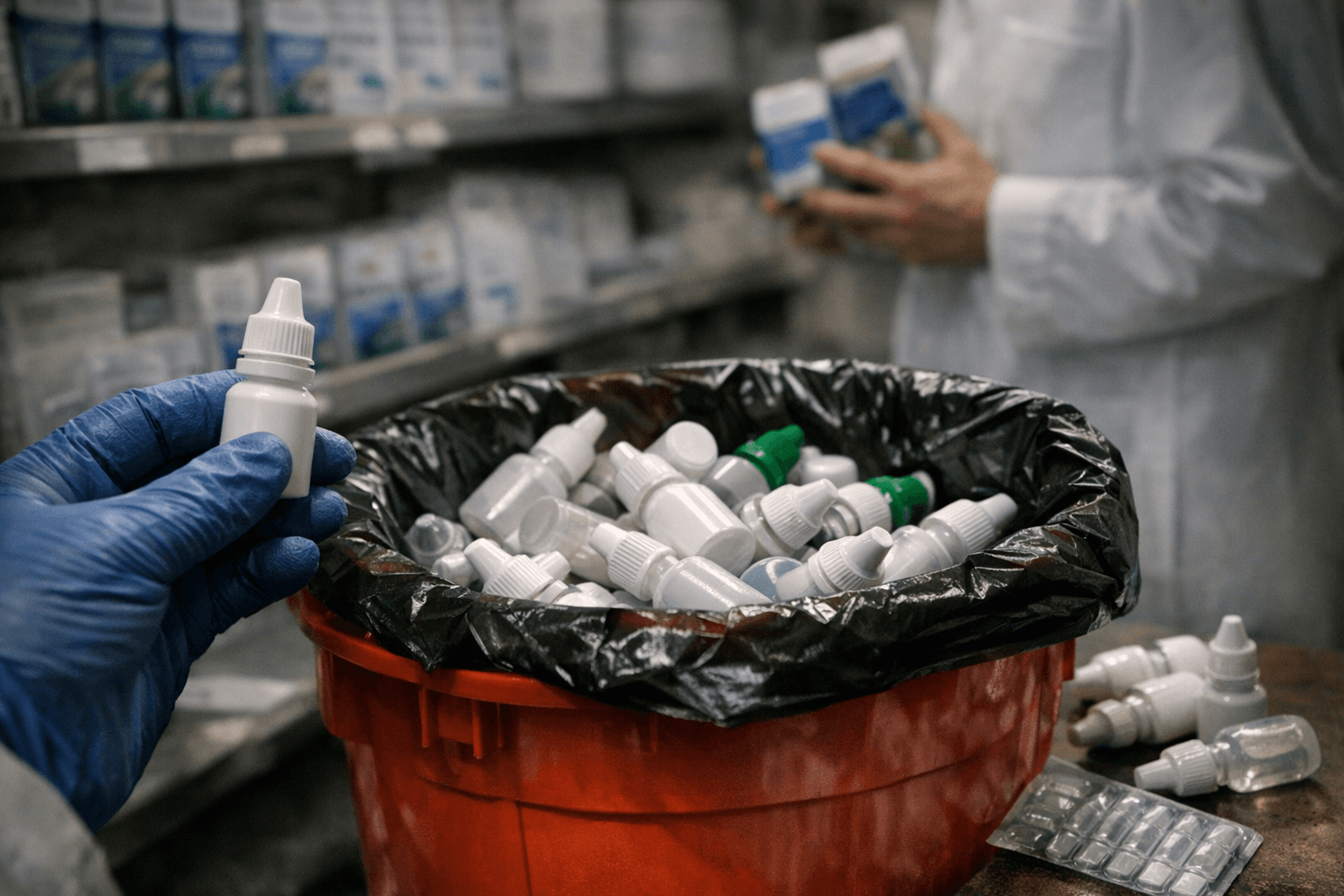
A single private-label manufacturer in Pomona, California has triggered one of the broader consumer eye-drop recalls in recent memory, with more than 3.1 million bottles pulled under the FDA's watch after the company acknowledged it could not guarantee its products were free of infection-causing microbes.
K.C. Pharmaceuticals, Inc. voluntarily initiated the recall on March 3, 2026. The FDA formally published its enforcement report on March 31 and classified the action as a Class II recall, meaning use of the affected products may cause temporary or medically reversible harm, while the probability of serious consequences remains remote. Public notices from health officials spread widely by April 3.
The scale of the recall reflects how contract pharmaceutical manufacturing works in practice. K.C. Pharmaceuticals produces white-label eye-care products sold under roughly 26 retail brand names, and a single sterility question at one facility implicates all of them simultaneously. The 3,111,072 affected bottles span eight product types, including Dry Eye Relief Eye Drops, Artificial Tears Sterile Lubricant Eye Drops, and Sterile Eye Drops Redness Lubricant, among others. Store and generic labels caught in the recall include Best Choice, QC-Quality Choice, Good Sense, CareOne, Equaline, TopCare, Foster & Thrive, DG Health, Geri Care, Leader, Harris Teeter, Exchange Select, and Good Neighbor Pharmacy. Retailers distributing the affected lots include CVS, Walgreens, Kroger, Meijer, H-E-B, Rite Aid, Dollar General, Publix, Walmart, and military exchange stores. Pharmaceutical distributors Cardinal Health and McKesson also handled the products.
The FDA's enforcement report did not state that any bottles were found to be contaminated. The cited reason is narrower: K.C. Pharmaceuticals could not assure the sterility of its manufacturing process, meaning the required safeguards against microbial intrusion were not demonstrably in place. The company has not issued a press release about the recall and did not respond to requests for comment.
Consumers can identify affected bottles by checking for lot codes beginning with AC, AR, LT, SU, RG, RL, SY, or AT, with expiration dates between April 30 and July 31, 2026. The recall is tracked under FDA Event ID 98533, with individual recall numbers running from D-0409-2026 through D-0416-2026. Per FDA guidance, people may generally continue using a product subject to a Class II recall unless the company specifically directs otherwise. Anyone experiencing eye redness, pain, discharge, or vision changes should contact a healthcare provider. Retailers are expected to remove affected lots and offer refunds or exchanges; consumers should hold onto the bottle and packaging to facilitate returns.
The recall arrives in a regulatory environment still shaped by the 2023 EzriCare disaster. In that case, Global Pharma Healthcare, an India-based manufacturer, recalled all lots of EzriCare Artificial Tears and Delsam Pharma products after the CDC identified a multistate outbreak of a carbapenem-resistant strain of Pseudomonas aeruginosa never previously reported in the United States. The CDC linked that outbreak to at least 81 people, four deaths, and eight cases of vision loss. The FDA's inspection of Global Pharma's facility found poor cleaning procedures and training gaps, and used the identical phrase now applied to K.C. Pharmaceuticals: "You used a manufacturing process that lacked assurance of product sterility."
The K.C. Pharmaceuticals recall, by contrast, carries no confirmed contamination and no reported patient harm. But it reinforces a pattern regulators have been watching closely: in 2025, AvKare recalled more than 75,000 cases of eye drops after an FDA audit found manufacturing deviations, and scrutiny of sterility controls at contract manufacturers has intensified since the EzriCare deaths. With no confirmed injuries tied to the current lots, the immediate risk appears low, but the breadth of the distribution network means millions of consumers may be holding an affected bottle without knowing it.
Sources:
Know something we missed? Have a correction or additional information?
Submit a Tip