Medtronic Recalls MiniMed Insulin Pumps Over Software Errors, Issues Fix
A software bug in Medtronic's MiniMed 780G insulin pump could stop insulin delivery; 26,851 devices are affected and a software update, not a replacement, is the fix.

Medtronic recalled 26,851 MiniMed 780G automated insulin pumps after identifying three distinct software defects capable of interrupting or misrepresenting insulin delivery to patients managing type 1 diabetes. No device returns or replacements are required; the corrective action is a software update applied through the pump and the companion MiniMed Mobile app.
The trouble began with two alerts issued on January 30, targeting pumps running software versions 6.60 and 6.61. One defect generated misleading pump error messages that created confusion about whether insulin was actually being delivered. A second flaw left the Blood Glucose Check feature unable to complete key verification and performance checks. Less than a month later, Medtronic issued a third alert for version 6.62, this one more urgent: a timing and processor communication failure could trigger Pump Error 43 or Pump Error 41, potentially stopping insulin delivery altogether.
The Food and Drug Administration logged the related field actions in its recall database, classifying the software-related notices as Class II, meaning the agency determined use of the affected devices could cause temporary or medically reversible adverse health consequences. Catalog numbers MMT-1884 and MMT-1886 running version 6.60 were among those specifically identified in enforcement records. No mass patient injuries were reported in connection with the defects, but the breadth of the notification and the severity of the delivery-suspension risk drove broad regulatory and clinical response.
Diabetes-care specialists urged patients not to panic while stressing urgency: "by following the update and the manufacturer's guidance, most users can avoid serious adverse events." Clinicians also advised patients to maintain a backup supply of insulin and syringes in case of device failure during or after the update process.
The MiniMed 780G is a closed-loop system, meaning it pairs a continuous glucose monitor with the pump and a control algorithm that automatically adjusts insulin dosing in real time. That integration is what makes the device transformative for the roughly 1.6 million Americans living with type 1 diabetes. It is also what makes any software defect a direct patient-safety issue rather than a peripheral inconvenience: the pump is the treatment.
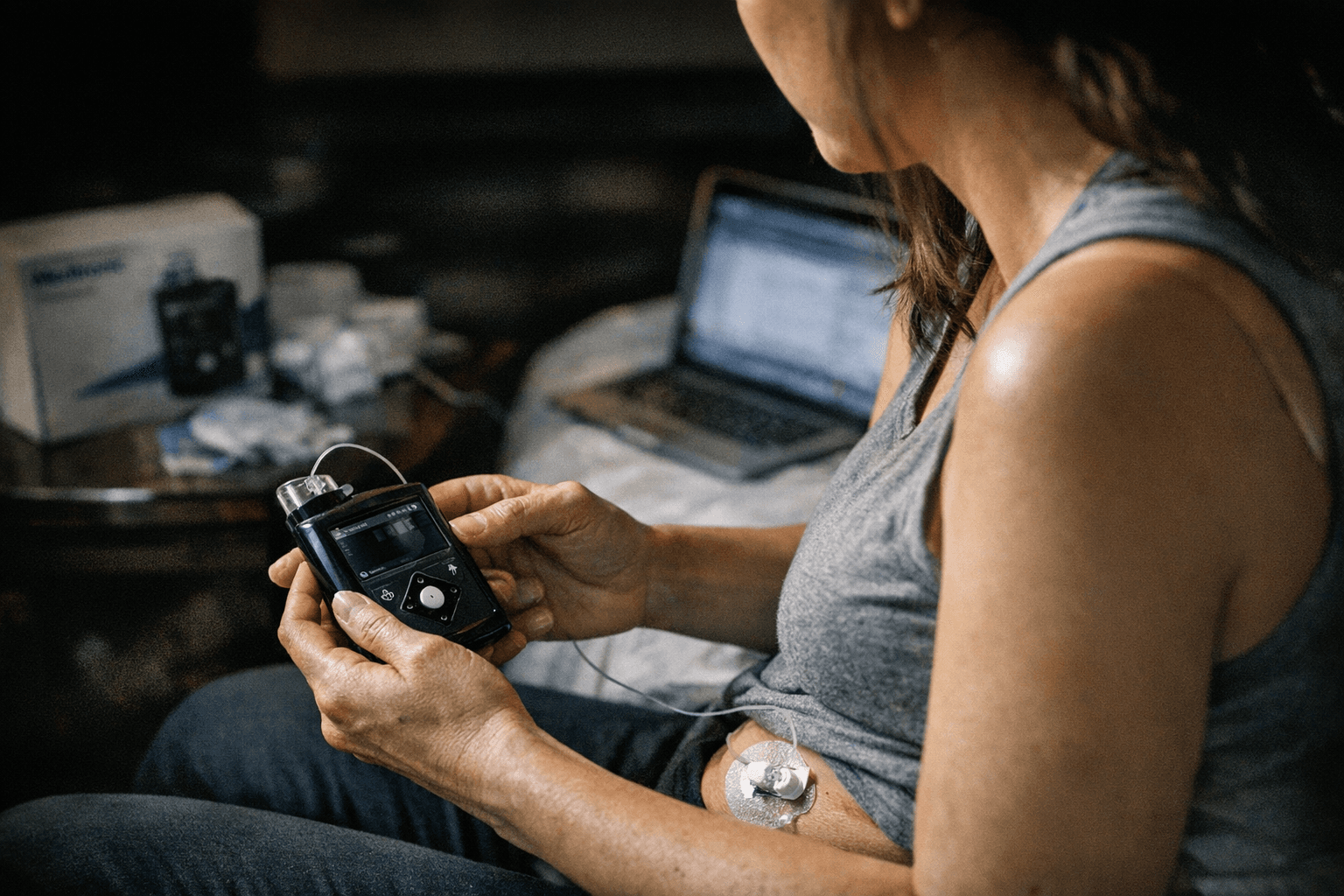
Medtronic's diabetes business, which has since been spun off and rebranded as MiniMed, has a history of firmware updates and field corrections across its insulin-pump lines. The 670G, 770G, and 780G models were also subject to a separate Class I recall for battery-related failures. The frequency of these notices has intensified scrutiny of how medical device software is validated before release and how quickly manufacturers can push corrections once defects surface post-market.
For endocrinologists and certified diabetes educators, the immediate obligation is to confirm whether their patients are running the affected software versions and to walk them through the update process. The full update, which requires a compatible mobile device, can take up to two hours to complete. Patients who lack a compatible smartphone can contact Medtronic's technical support line at 1-800-646-4633 to request an App Manager device with MiniMed Mobile pre-installed.
The episode is a stark reminder that as insulin pumps grow more sophisticated, the software running them carries the same life-or-death stakes as the hardware. Regulatory post-market surveillance catches these defects, but the window between a bug's introduction and its correction can span weeks or months, during which patients bear the risk. Faster patch deployment and more rigorous pre-release software validation are increasingly the standard the industry will be held to.
This article was produced by Prism’s automated news system from verified source data, official records, and press releases, then run through automated quality and moderation checks before publishing. The system is built and supervised by the people who set the standards it runs under. Read our full AI policy.
Did this article answer your question?


