Kentucky Family Turns Down $26 Million Offer for Farmland AI Data Center
Ida Huddleston, 82, and her daughter Delsia Bare turned down $26M from a mystery Fortune 100 AI company — about 10x local farmland value — to keep their Mason County farm.
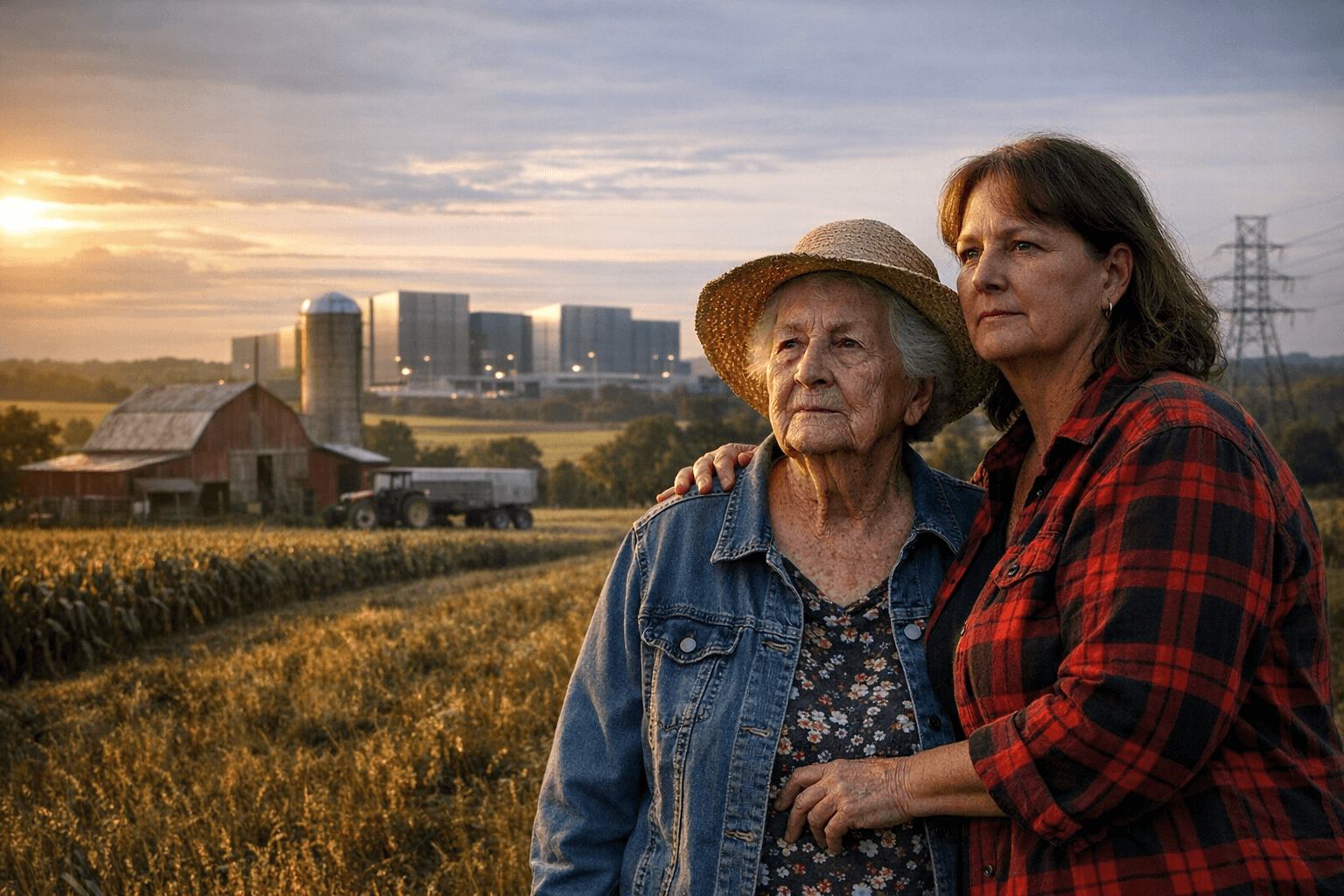
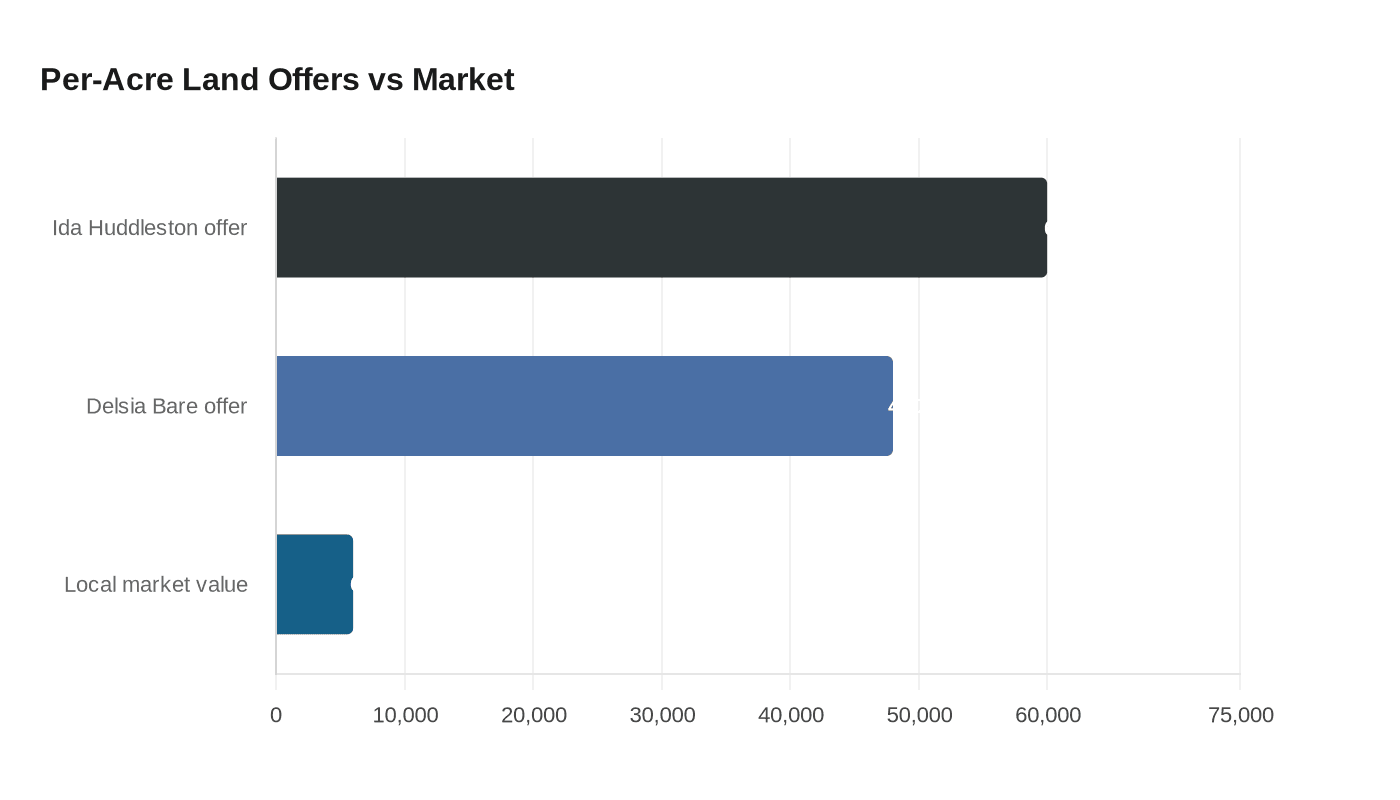
I don't want your money," Ida Huddleston told the developer who offered her $60,000 per acre for her 71-acre Mason County property, a deal that would have put $4.26 million in her pocket. Her daughter, Delsia Bare, was pitched an even larger sum: $48,000 per acre for her 463 acres, totaling more than $22 million. Together, the combined offer came to roughly $26 million. They said no.
Last year, a "major artificial intelligence company" offered the family $26 million to sell part of their farm for a proposed data center. Huddleston and her family declined, saying they didn't want a data center built near them or on any of their 1,200 acres of farmland outside Maysville, Kentucky.
The offers dwarfed local farmland values, which hover around $6,000 per acre, making the per-acre bid roughly ten times what the land would fetch on the open market. The developer, described across multiple reports as an unnamed Fortune 100 company, has not publicly identified itself.
Huddleston, who is 82 and has spent her life on the property, rejected the deal more than once. "They call us old stupid farmers, you know, but we're not," she said. "We know whenever our food is disappearing, our lands are disappearing, and we don't have any water — and that poison. Well, we know we've had it." When asked about the project's promised economic benefits, Huddleston called it "a scam." "I say they're a liar, and the truth isn't in them. That's what I say. It's a scam," she told WKRC/Local 12.
Bare was equally direct. "Stay and hold and feed a nation, $26 million doesn't mean anything," she told LEX 18. The Kentucky landowner explained how her family ties reach deep into the clay-heavy soil: "My grandfather and great-grandfather and a whole bunch of family have all lived here for years, paid taxes on it, fed a nation off of it." She added: "Even raised wheat through the Depression and kept bread lines up in the United States of America when people didn't have anything else."
The secrecy surrounding the buyer hardened both women's resolve. Bare, whose family has owned parts of their farm since the 1860s, is concerned that the massive project would ruin the local landscape. "The quietness and the beauty of nature, of the trees, and everything that's there, it's all going to be destroyed completely," she said. "To give up this kind of beauty, just so people can sit there and play with computers."
Pitched by local officials as a once-in-a-generation economic opportunity for Mason County's roughly 17,000 residents, the planned data center would be built on 2,080 acres of farmland off Big Pond Road outside Maysville. The massive campus would span nearly three miles across, planning documents show. County economic development leaders claim the project would bring some 400 full-time jobs and more than 1,500 construction positions, saying the data center would instantly rank among the area's largest employers.
Community opposition extends beyond the Huddleston family. Janet Garrison, treasurer for the nonprofit community group We Are Mason County, said: "We want this thing to go in an industrial park. They want farmland, and that's just not a very efficient use of 2,000 acres when they might only hire 50 people." In December, LEX 18 reported on nearby landowners Andy Grosser and his father, Timothy, who rejected nearly $8 million for their farm at the same proposed site.
The Mason County fight echoes similar disputes from Iowa to Washington state, where farmers have walked away from multimillion-dollar offers rather than see cropland and orchards turned into server farms. Across these communities, residents worry about surging electricity demand, water use for cooling, and round-the-clock noise from backup generators and cooling equipment. Critics also question whether the facilities, which employ far fewer workers than traditional factories, justify the heavy public subsidies they often receive.
Whether or not the Huddlestons agree to sell, the data center could still be built nearby as a result of other farmers selling up. For Bare, that possibility changes nothing. "As she was attached to that land, her spirit never would die. That's the exact same thing for me right here. As long as I'm on this land, as long as it's feeding me, as long as it's taking care of me, there's nothing that can destroy me if I've got this land.
Know something we missed? Have a correction or additional information?
Submit a Tip

