Kenya suspends transport strike after deadly protests over fuel prices
A one-week pause in Kenya’s transport strike followed deadly protests, as fuel shocks from the Middle East pushed up fares, food prices and political pressure.

Kenya’s transport strike exposed how fast a fuel shock in the Middle East can hit Nairobi’s roads, household budgets and political calm. Interior Minister Kipchumba Murkomen said in televised remarks that the public transport shutdown would be suspended for one week, after four people were killed in protests tied to higher fuel prices and commuters across the country were left scrambling for buses, minibuses and cash for fares.
The pause came after talks on Monday, the first day of the strike, failed to produce an agreement even after the government agreed to cut diesel prices by 10 shillings per litre. Transport operators did not drop their wider demands, and the dispute had already moved beyond a narrow labor standoff. Bus and minibus services were disrupted across Kenya, some schools shut, and the stoppage spread beyond Nairobi to other towns, bringing daily movement to a standstill.
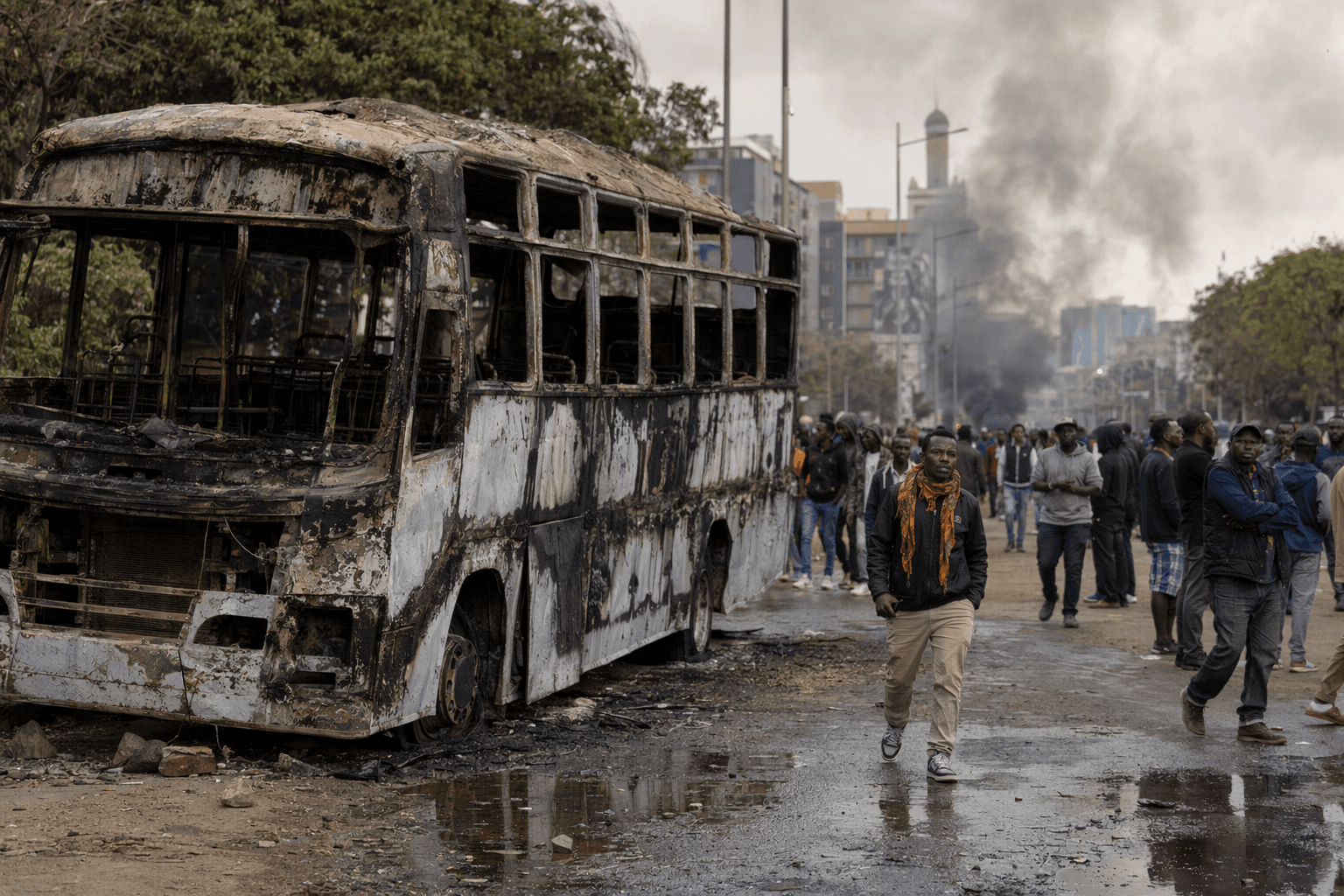
The human cost showed up immediately. Many commuters walked long distances to work, while others paid sharply higher fares to get where they needed to go. Public anger rose quickly as the strike collided with a broader cost-of-living squeeze. Gabriel Odhiambo, a 24-year-old public relations worker, said his transport costs had doubled and that food prices had also risen. Reuters reported a stark example of inflation pressure: four tomatoes cost 60 shillings, about 50 U.S. cents, roughly three times more than before.
Kenya’s vulnerability is rooted in its fuel system. The country imports nearly all of its fuel from the Middle East through government-to-government deals with Gulf suppliers, leaving it highly exposed to supply shocks linked to the war in Iran. That dependence turned an external conflict into a domestic transport crisis, with fuel costs feeding straight into fares, food prices and pressure on public services. The government’s diesel concession offered some relief, but it also underscored how little fiscal room Nairobi has to shield households without worsening strain on the public finances.
The one-week suspension gave the government time to keep talking, but it did not resolve the underlying problem. Higher fuel costs, fragile household budgets and a transport sector able to freeze mobility across the country ensured that the dispute remained a test of Kenya’s economic resilience and political stability.
Know something we missed? Have a correction or additional information?
Submit a Tip