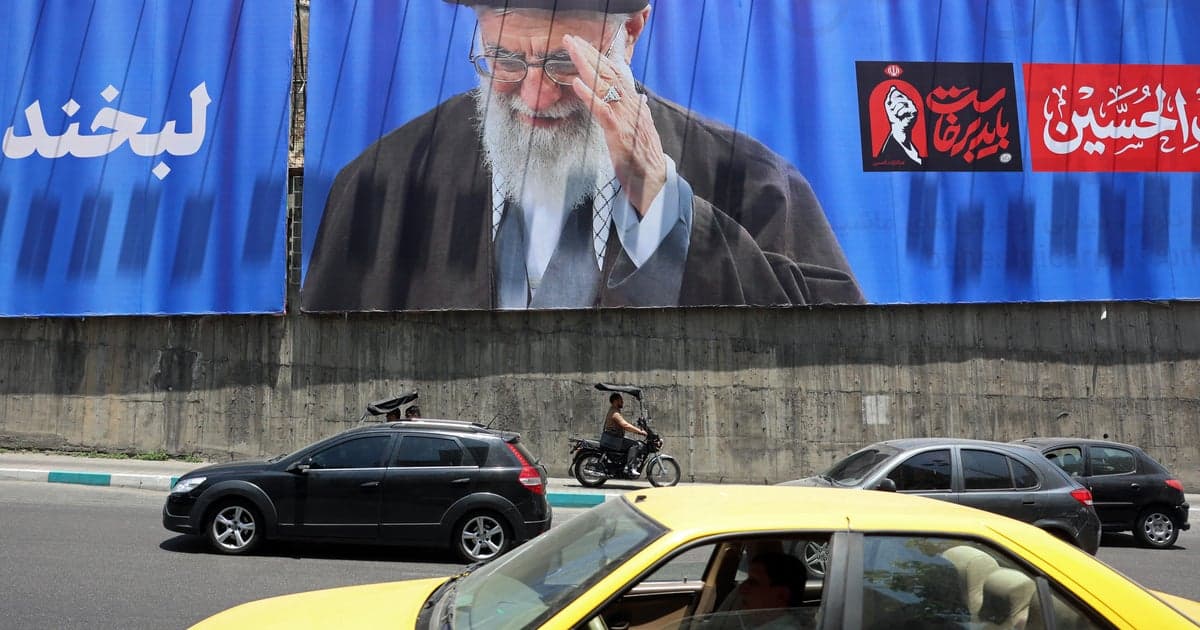
Khamenei Vows Tough Response as Economic Protests Sweep Iran
Iran’s Supreme Leader Ayatollah Ali Khamenei refused to yield to widespread demonstrations over soaring inflation and a collapsing rial, urging a firm response even as he acknowledged merchants’ economic grievances. The unrest, now in its fifth day, risks a harsher domestic crackdown and heightened international tensions after U.S. and Israeli officials signalled interventions and pressure.

On Jan. 3, Supreme Leader Ayatollah Ali Khamenei delivered a recorded televised address rejecting demands from street protesters who have taken to the streets across multiple Iranian cities over surging prices, a plunging national currency and shortages of water and electricity. As demonstrations entered their fifth day, Khamenei struck a dual tone: he acknowledged that the concerns of merchants and shopkeepers were legitimate but insisted on forceful action against what he characterized as externally manipulated disorder.
Khamenei said the Islamic Republic "will not yield to the enemy" and declared that "rioters must be put in their place." He praised the merchant class as "among the most loyal segments of the country to the Islamic system" and urged officials to distinguish between those with legitimate complaints and those he labeled as troublemakers, saying authorities should speak with "protesters, not rioters." At the same time he accused foreign adversaries of exploiting domestic economic distress, asserting a "hand of the enemy" was behind recent currency fluctuations and that some people had been "incited or hired by the enemy" to turn economic protests into anti-regime chants.
The demonstrations were triggered by widespread inflation, a collapsing rial and shortages that have strained daily life. Shopkeeper marches and spontaneous public protests have spread from provincial towns to larger cities, reflecting popular frustration in an economy hit by sanctions and constrained public finances. Rights groups reported a sharp rise in arrests during the days of unrest, and some accounts said demonstrations had turned deadly, with "several" people killed; precise casualty and arrest figures have not been independently verified.
Government and allied security forces have signaled readiness to suppress what they describe as rioting while offering some limited engagement with commercial grievances. The leadership’s posture underscores a broader strategy that seeks to validate economic complaints enough to defuse wider protest sympathy while isolating and suppressing elements cast as politically motivated provocation.

The unrest is unfolding amid intensified external pressure on Tehran. In U.S. television transcripts, President Donald Trump is quoted as threatening to "come to the aid of protesters" and warning that if Iran rebuilt certain military capabilities "we’ll knock the hell out of them." Iran has urged the United Nations to respond to what it called "reckless" threats. Meanwhile, Israeli Prime Minister Benjamin Netanyahu has pressed for tougher measures in Washington targeting Iran’s ballistic missile program, part of a broader push in some diplomatic capitals to increase pressure on Tehran.
The current wave of demonstrations is being compared domestically to the mass unrest of 2022, though analysts say it remains uneven in scale and leadership. For now, Tehran’s approach aims to manage economic discontent without ceding political control, while international exchanges threaten to turn an economic protest movement into a broader geopolitical flashpoint. Independent verification of allegations of foreign orchestration or detailed casualty and arrest counts remains limited, and further reporting will be required to map the protests’ trajectory and political consequences.
This article was produced by Prism’s automated news system from verified source data, official records, and press releases, then run through automated quality and moderation checks before publishing. The system is built and supervised by the people who set the standards it runs under. Read our full AI policy.
Did this article answer your question?